


Liepāja · Kurzeme · Latvia
Liepāja: Blown-Up Forts, a Prison Hotel and a City Marked in Musical Notes
A Liepāja city guide with the Northern Forts, Karosta Prison, Art Nouveau architecture, street art, music, beaches and practical tips.
A Baltic city where blown-up forts, a prison hotel, music and a wide beach make for an unexpectedly versatile coastal break.
At a glance
- Best for
- Military history, unusual architecture, street art, music and a wide Baltic beach.
- Time needed
- A day and a half covers the main sights, although two full days give you more time for Karosta, the Northern Forts and the city centre.
- Getting there
- Liepāja is about 220 kilometres from Riga, roughly three hours by car, direct bus or train. A car is especially useful for the Northern Forts.
- Good to know
- The centre is walkable, Karosta is reachable by public transport, and the Northern Forts are easiest to visit by car.
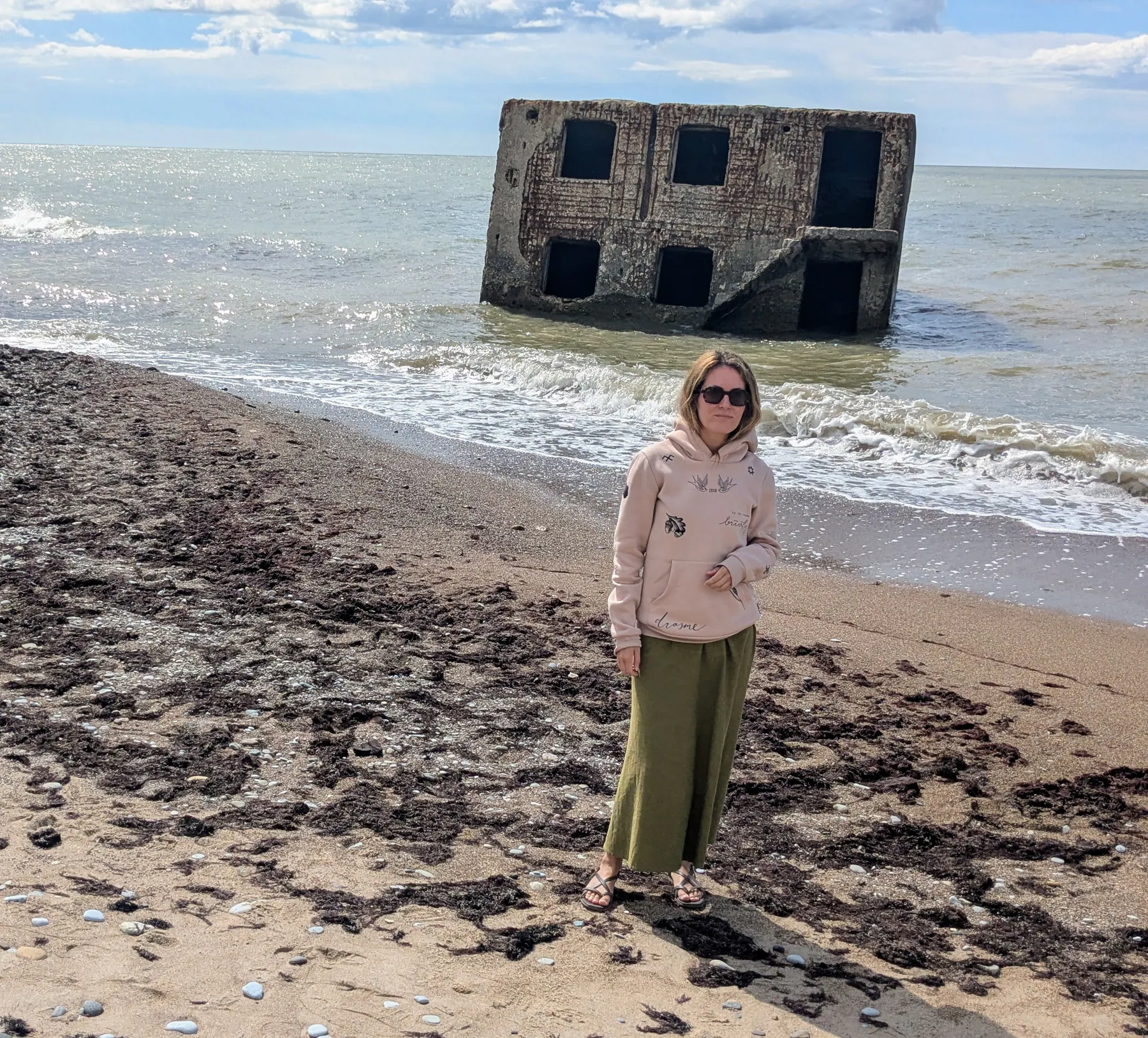
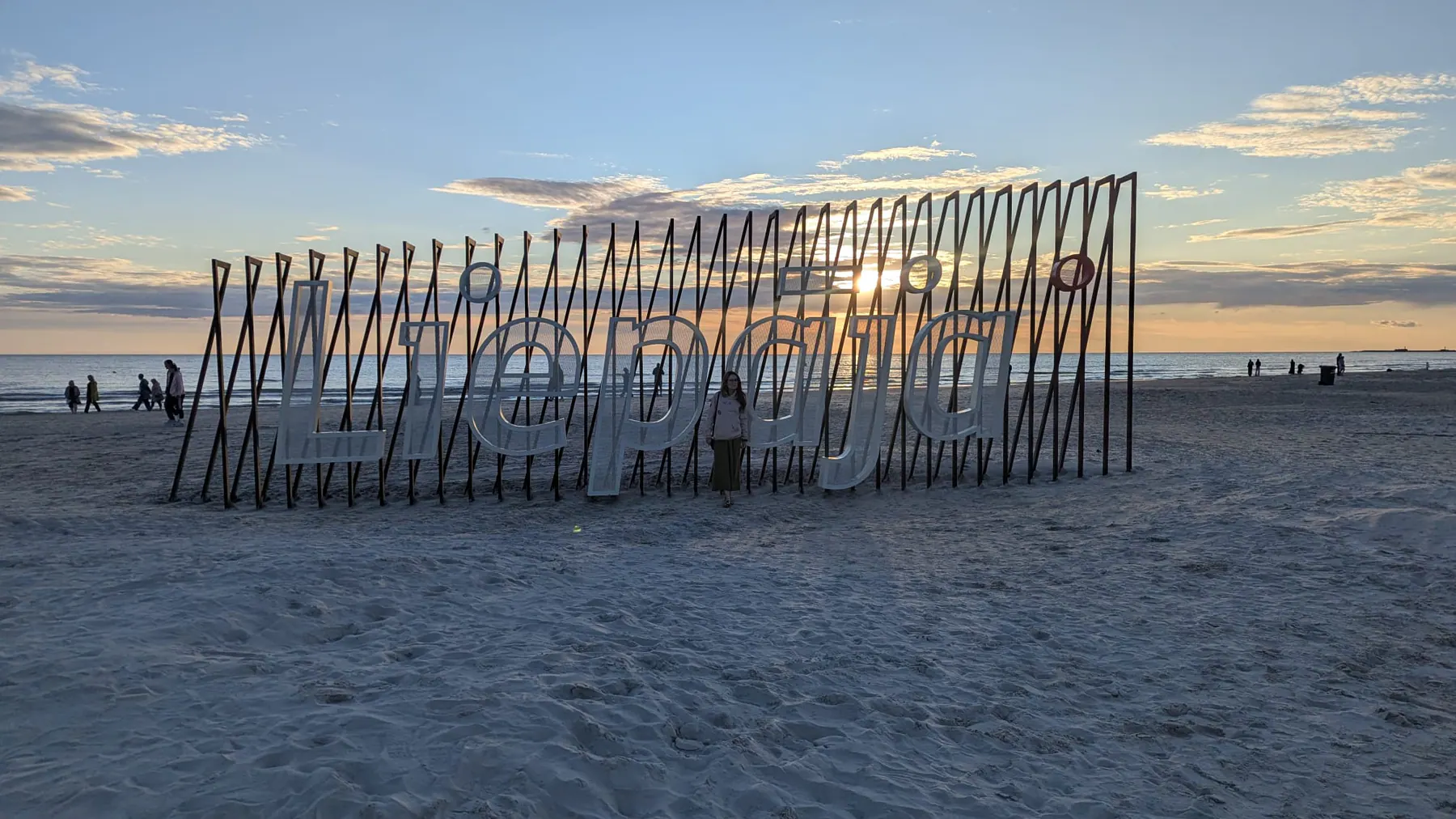
It has a lot to offer, and not only in the centre - some of the strangest things here are on the outskirts.
Latvians call it the city where the wind is born. It’s also the city of music: a lot of the country’s important musicians came from here, and you feel that everywhere.
We came in the second week of July, at the end of a long drive down the west coast after Kandava, Sabile, Kuldīga and Jūrkalne, and gave it a day and a half.
Getting there and getting around
It’s about 220 kilometres from Riga by road, roughly three hours, and buses run around twenty times a day - Lux Express and LapLine both do the route. There’s also a direct train from Riga, which takes about the same time and costs around €9 one way. Buses run direct from Kuldīga and Ventspils too.
What people often don’t realise is how close it is to Lithuania: Klaipėda is only about an hour and forty minutes away by bus in summer, with stops at Palanga airport on the way, so Liepāja works just as well as a side trip from the Lithuanian coast as from Riga.
Once you’re here, the centre is easily walkable and that’s how we did it. If you’d rather not walk, the local buses work well. You can reach Karosta by public bus, but not the Northern Forts (Ziemeļu forti) - the bus gets you closer, but it won’t leave you anywhere near them, so for the forts you really do want a car.
A day and a half was enough, but two full days would have been better. Between the city and Karosta there’s more here than you expect.
The Northern Forts (Ziemeļu forti)
We started at the far end of the city, at the Northern Forts (Ziemeļu forti), and they are unlike anything you have probably seen.
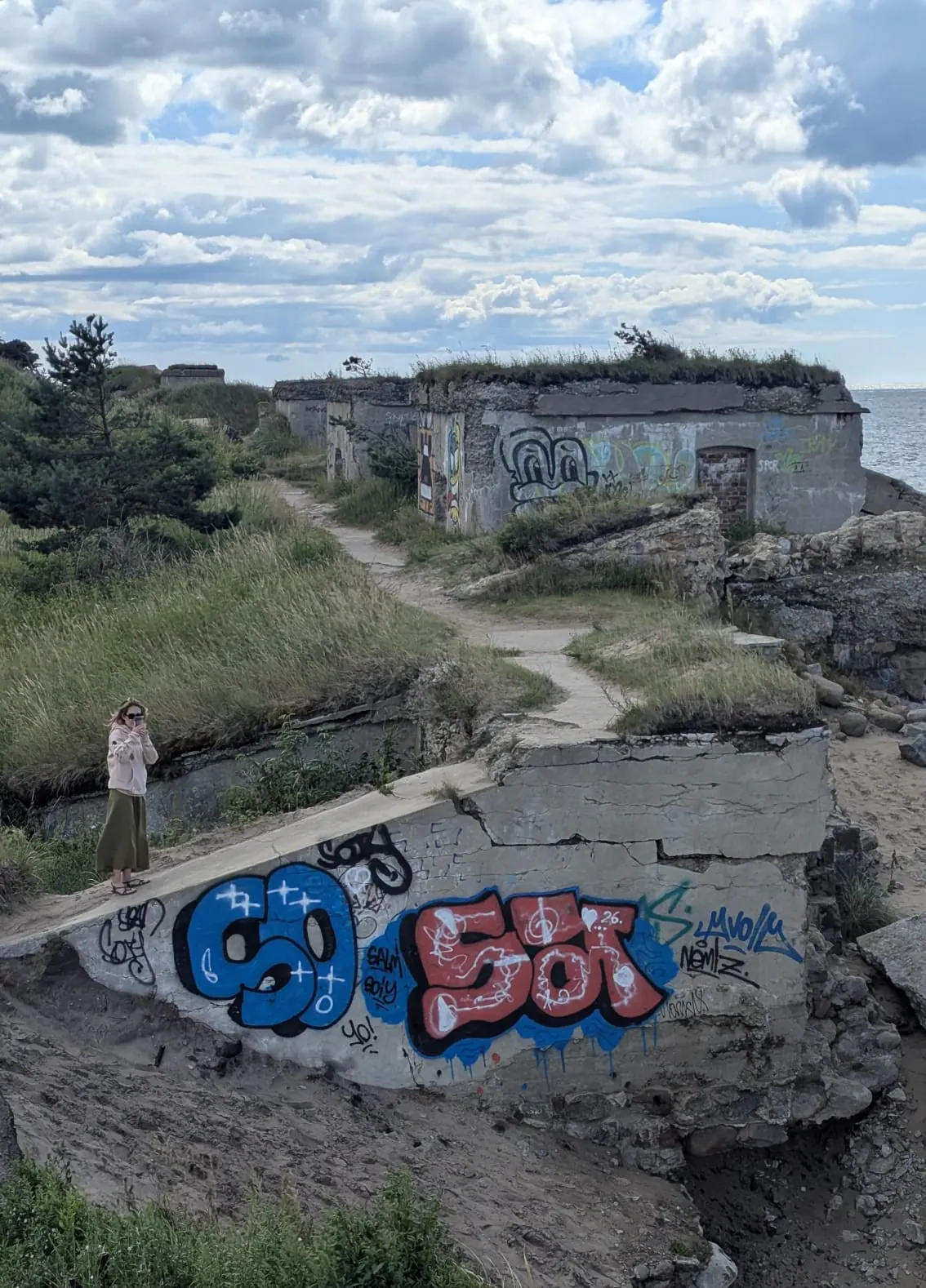
The short version of the history: at the end of the 19th century the Russian empire built a huge fortress here to defend its naval base, finishing around 1906. In November 1908, less than a decade later, the whole thing was declared a strategic mistake and dismantled, and the fortifications were blown up. What you see today is what survived being demolished on purpose - the concrete was simply built too well to come apart.
They aren’t all in one place, which is worth knowing before you go. A car is basically the only sensible option. We stopped first at Artillery Battery No. 1 (Cietokšņa baterija Nr. 1), which is the largest surviving section and the one people mean when they say the Northern Fort. There’s a dedicated parking area, and from there you walk along the shore looking at them.
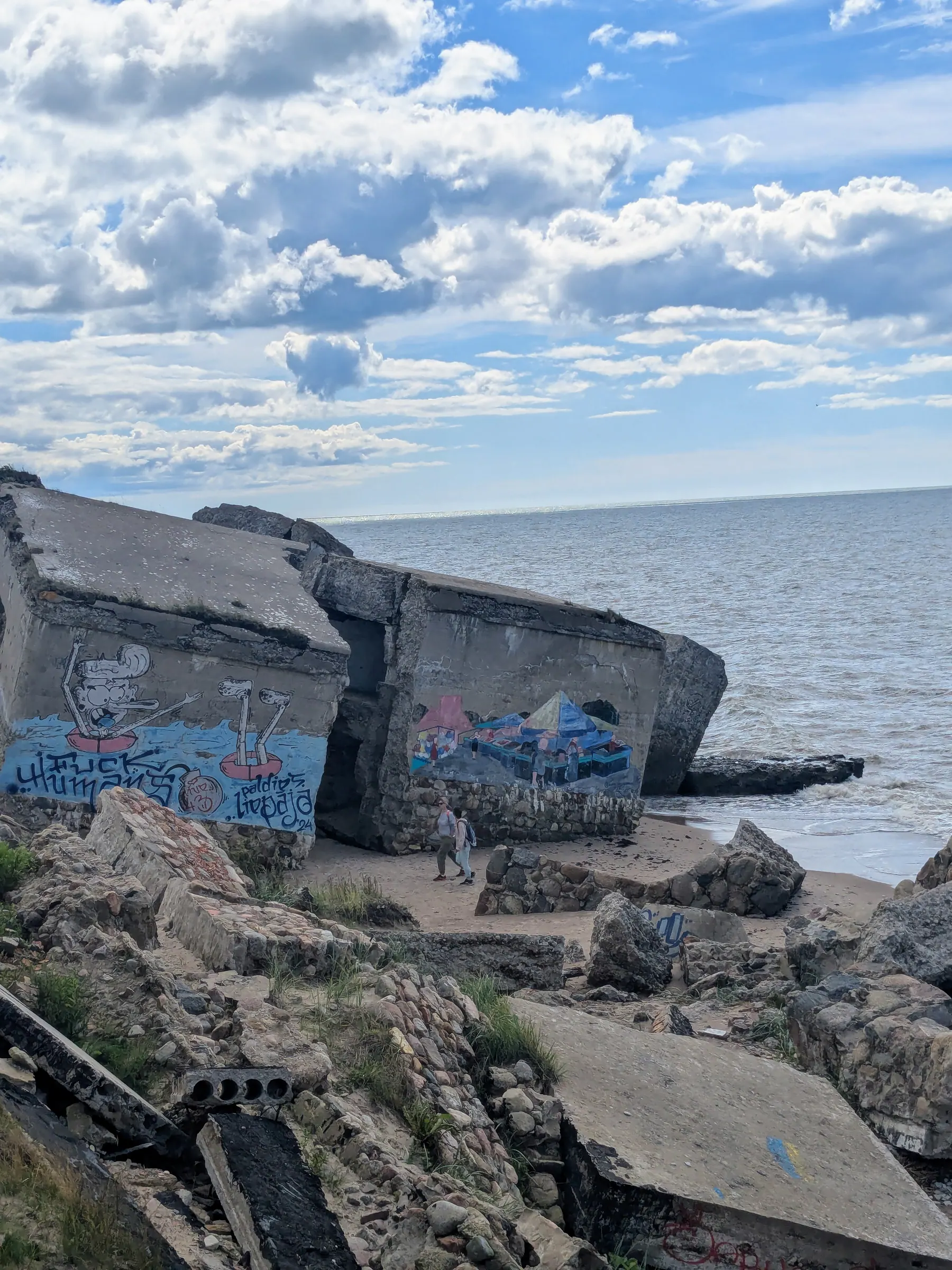
They give the place a real mysteriousness. Enormous slabs of concrete lying at angles they were never meant to lie at, each one fallen differently. You can walk carefully on them - there’s a path to follow - and what makes them feel alive rather than dead is the graffiti. Some of it is proper large-scale mural work. One slab has the cat from Flow painted on it - the Latvian animated film that won the Oscar for Best Animated Feature in 2025, the country’s first.
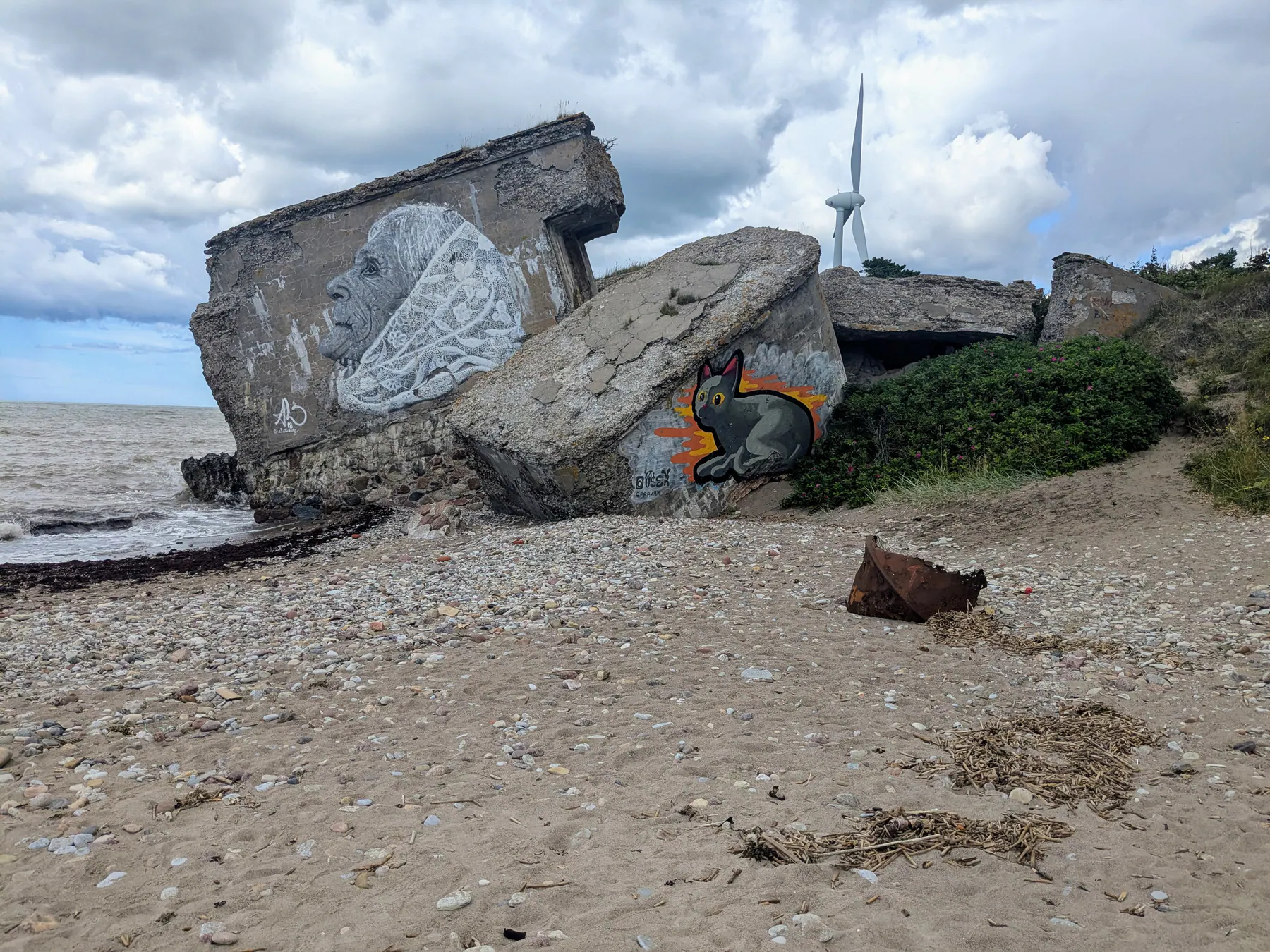
We spent about forty minutes there. It’s free and there’s no closing time, so it works for sunset too.
But that wasn’t all of it. I had seen photographs of an emblematic fort building standing half-drowned in the sea, and it wasn’t at this location. So we drove on and reached Artillery Battery No. 3 (Cietokšņa baterija Nr. 3), and there it was - that section of building sitting in the water, and it really is impressive in person. In front of it there’s a small beach where people were swimming. There are other remains to look at here as well as you walk past.
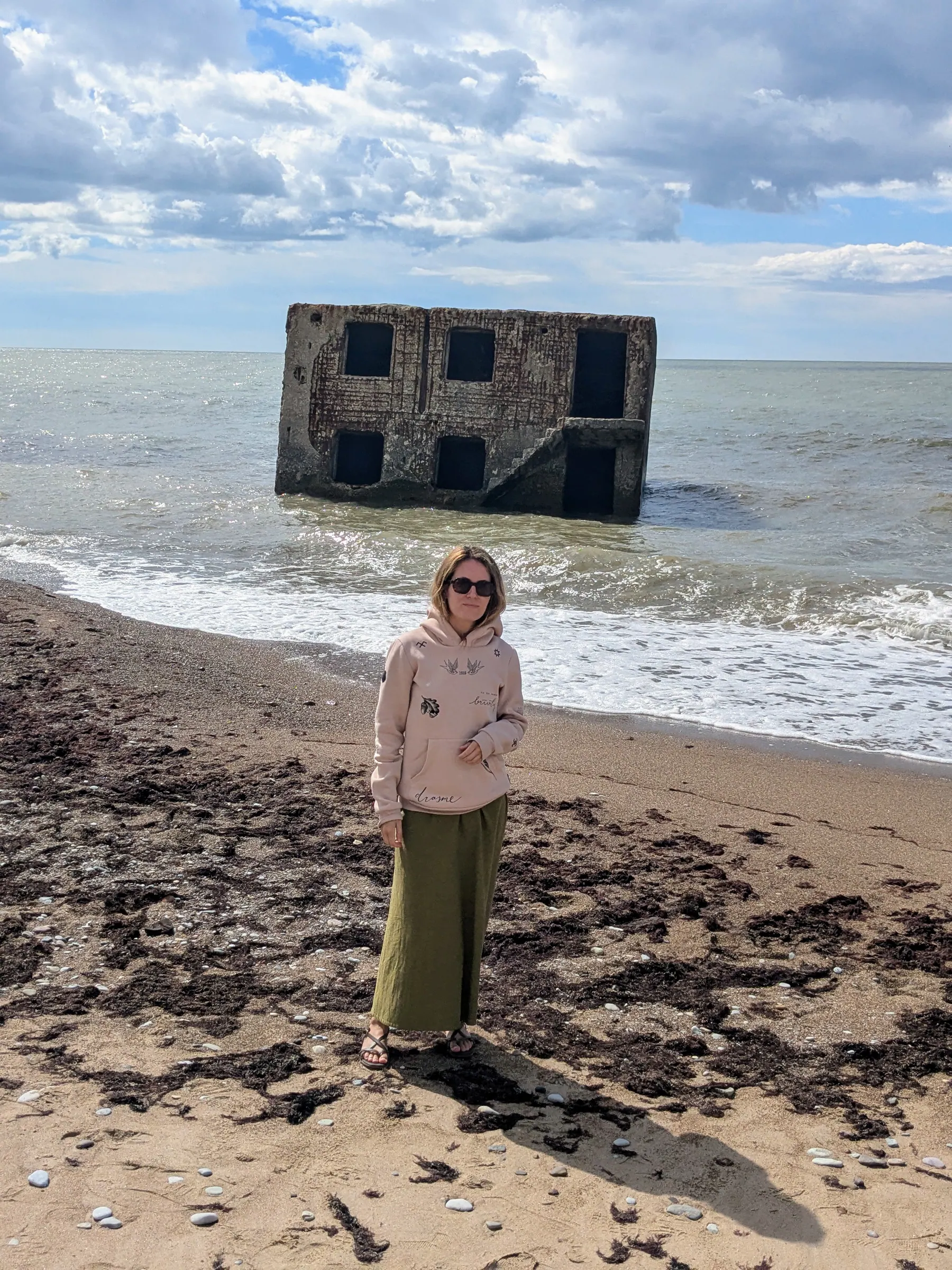
One safety note: it is officially forbidden to walk underneath the fort ruins. The coast here is eroding and sections can collapse. Stay on the marked paths and you’re fine.
The Northern Forts are a particular kind of place, and not one you find often. Concrete built to last a century, demolished within a decade of being finished, and now standing in the sea covered in murals. It costs nothing to visit. If you come to Liepāja, come also here.
Karosta and its prison
From there we went into Karosta, which is another curious place.
The name means “War Port”. It was built as a naval base for the Russian empire, and under the Soviets it became a closed military town - so secret that it was left off maps, and even people who lived in Liepāja were not allowed in. It takes up roughly a third of the city.
Karosta is a red town. Red brick buildings everywhere, a sort of village of its own. Driving through it you notice immediately how different it is from anywhere else.
We went straight to Karosta Prison (Karostas cietums). This is the only military prison in Europe you can visit, and that alone makes it worth the trip.
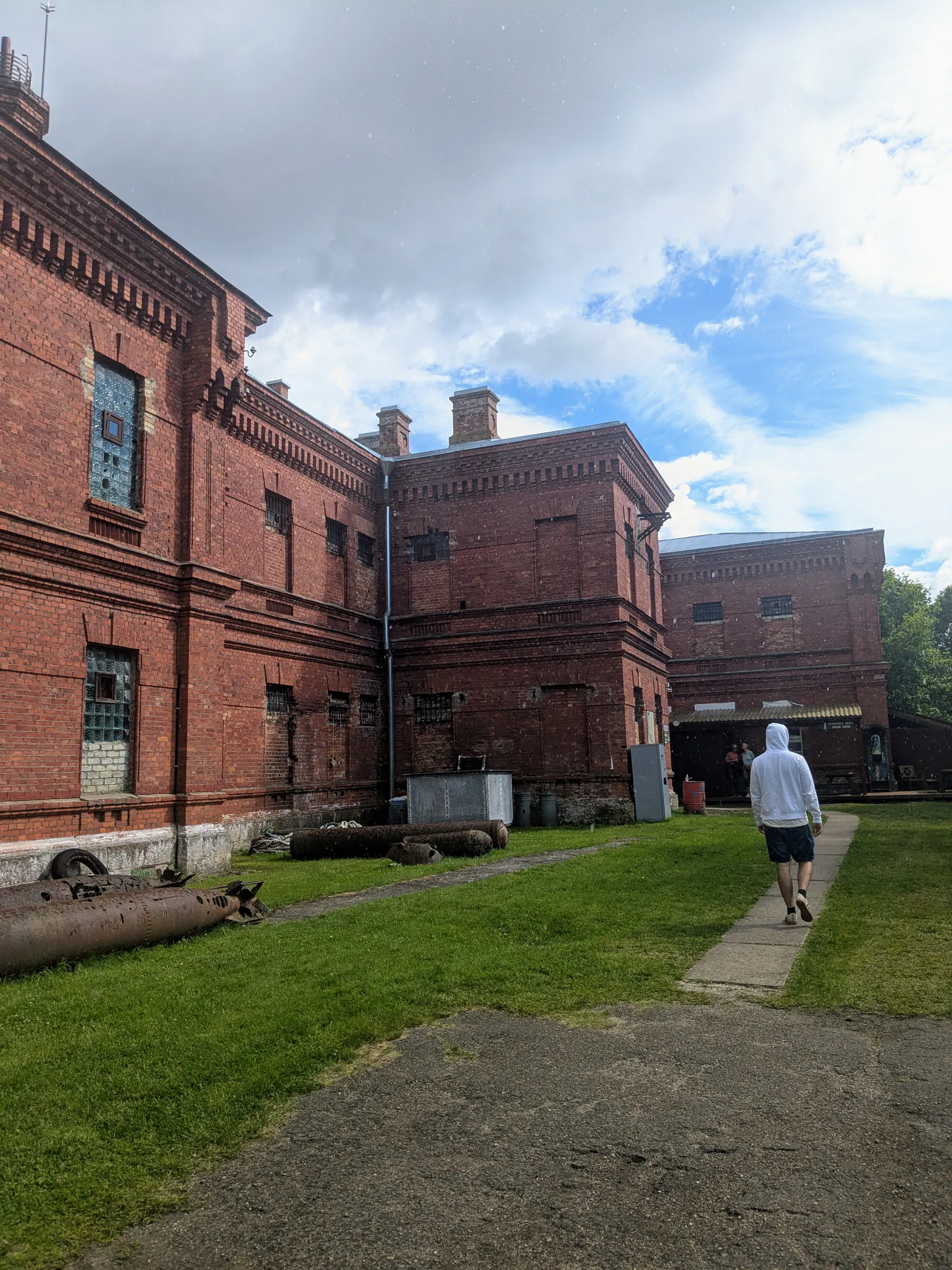
The building has a good irony behind it: it was built around 1900 as a naval hospital and never admitted a single patient. After the 1905 revolt it was turned into a guardhouse instead, and it stayed a prison through tsarist Russia, Nazi Germany, the Soviet Union and independent Latvia. No prisoner ever escaped. The last inmates scratched their calendars and messages into the cell walls in 1997, which is recent enough to be unsettling.
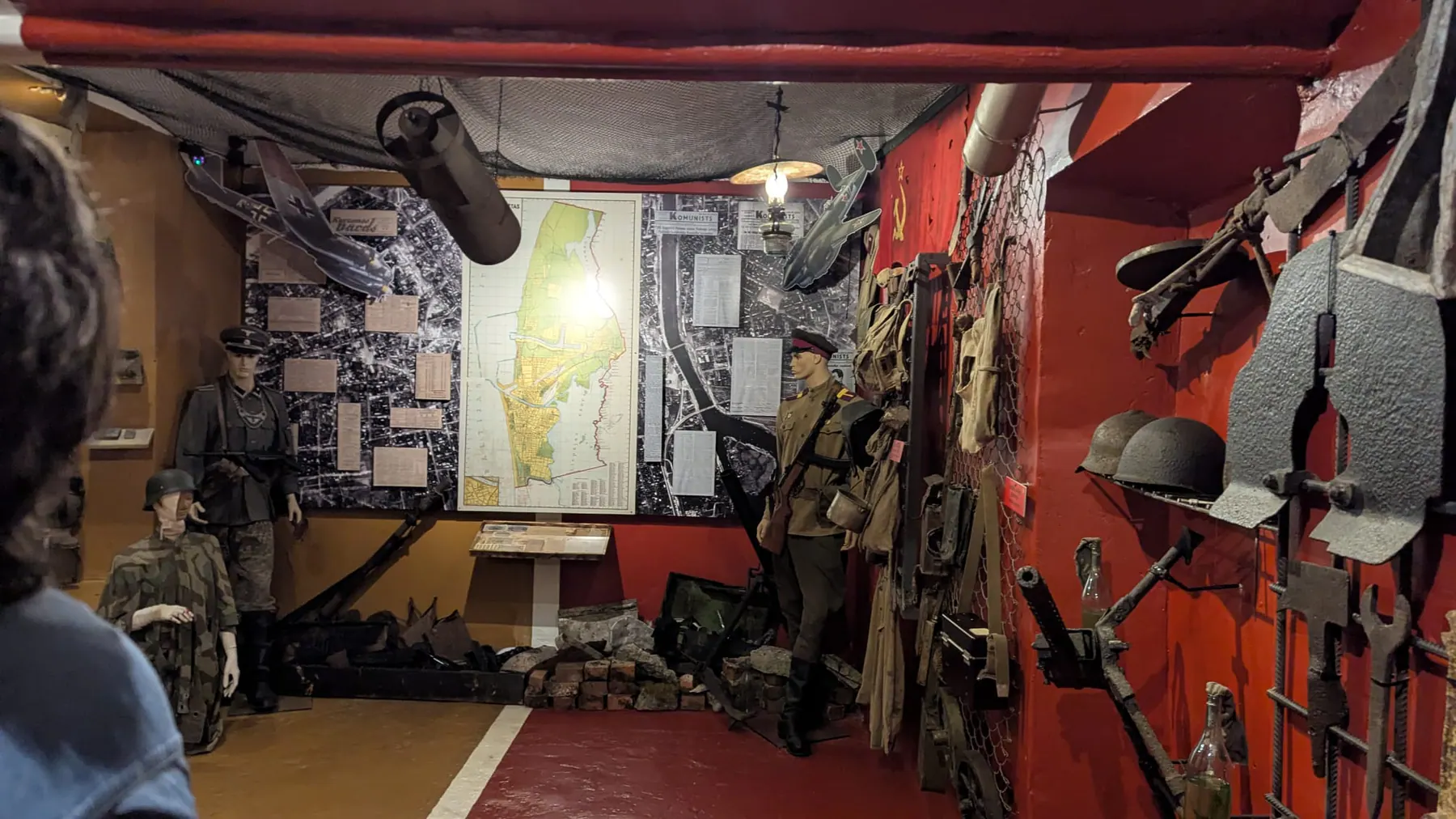
The tour runs in Latvian or English (other languages need to be prebooked in advance), and we booked it on arrival - but check the closing times, because we came in late afternoon and made it by minutes. It lasted around 45 minutes and cost €8. It takes you through the cells and shows how prisoners were treated, where they slept (although some rooms had a new artistic design), and how the discipline worked. It can be frightening for some people. It’s also very interesting.
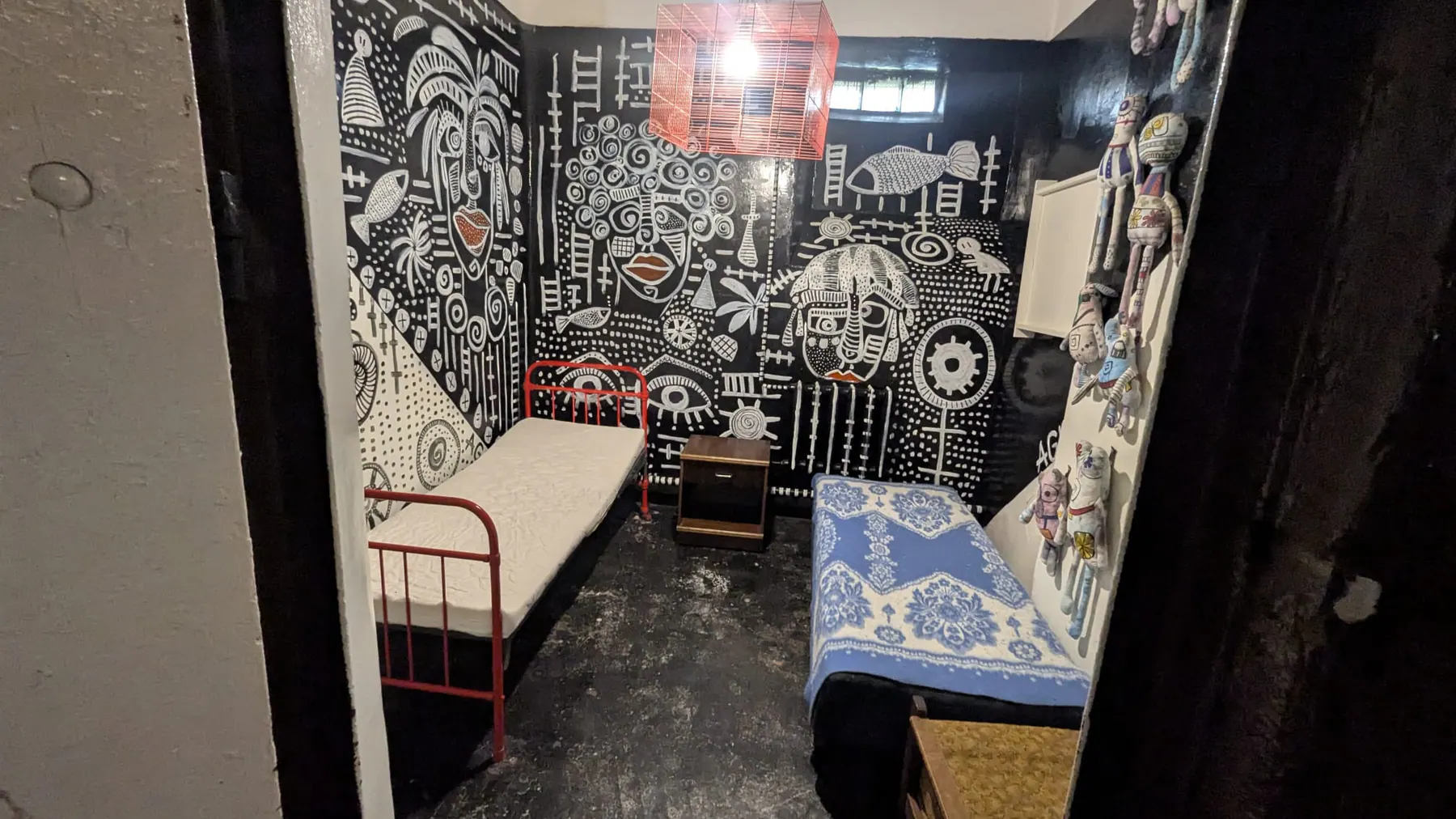
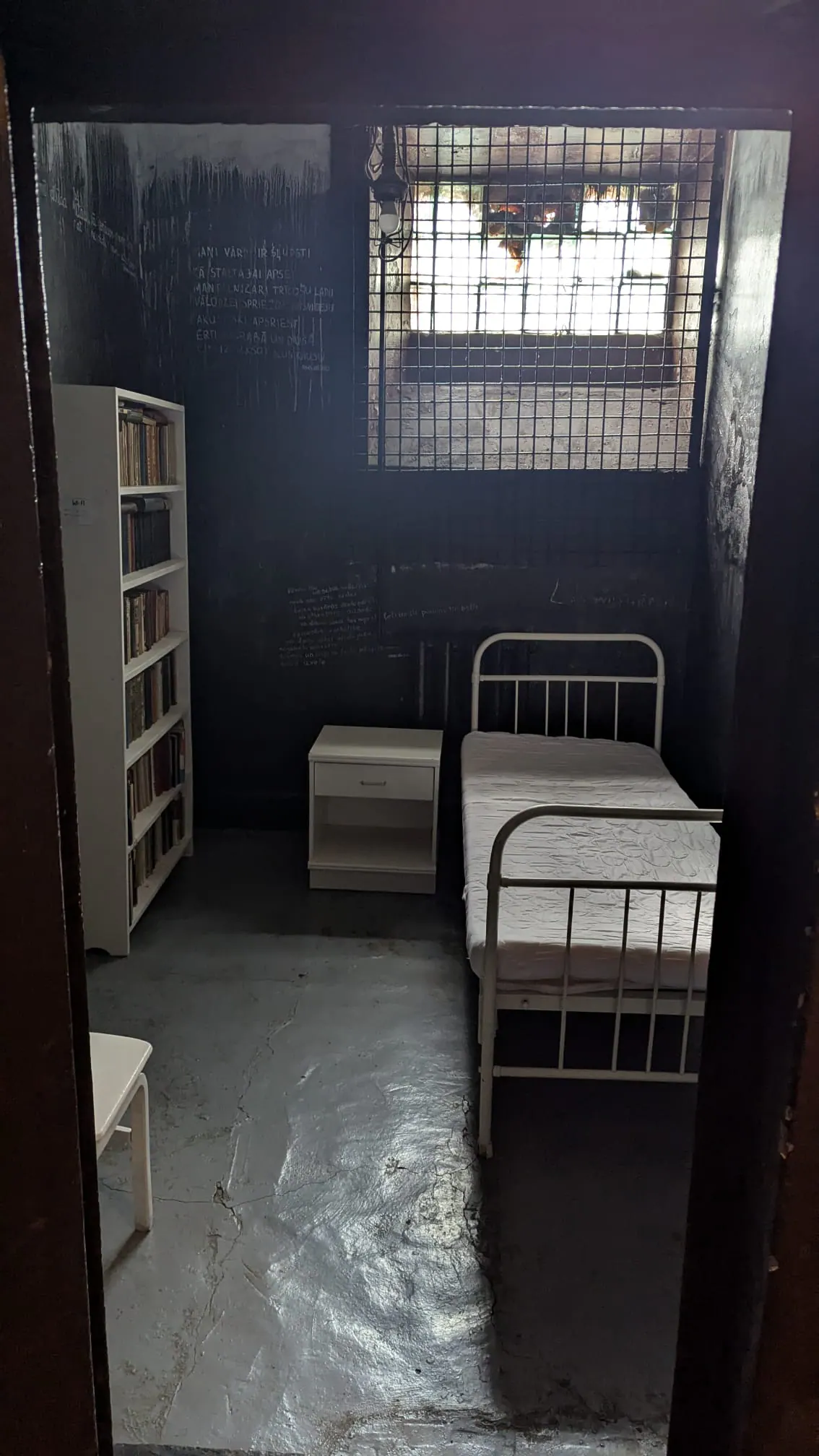
A small detail I liked: the prison buffet keeps the Soviet atmosphere completely, right down to the cups and small plates, which are all from Soviet times. It’s part of the experience rather than a gift shop tacked on.
This time my boyfriend did the tour, since I’d already seen it.
The standard tour is only one of the things on offer, and it’s worth knowing before you go, because you could easily spend most of a day here. There’s a short film about Karosta, two escape rooms, airsoft games, bicycle rental and guided bike tours of the district, and a visitor centre where you can book tours of Karosta and the city.
There are also harder versions of the visit. “Behind the Bars” is an interactive show where guards in Soviet uniform shout at you, order you around and put you in a cell - you sign a waiver first. And you can sleep here, in a cell, with the option of being woken during the night to do press-ups or simply be shouted at.
I did ‘’Behind bars” and ‘’normal’ sleeping without shouting, many years ago on a school trip. I was a kid at the time and it scared me properly: the guard we got was very strict and it all felt convincingly real. It’s a strange thing to be able to say you’ve done, and I’d recommend it if you want the full version rather than the museum.
Into the city
After our prison break we drove into the centre, and Liepāja changes completely.
The city was doing well at the turn of the last century, and it shows. Liepāja ran the first electric tram in the Baltic states, in 1899, and the line is still going today, which makes it one of the oldest electric tram networks in Europe.
We had booked Hotel Amrita, a four-star hotel with a good price. We paid €95 for the two of us with breakfast included, and it was a proper hotel with an excellent buffet breakfast. It’s close to the centre and you can walk everywhere from there. We left the car and didn’t use it again in the city.
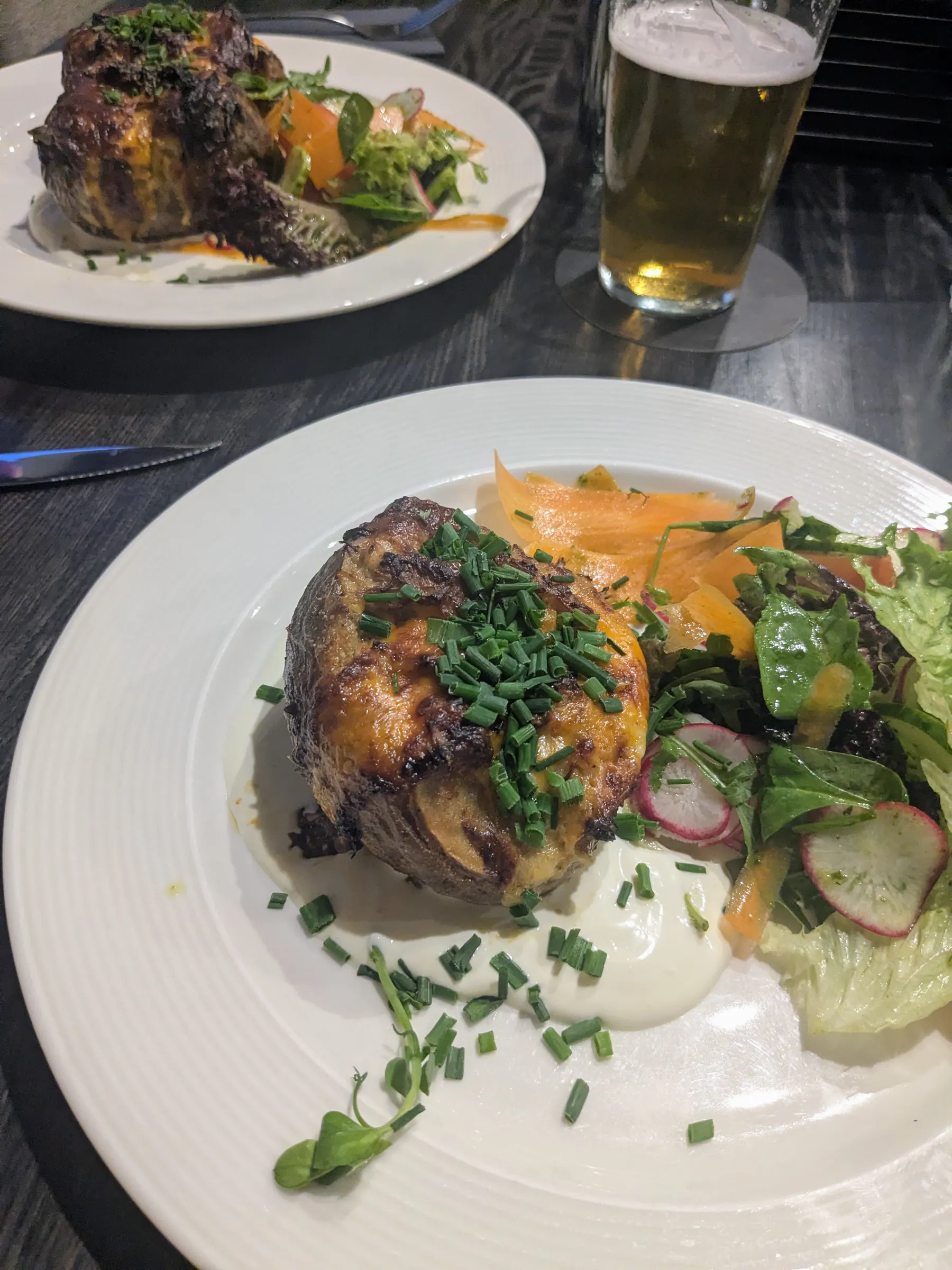
It was already evening, so we went looking for food and found Hot Potato just around the corner, which had very good reviews. They do big stuffed potatoes with all kinds of fillings, and you can order half or full. I took the half and immediately wanted more. A full portion is a generous plate for around €15. Recommended.
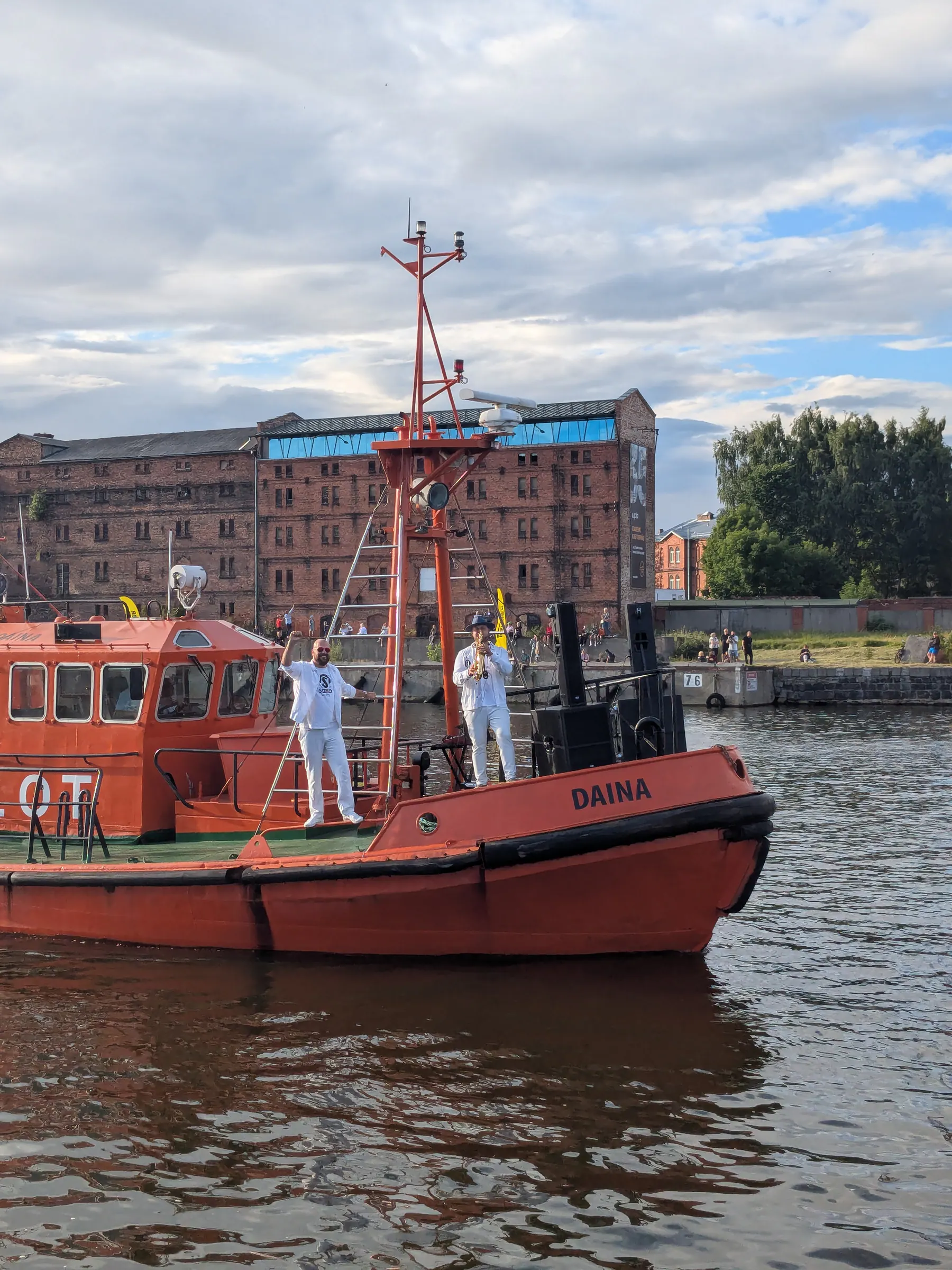
We were lucky with the timing: the city’s maritime festival was starting that weekend, and the opening was happening in the canal with boats. A good moment to walk into by accident.
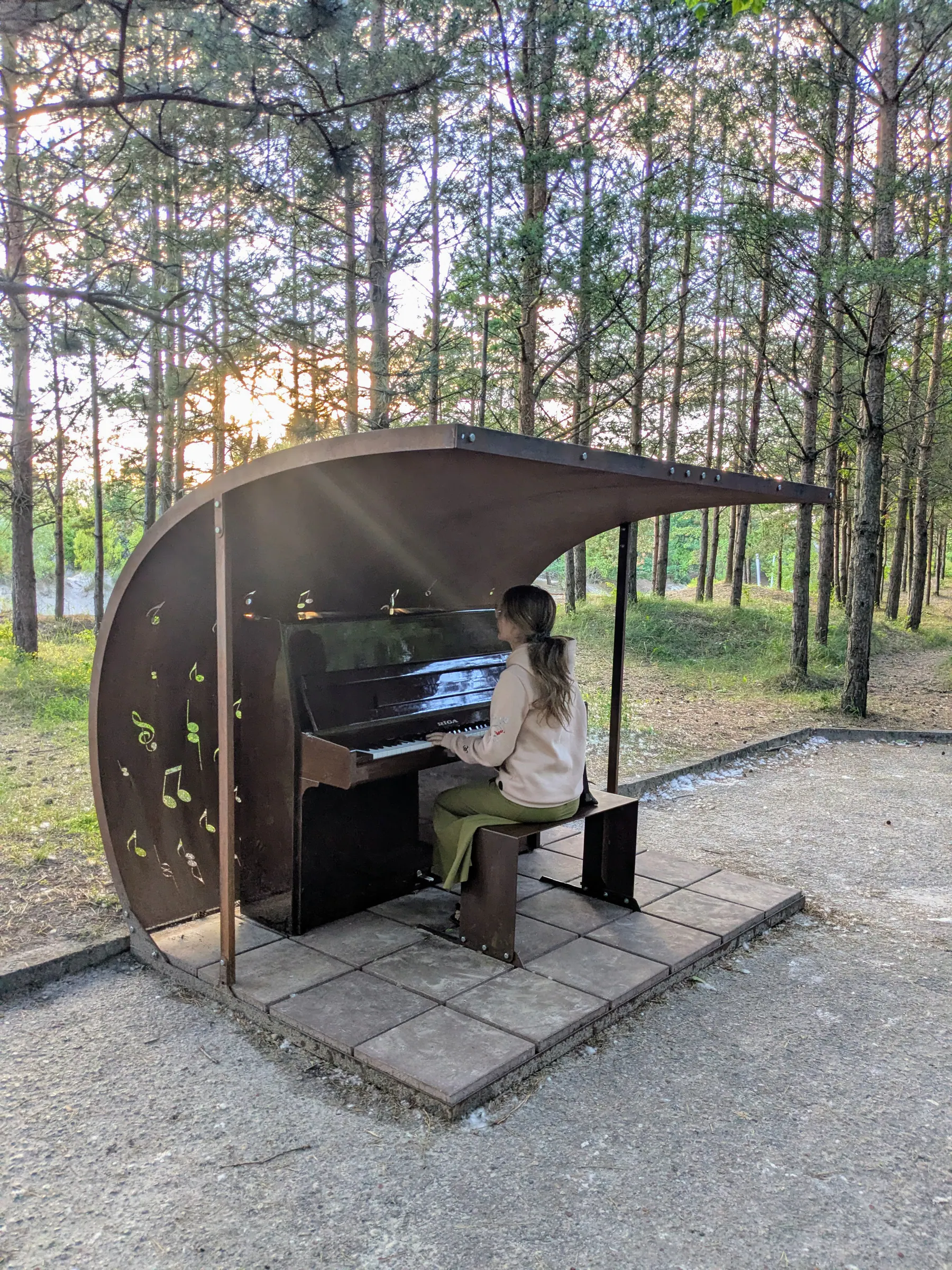
Then a stroll through the central streets and out to the beach for sunset. Just before you get onto the sand in Liepāja Seaside Park (Jūrmalas parks), there’s a piano standing there, and you can actually play it. It doesn’t have a point on the map, but it’s close to café Tafelē, before the beach starts. It’s a small thing, and it tells you something about how Liepāja is presenting itself now - the whole city is full of these considered, welcoming details.
The beach is wide, with fine white sand, and there are objects placed along it that are clearly there to be photographed. It’s all on the central beach; you can find it by searching for City Name on the Beach on the map. When we went there were sand sculptures too. And a real advantage of this coast: because you’re facing west, you get the sun setting into the sea.
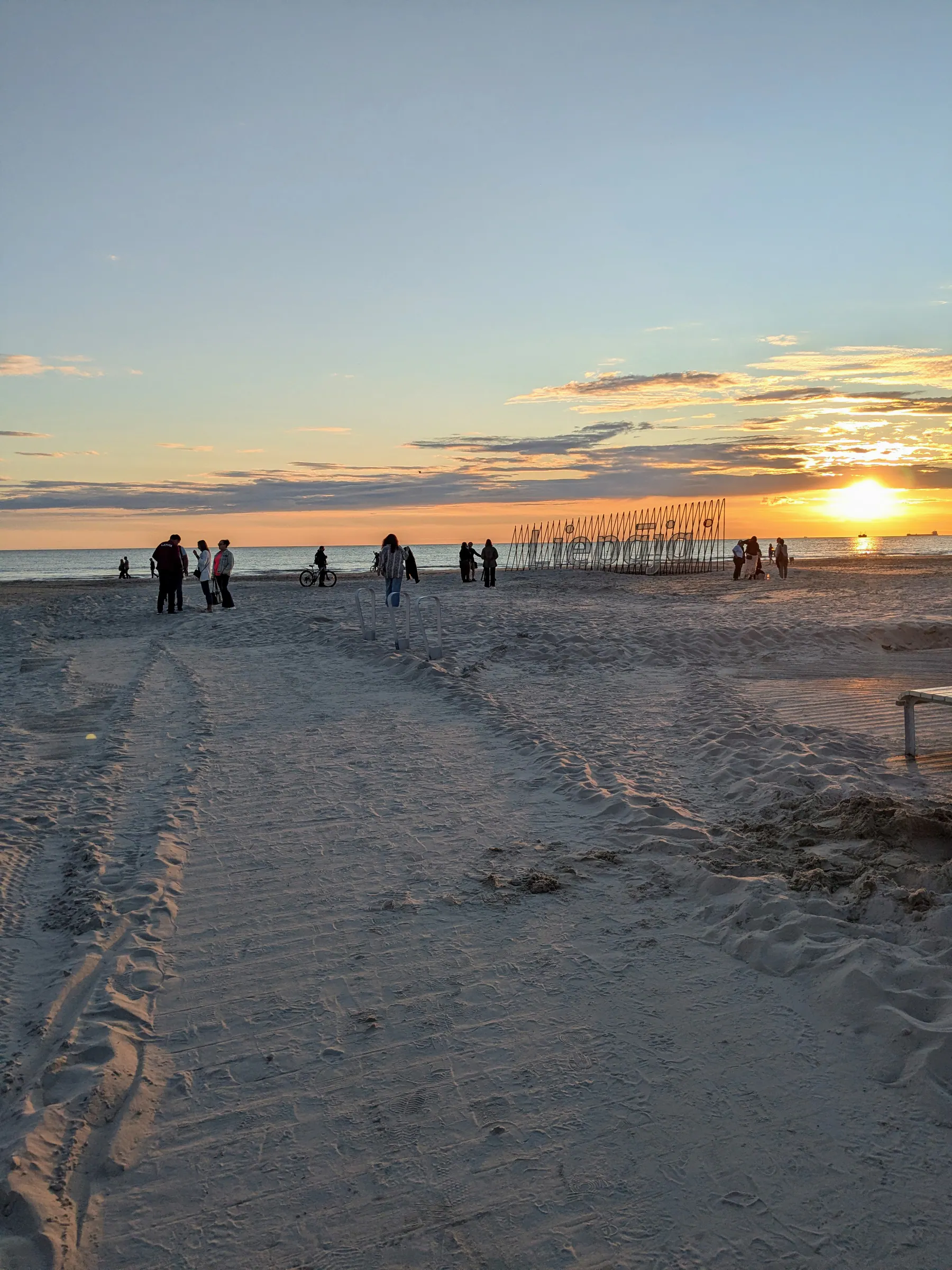
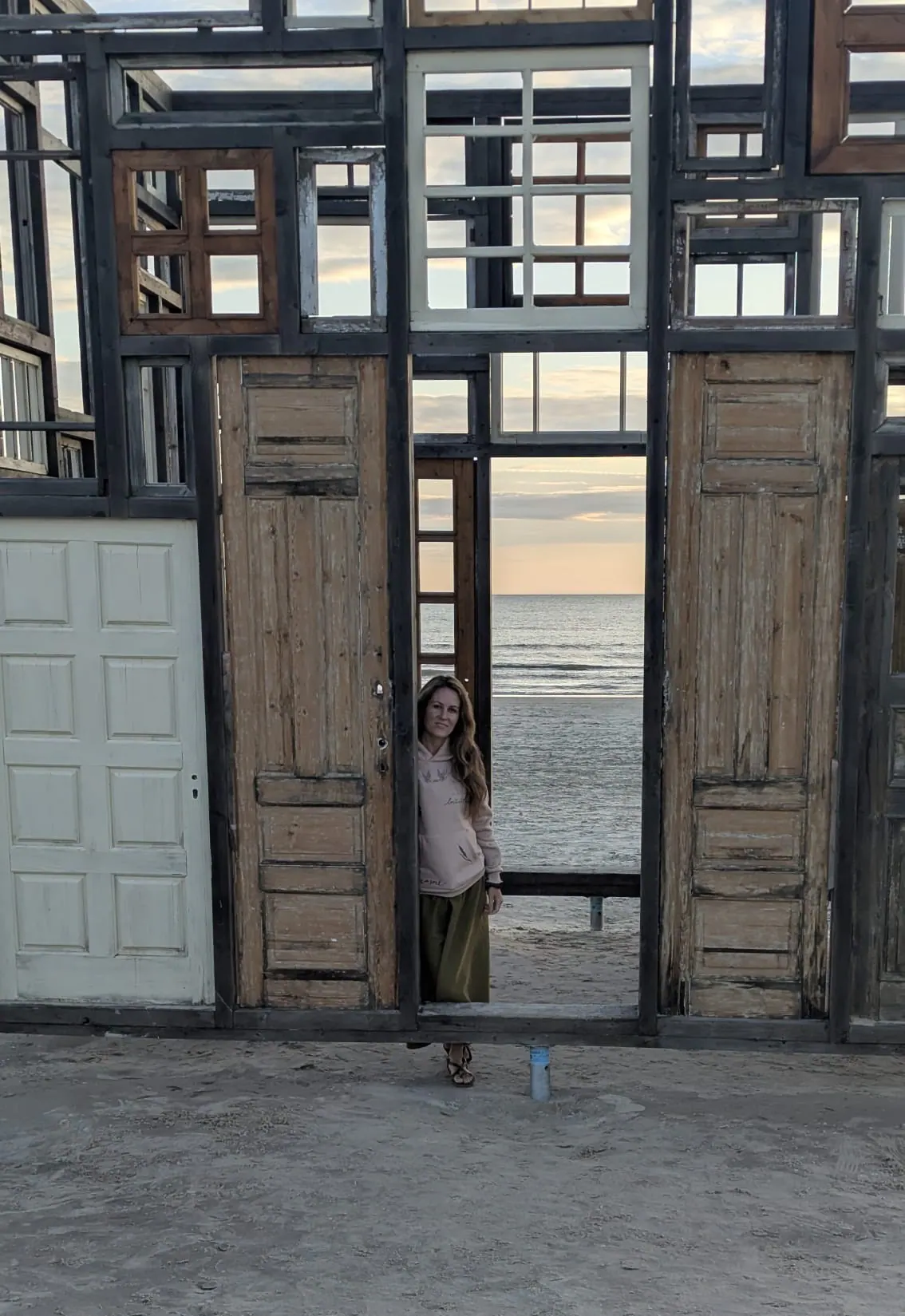
It’s also a good example of the city looking after its amenities. There are changing rooms, and a few beach bars, and if you keep walking to the far end you can carry on out onto the mole. Liepāja’s beach is honestly one of my favourite beaches in Latvia - good atmosphere, and very well kept. It also just keeps going: the sand runs south from the city all the way to the Lithuanian border.
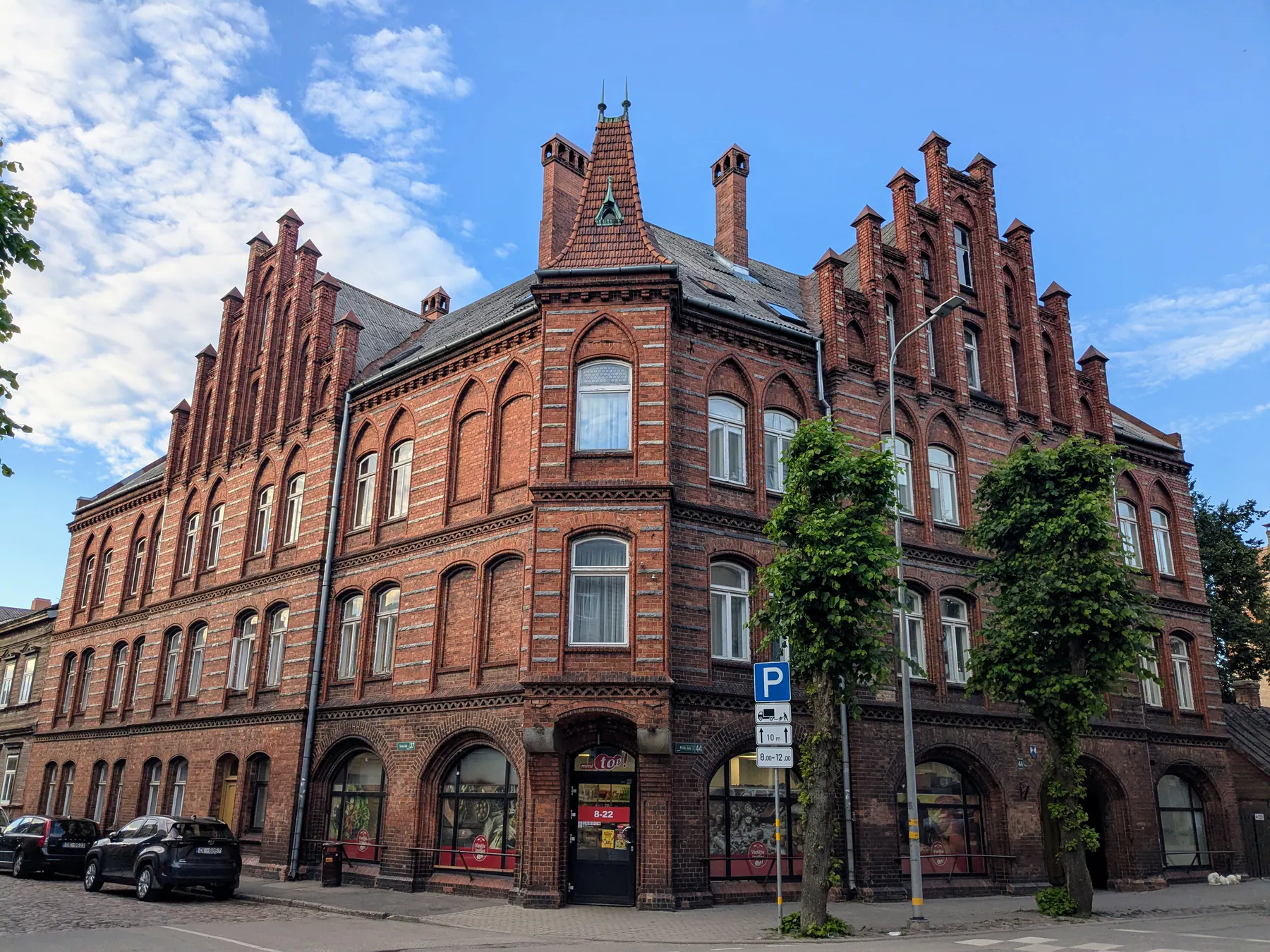
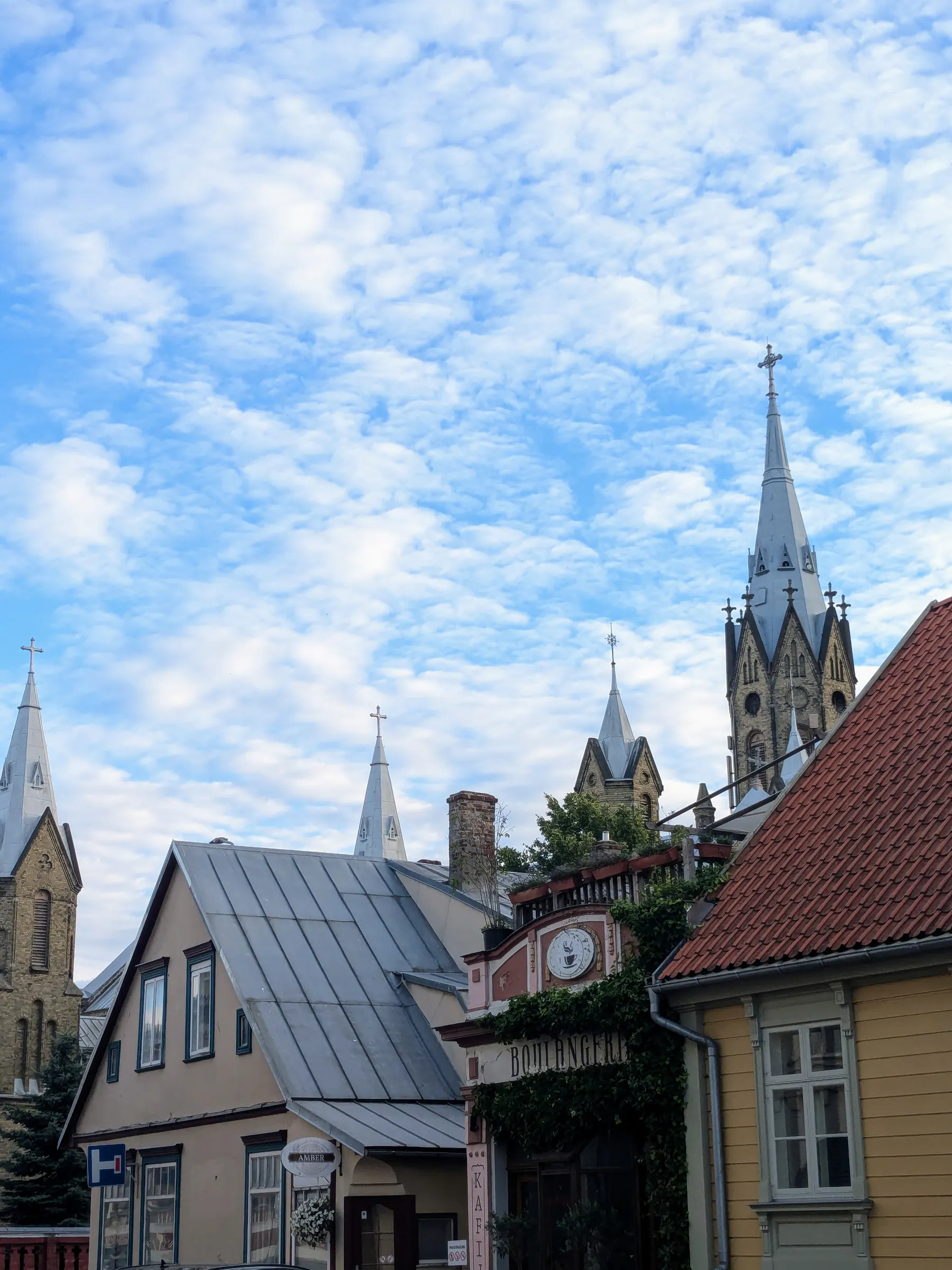
We walked there and back along Peldu iela, which is the easiest way between the city centre and the sea and a lovely walk in itself. The street is lined with the wooden houses and red brick buildings Liepāja is known for, and from certain corners you get a view of the churches.
In the evening we went to Pegaza pagalms for a drink and to watch a football semi-final - more on that place below.
Street art, art nouveau and musical notes
Our second day was when Liepāja proved it really is the city where the wind is born. It came in off the sea and stayed all day, with rain behind it. We kept going anyway.
Liepāja has a lot of street art, and once you notice it you see it everywhere, including down the side streets.
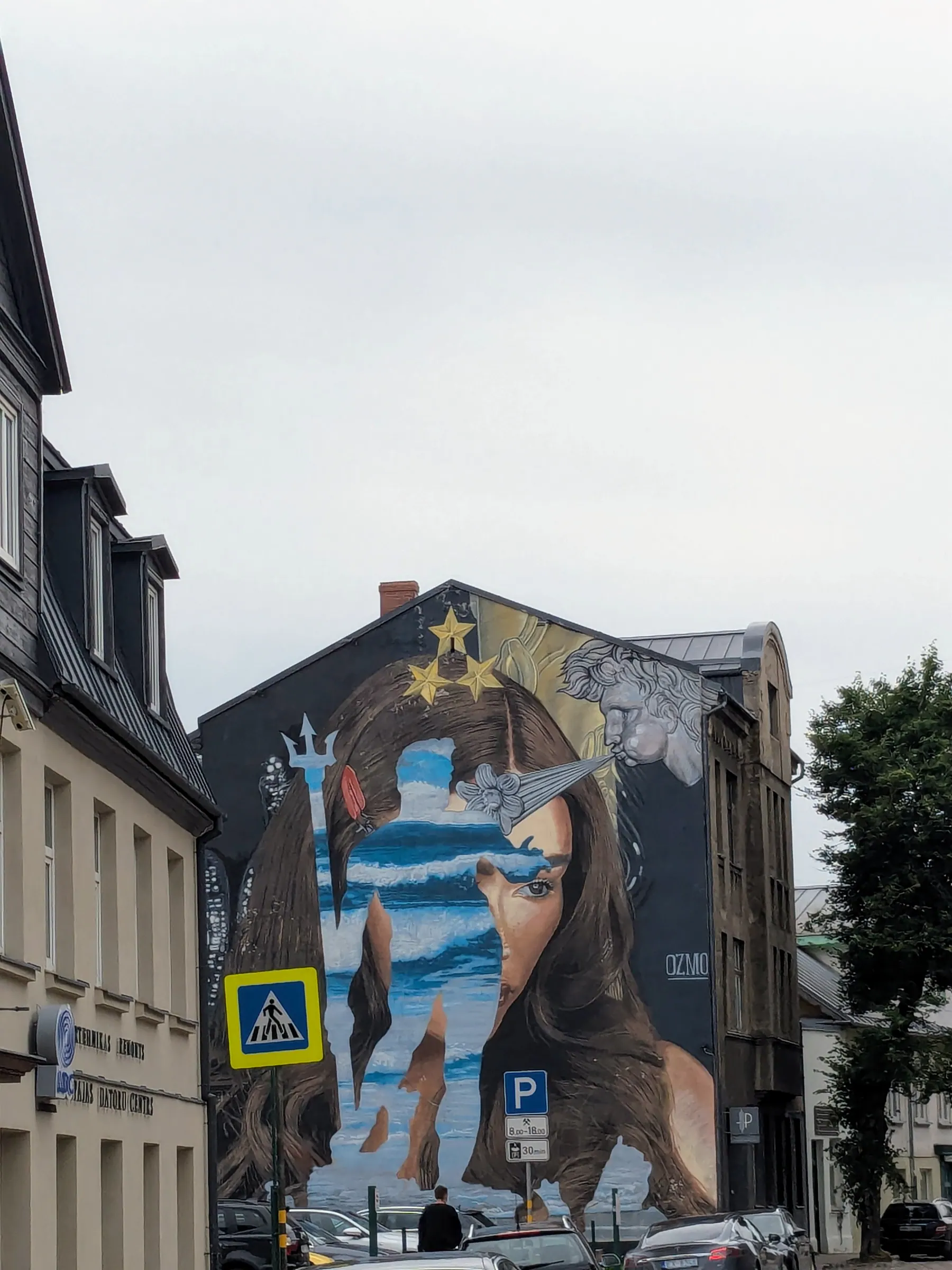
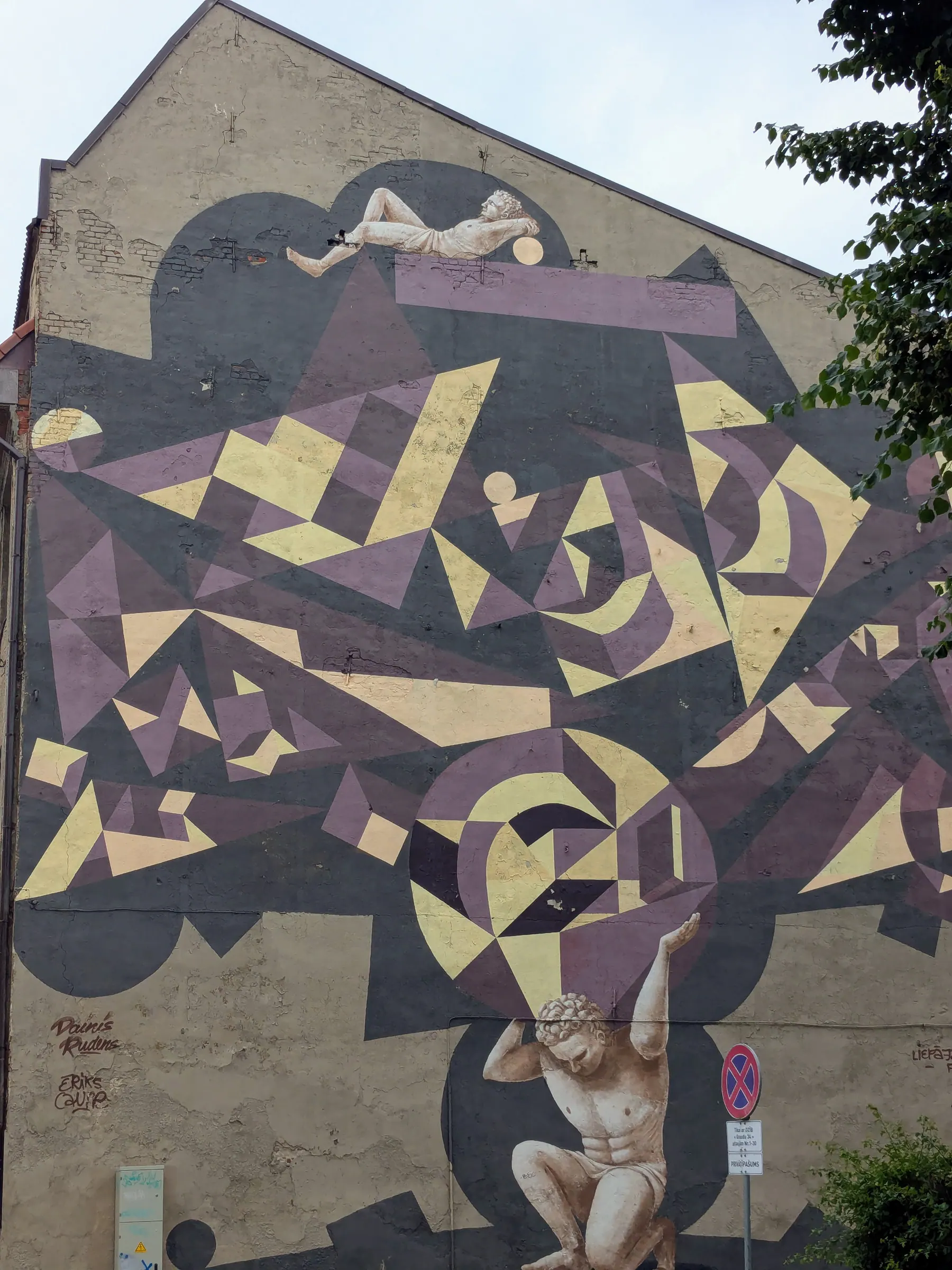
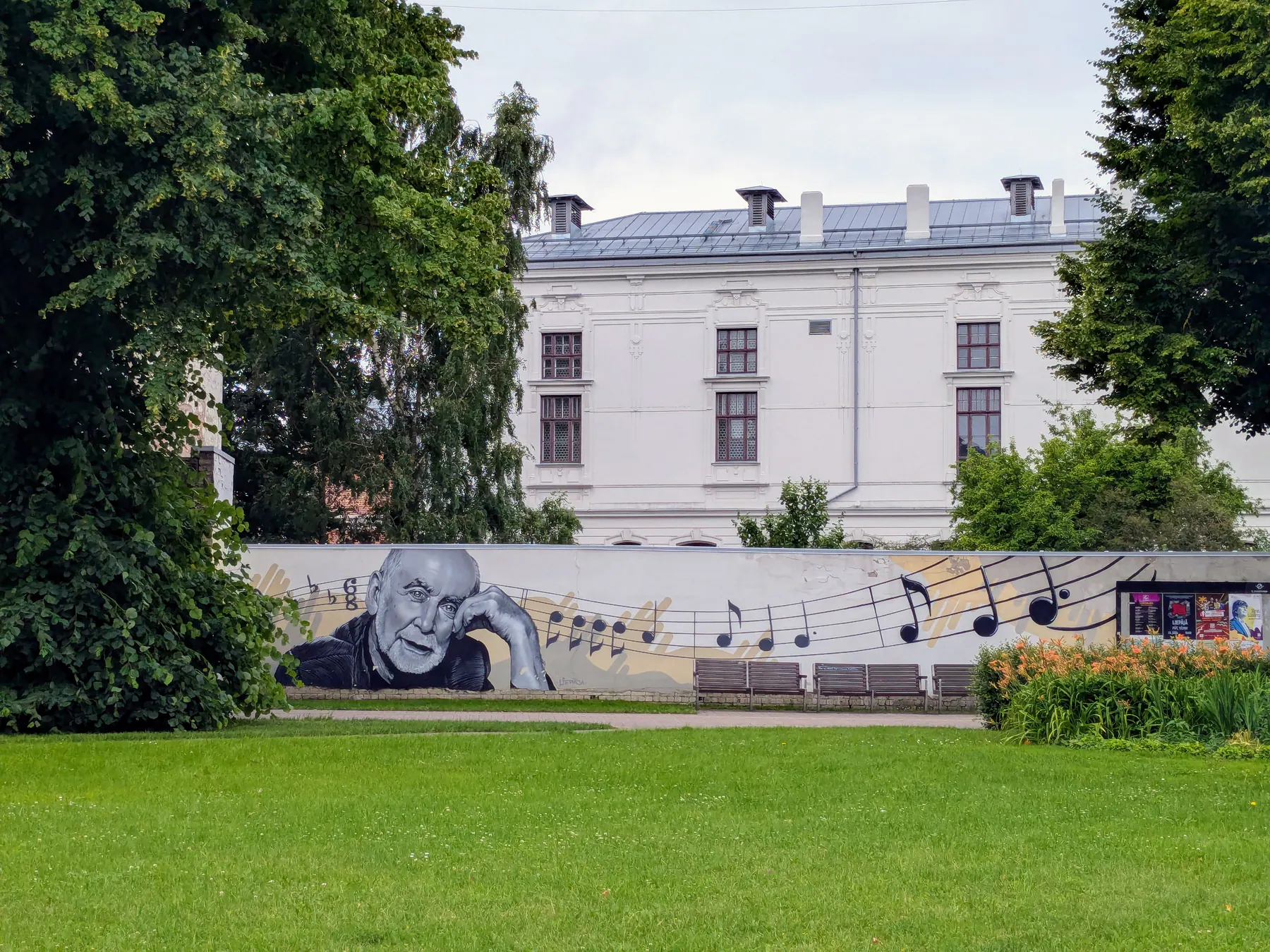
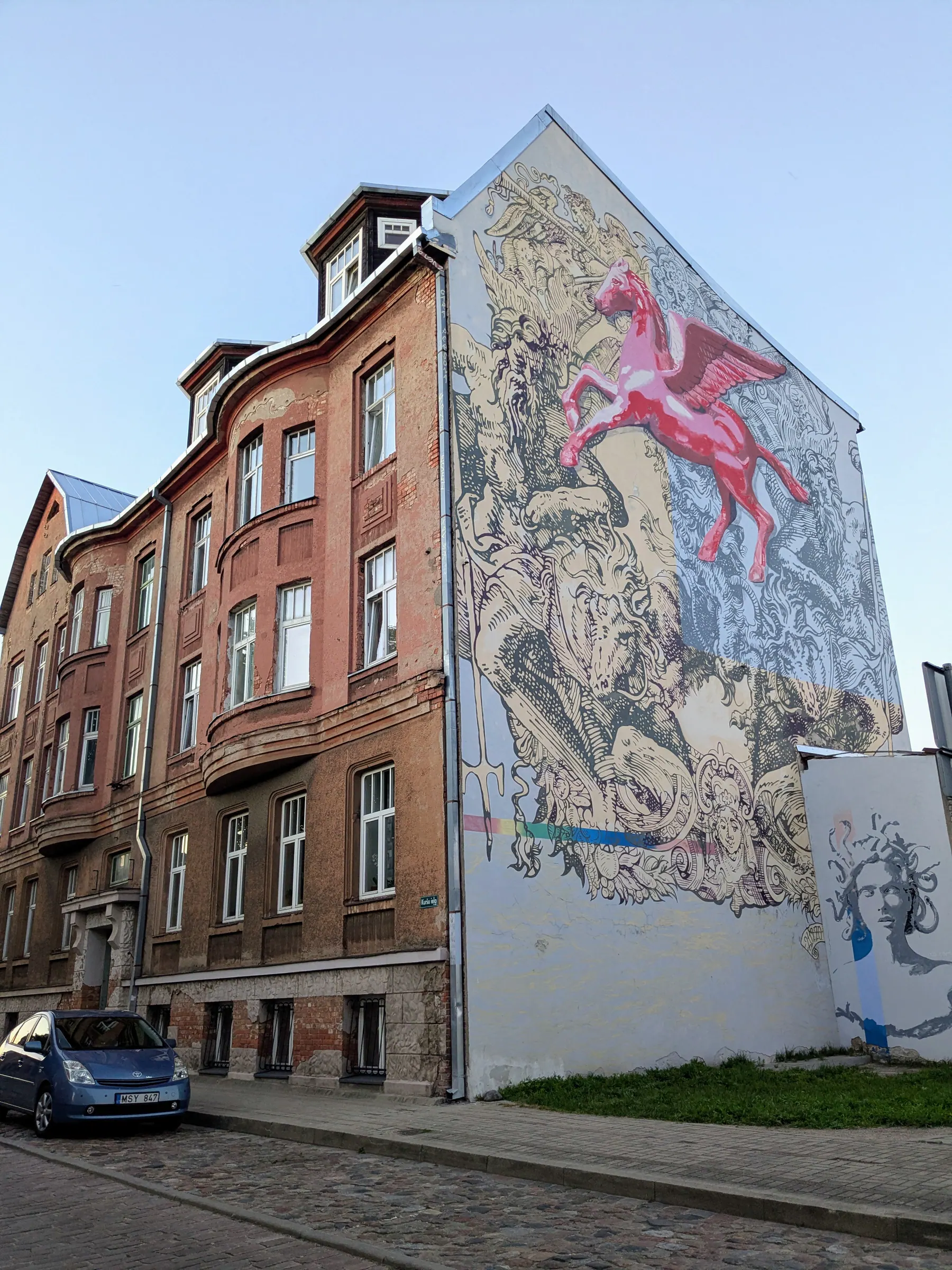
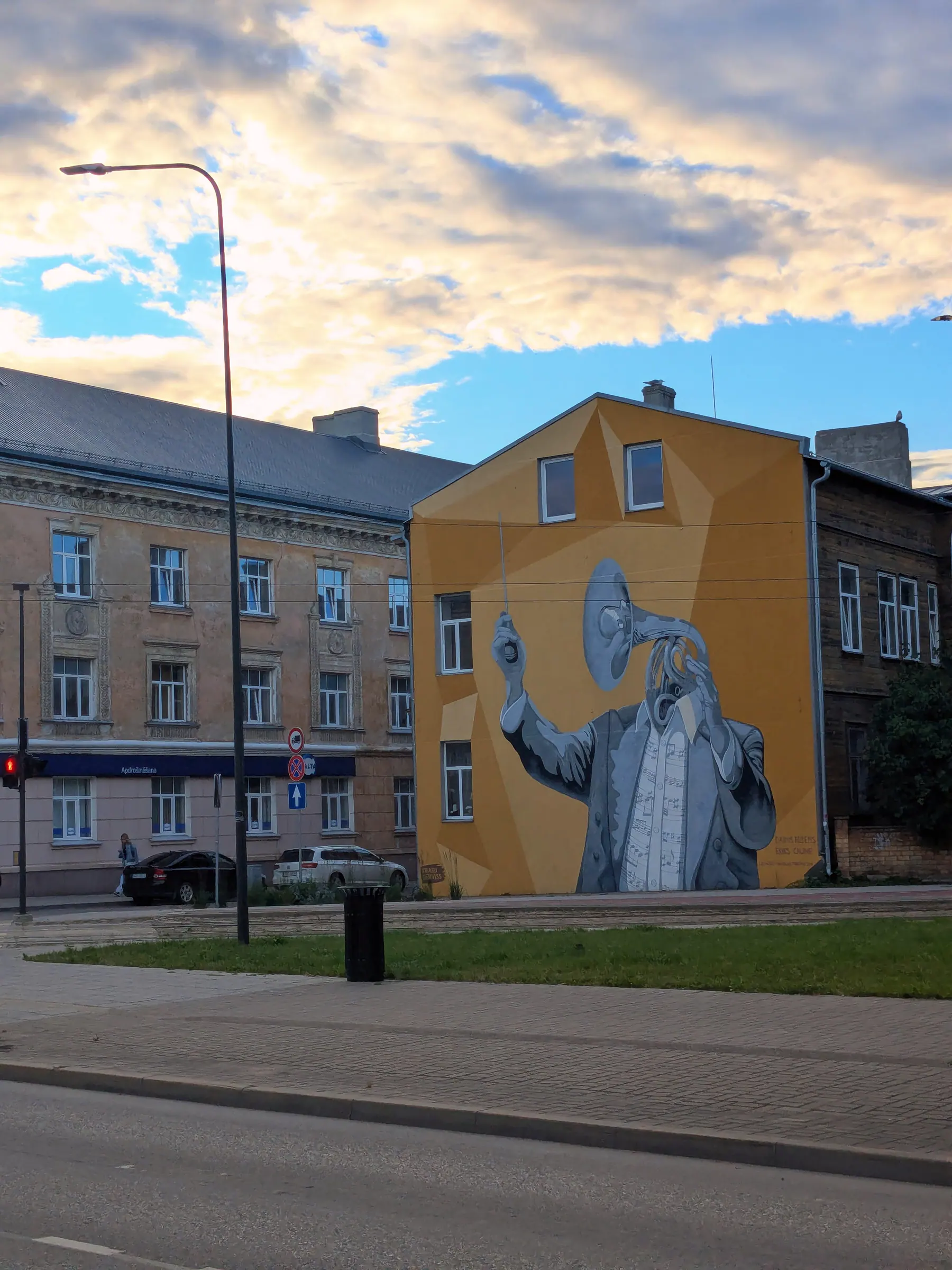
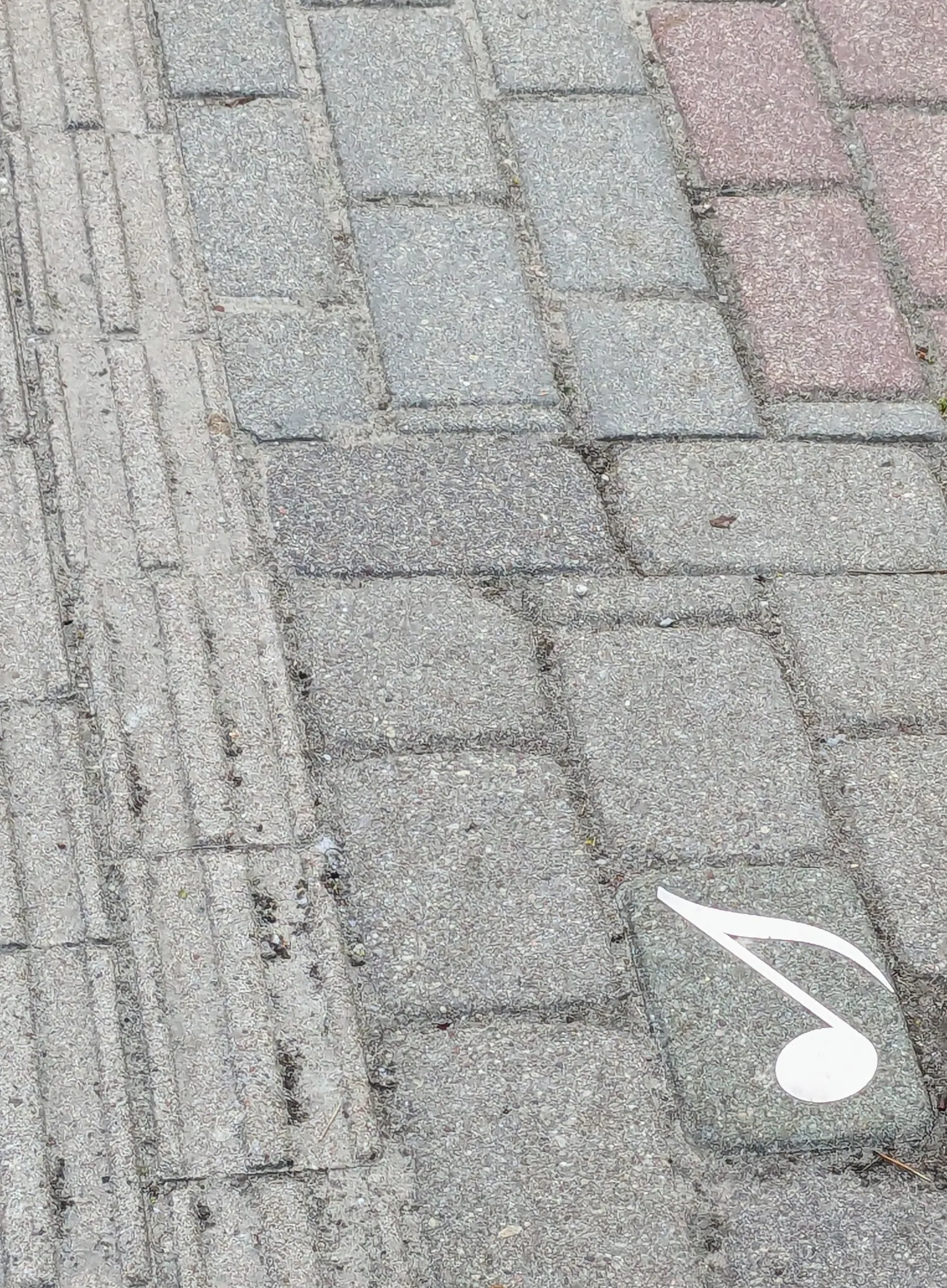
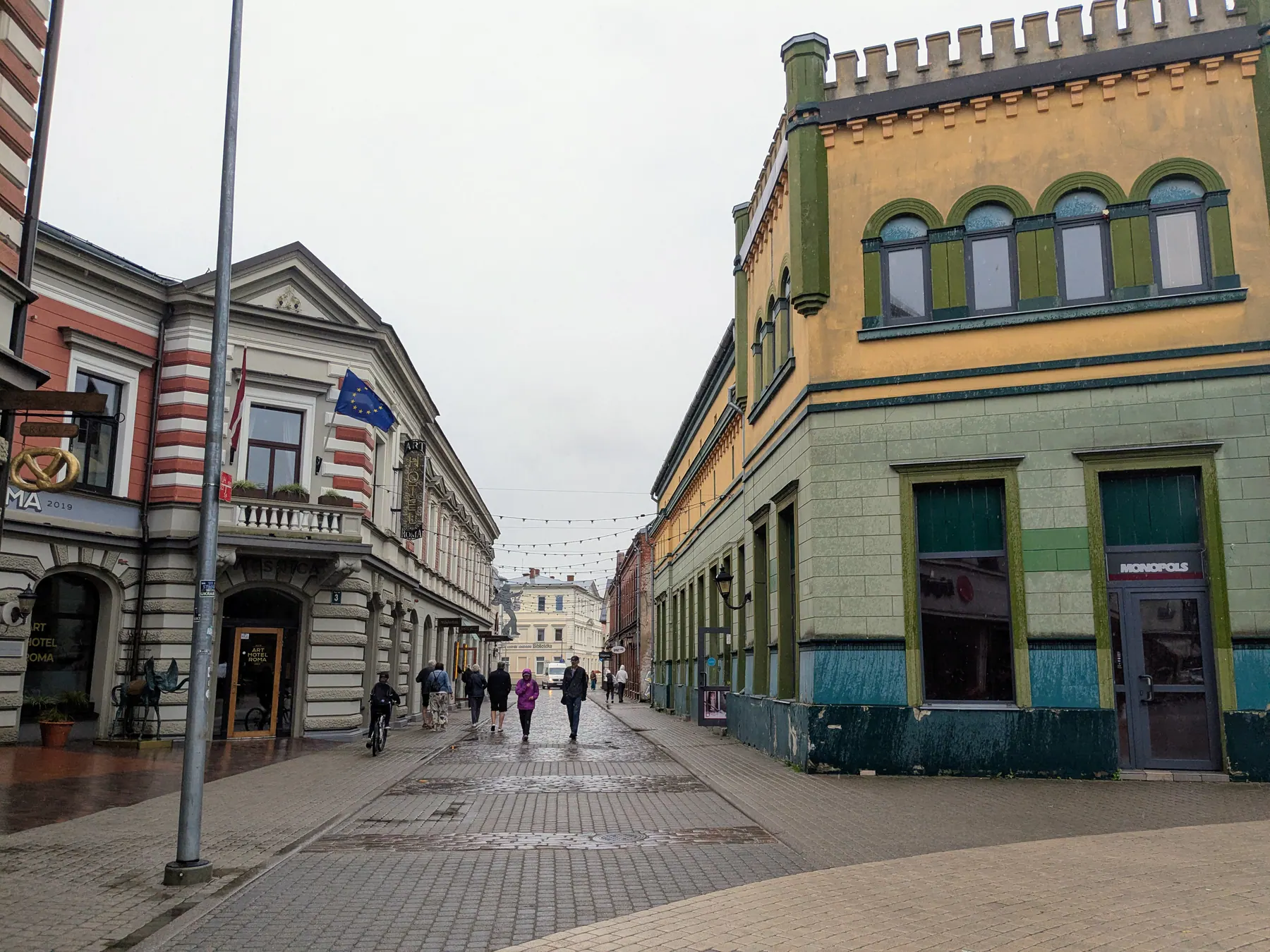
This day we picked up the main thing: the walking route called “Liepāja - follow the notes”. You can see the map and follow the notes here: on the official Liepāja Travel website. Musical note signs are set into the ground all over the city, which reinforces the musical identity. The seven notes - Do, Re, Mi, Fa, Sol, La, Si - mark seven stops around the centre. The official starting point is Rose Square (Rožu laukums), the heart of the city, shaped as the treble clef, the city’s key. We did it the other way round and finished there.
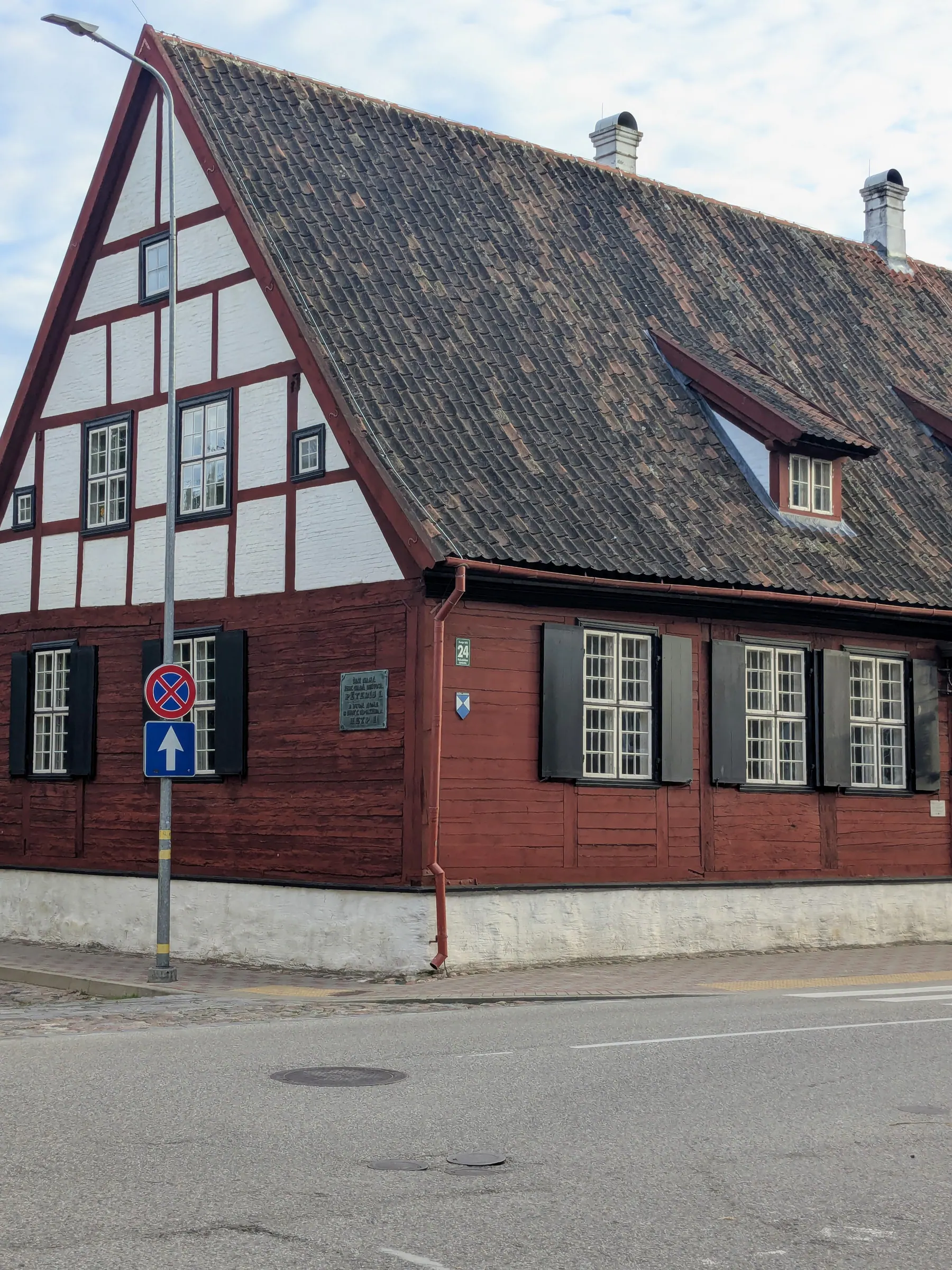
Do - Madame Hoyer’s guest house (Hoijeres kundzes viesu nams). One of the oldest houses in Liepāja, now a museum of 17th to 19th century interiors, and worth going in for an idea of how a house in this region used to look. Both Peter the Great and Charles XII of Sweden stayed here. Also from outside the building is very beautiful to admire.
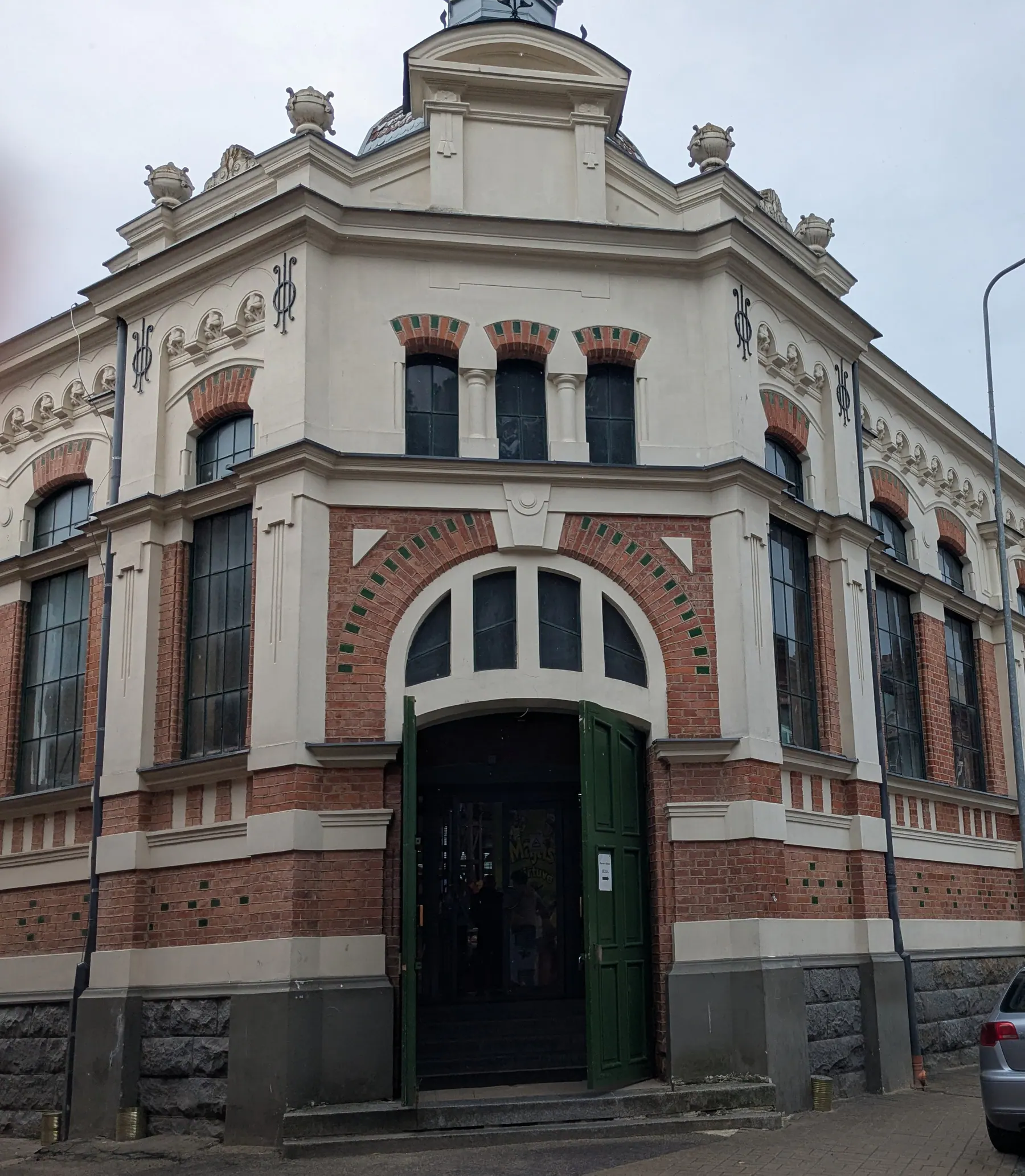
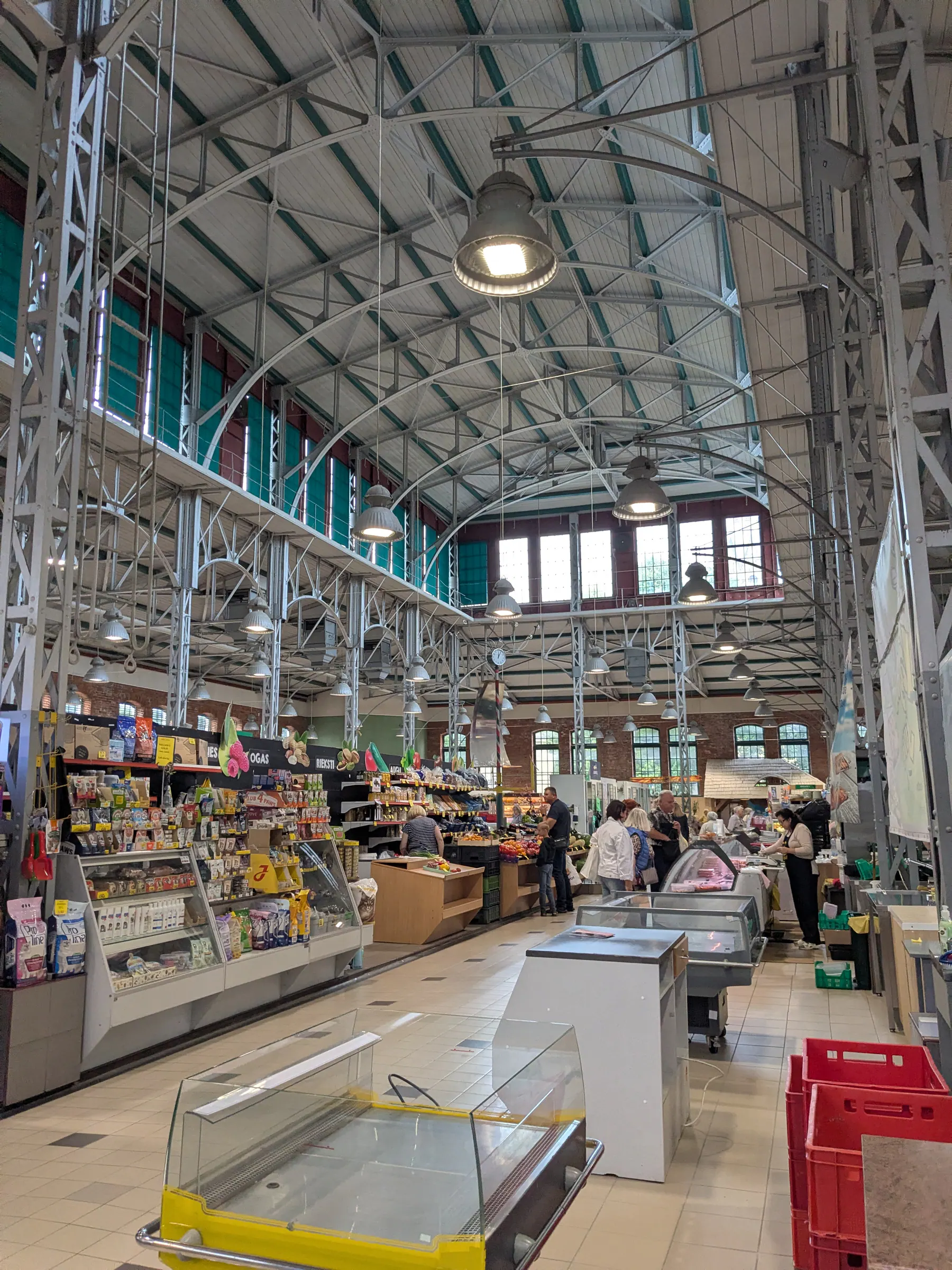
Re - Peter’s Market (Pētertirgus). A historic building from outside, completely renovated and fresh inside. It’s compact rather than exhausting - small and cosy, easy to have a look around - and a good place to buy local produce. Go in the first half of the day.
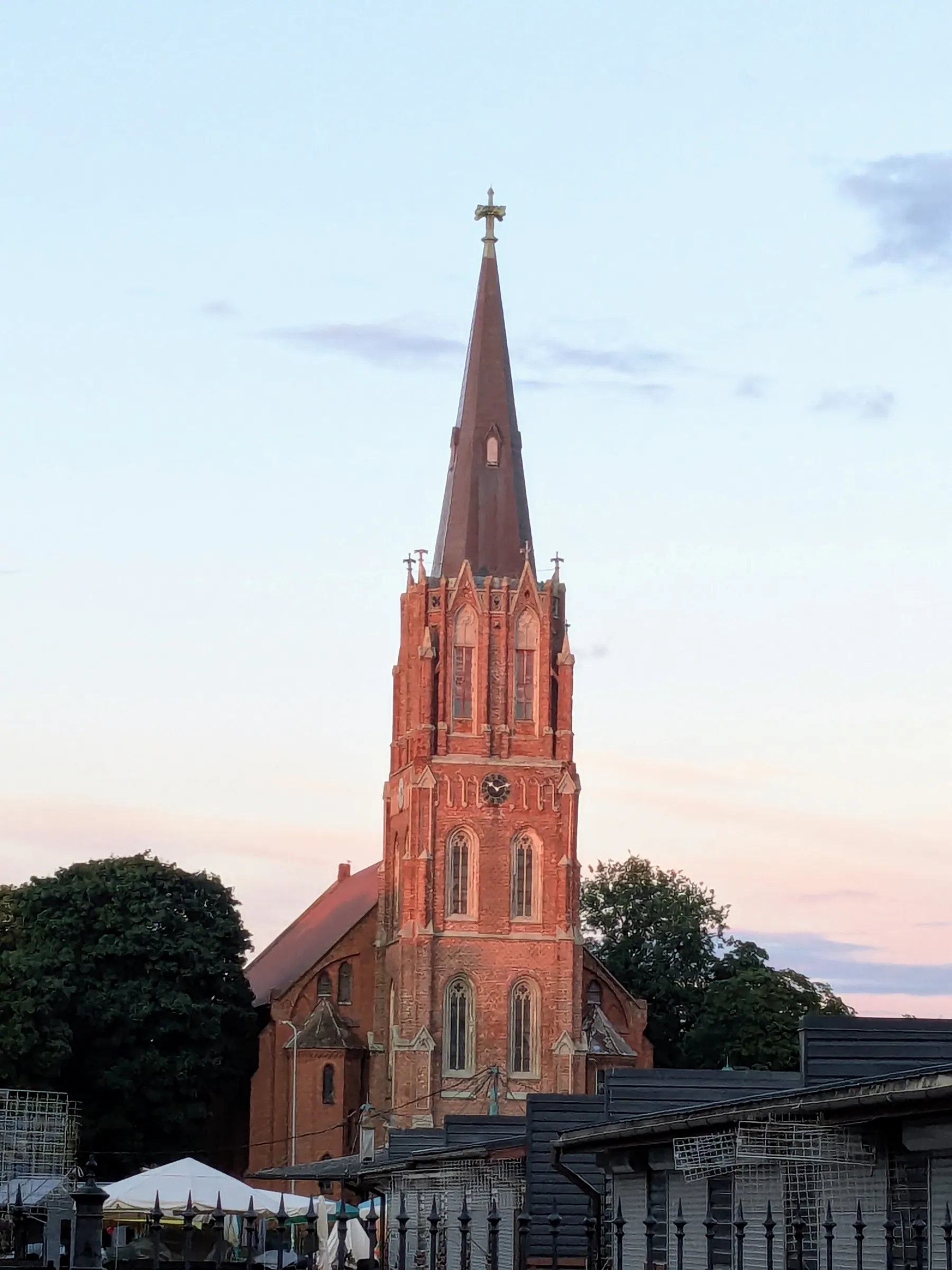
Next to it stands St Anne’s Church (Sv. Annas luterāņu baznīca), the oldest church in Liepāja - first mentioned in 1508, originally wooden, later rebuilt in brick - and its tower is the tallest thing in the centre at 60 metres. This one I really liked: the red brick, and especially walking past it in the evening and at night, when the light emphasizes colours in it.
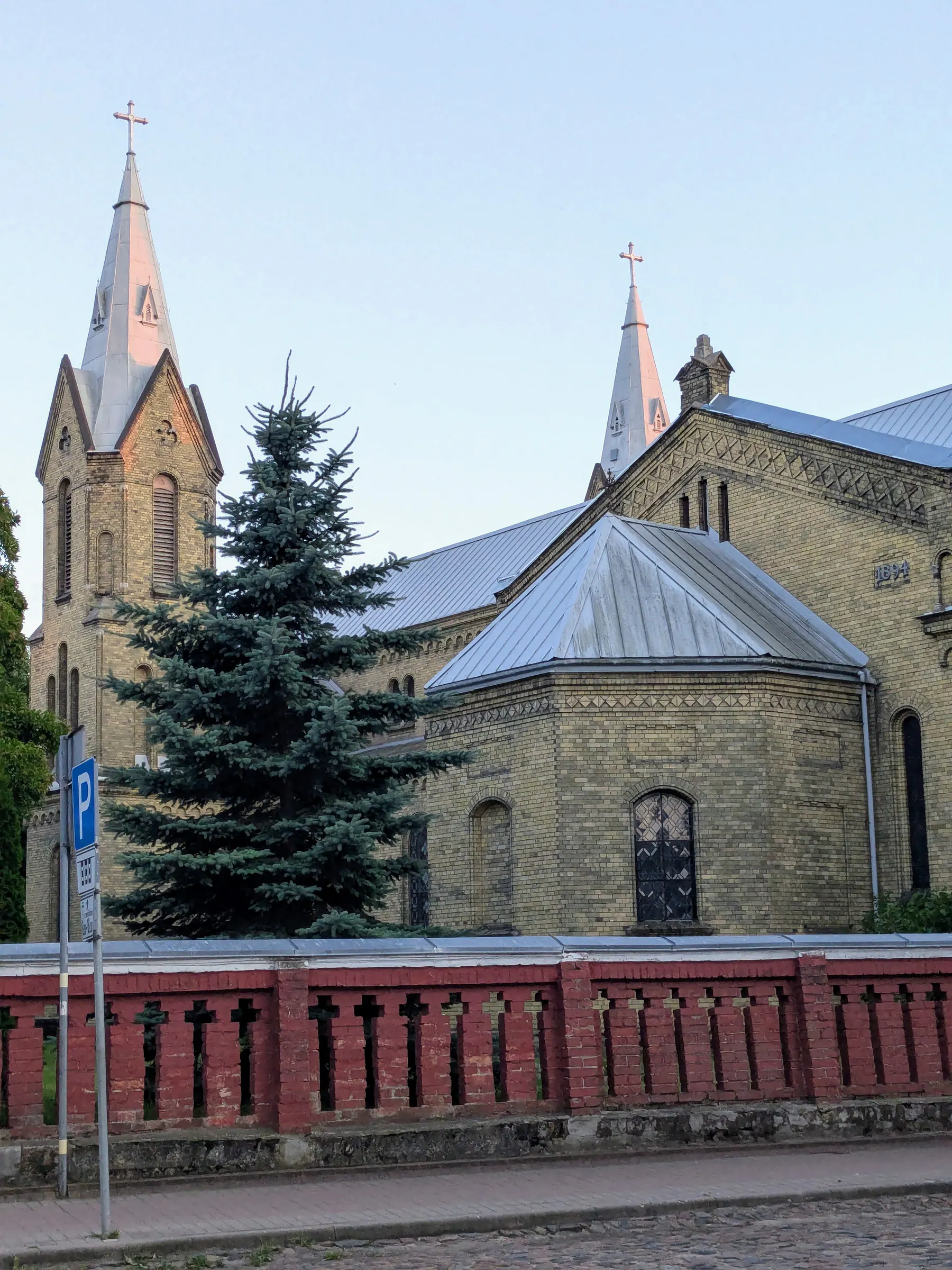
Mi - St Joseph’s Cathedral (Sv. Jāzepa katoļu katedrāle). A completely different style, and the largest Catholic church in this part of Latvia. There are several things clustered around this note: Jānis Čakste Square (Jāņa Čakstes laukums), a nice little square with a fountain, named after Latvia’s first president. This is also where you reach Peldu iela.
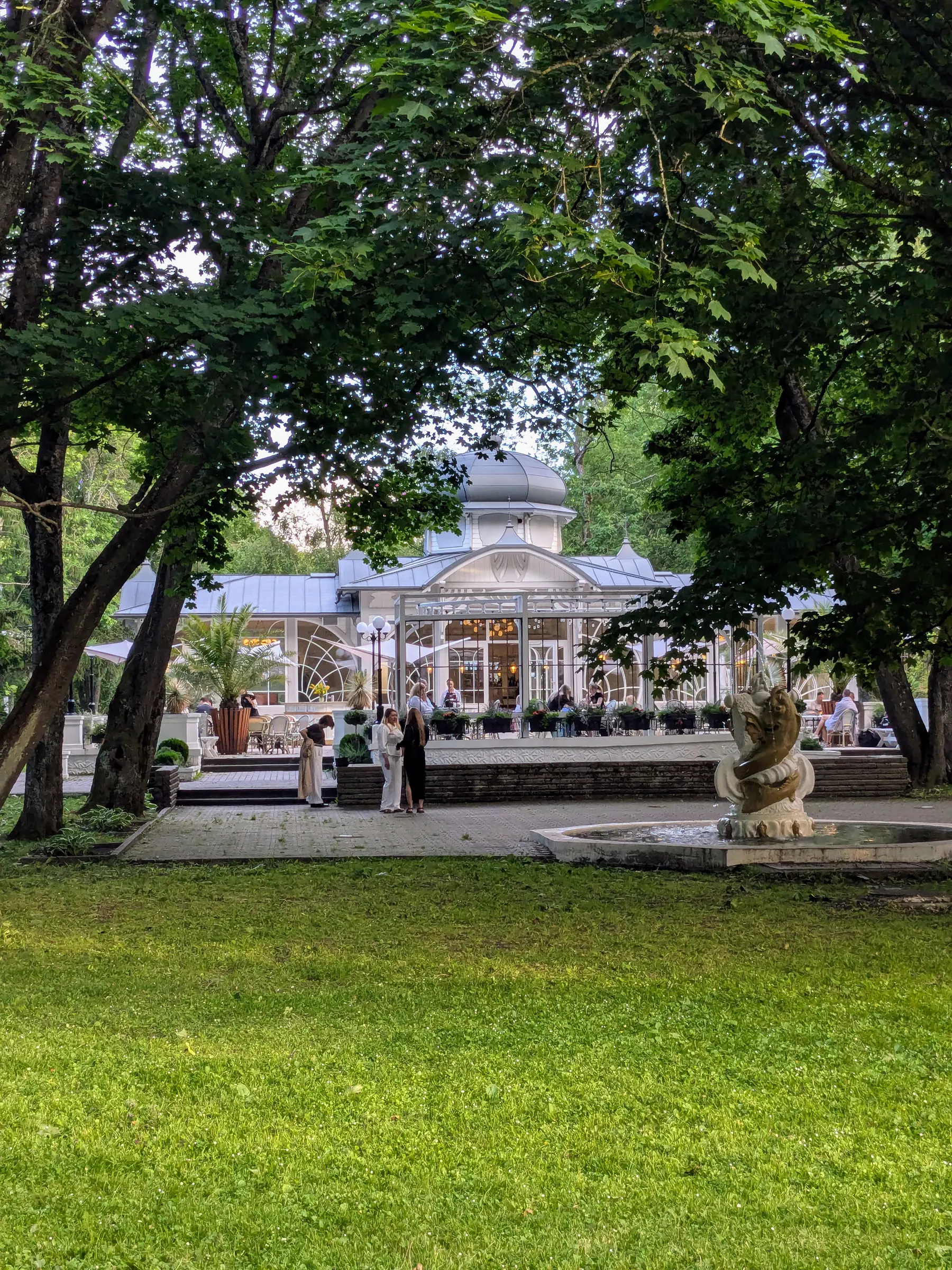
From there we walked into the Seaside Park (Jūrmalas parks), three kilometres of planted greenery along the coast and one of the largest parks in Latvia. It was laid out at the end of the 19th century for the resort, and also for a practical reason that fits the city: to stop the wind blowing sand into the streets. It’s green and full of objects to find. At the end of Peldu iela there are drums; in the park there’s a saxophone (although we couldn´t find exact saxophone figure but we realized it was the fountain itself),a violin by the swan pond, and a trumpet on Kūrmājas prospekts.
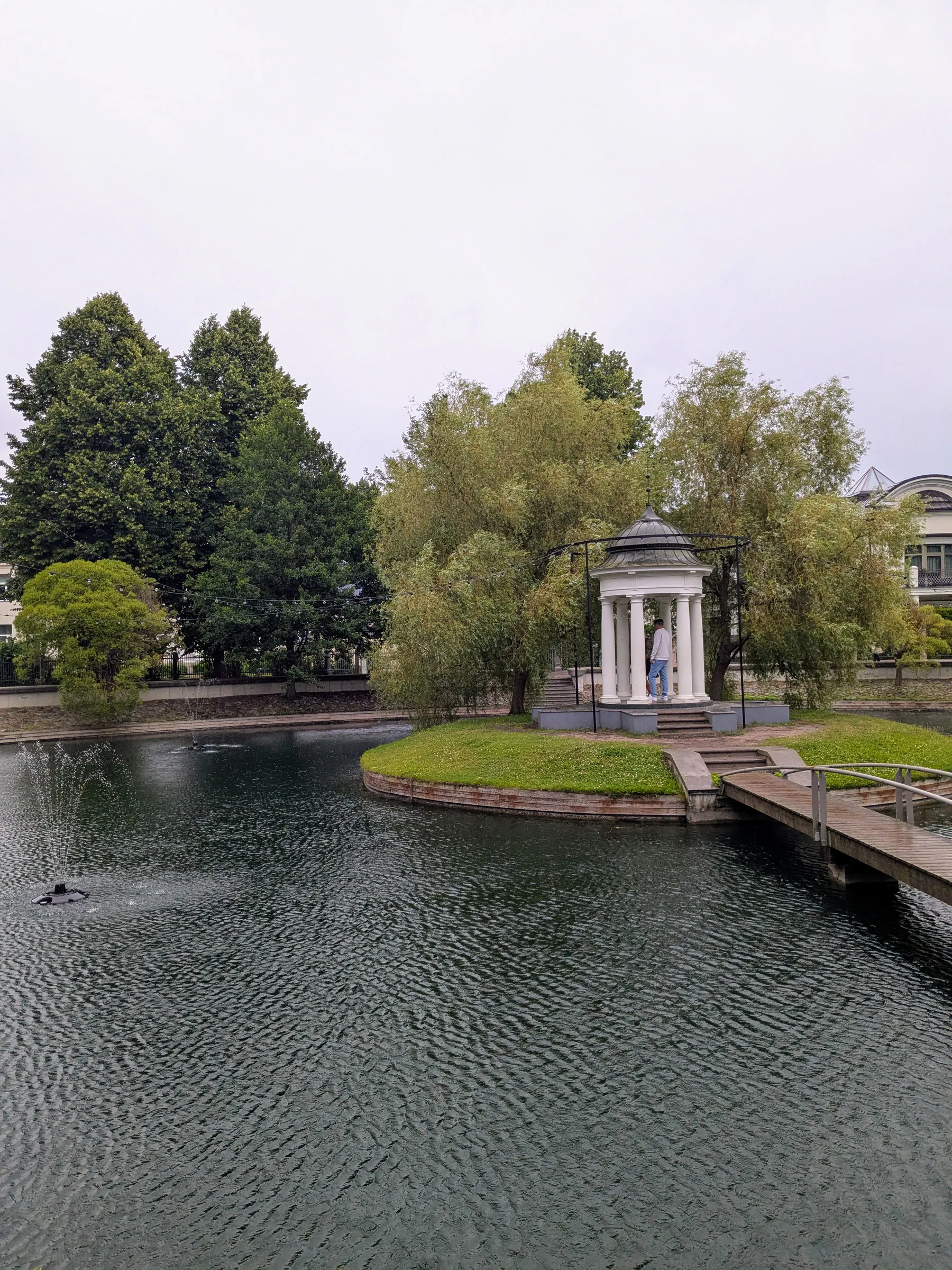
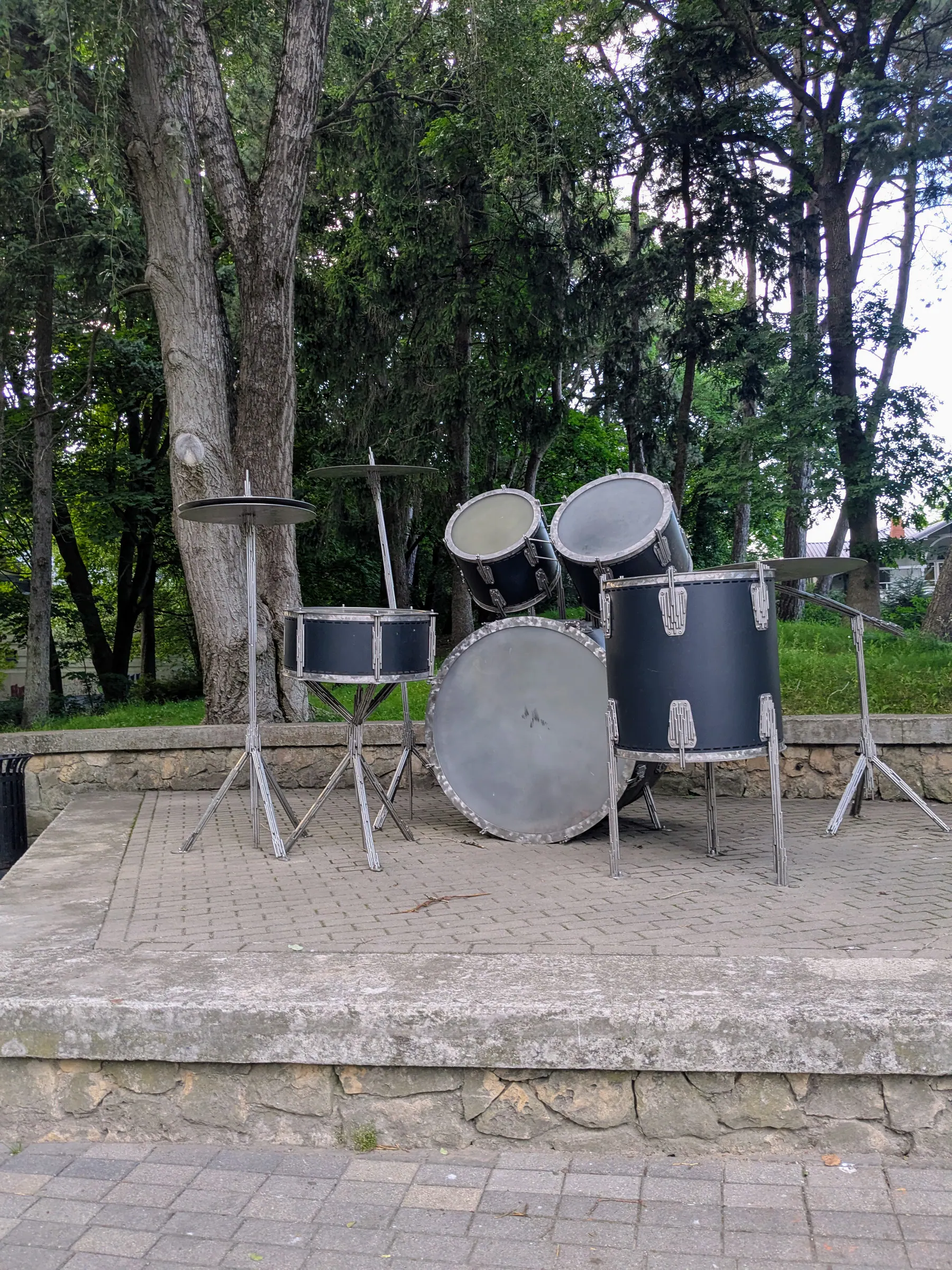
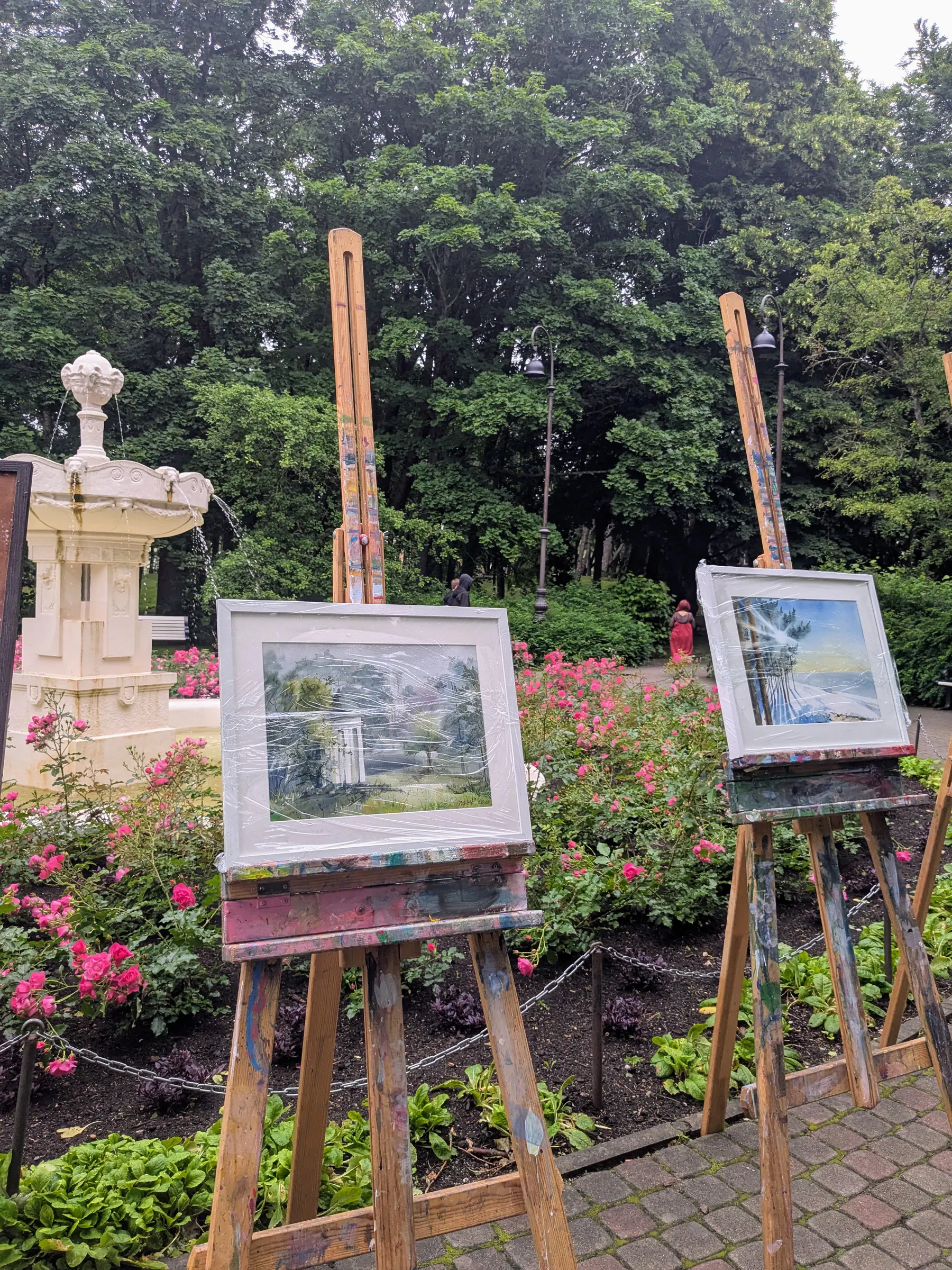
The park turned out to be a paradise for children - there are free play areas, and even a tree-obstacle course. But it works just as well the other way: it’s a calm, romantic place for a slow walk if that’s what you’re after.
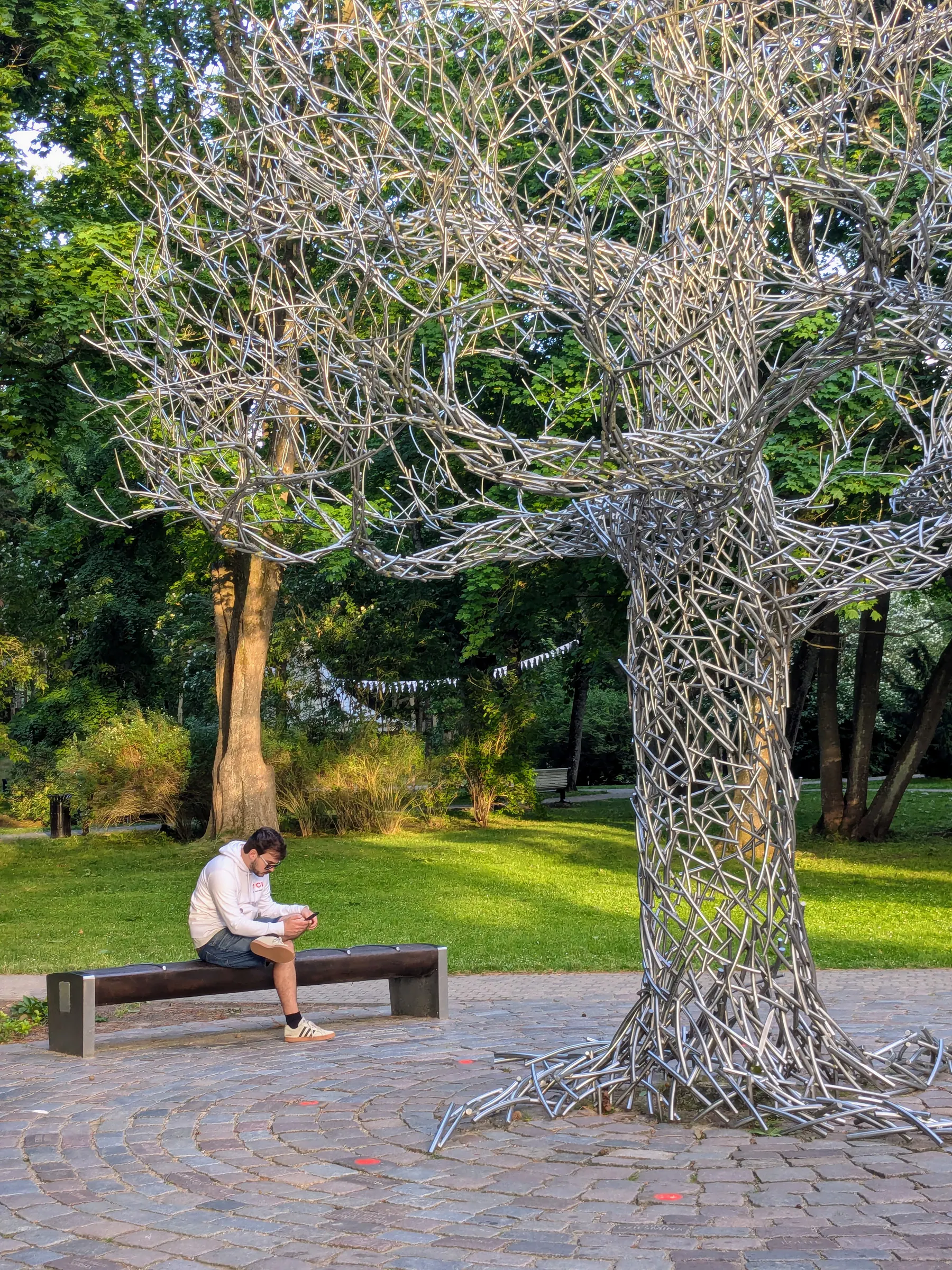
Also in the park is the Latvian Musicians’ Walk of Fame (Latvijas mūziķu Slavas aleja), a small Latvian version of Hollywood Boulevard. And next to it the Spoku koks, the Ghost Tree - a silver sculpture of a tree with benches beside it, where music starts playing when you sit down. It’s a tribute to Līvi, one of Latvia’s best-known rock bands, who came from here. We thought this was one of the nicest things in the park: the colour and the sound idea fit the city perfectly. This is also please for ‘’guitar’’ symbol which are benches
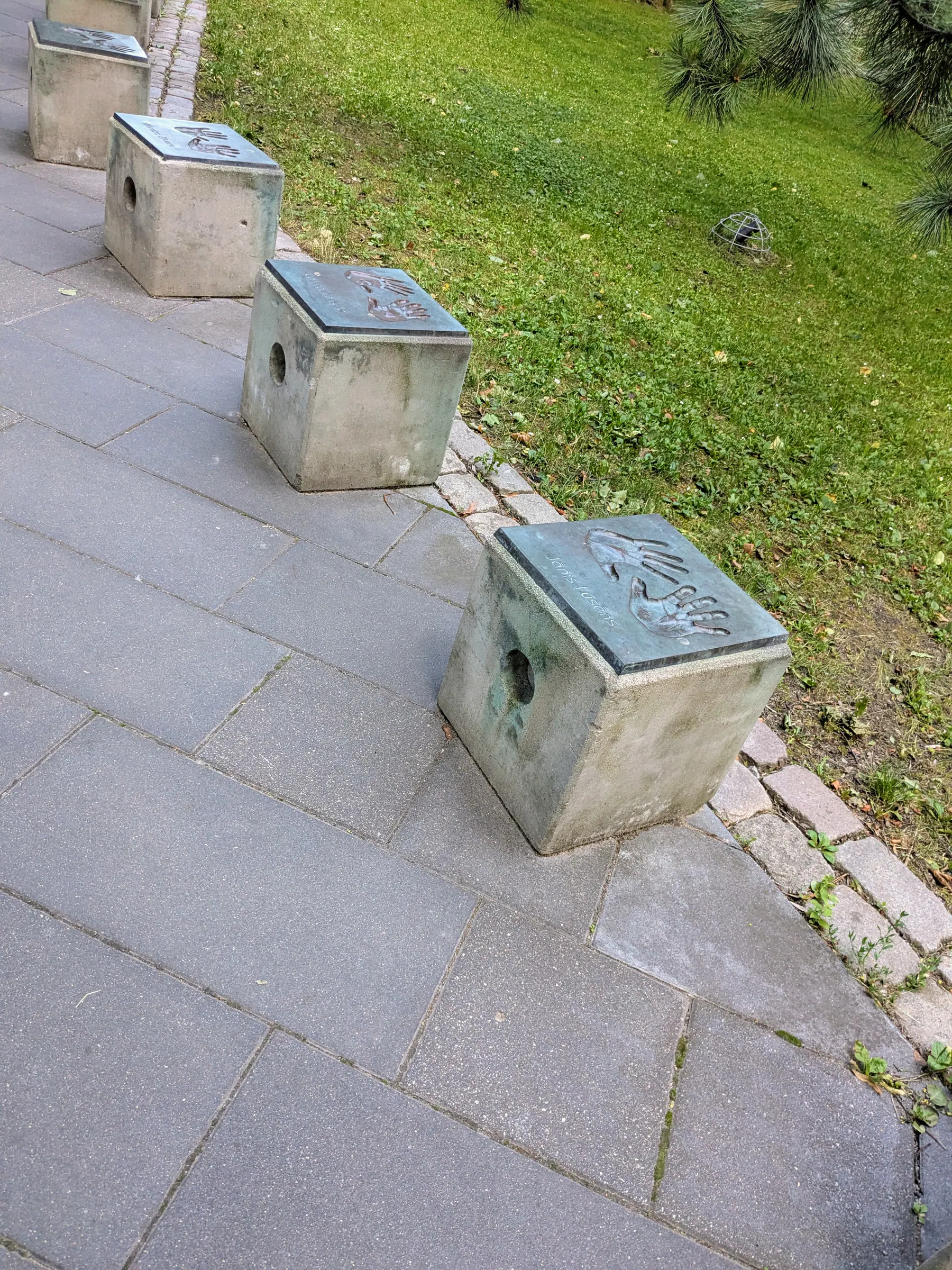
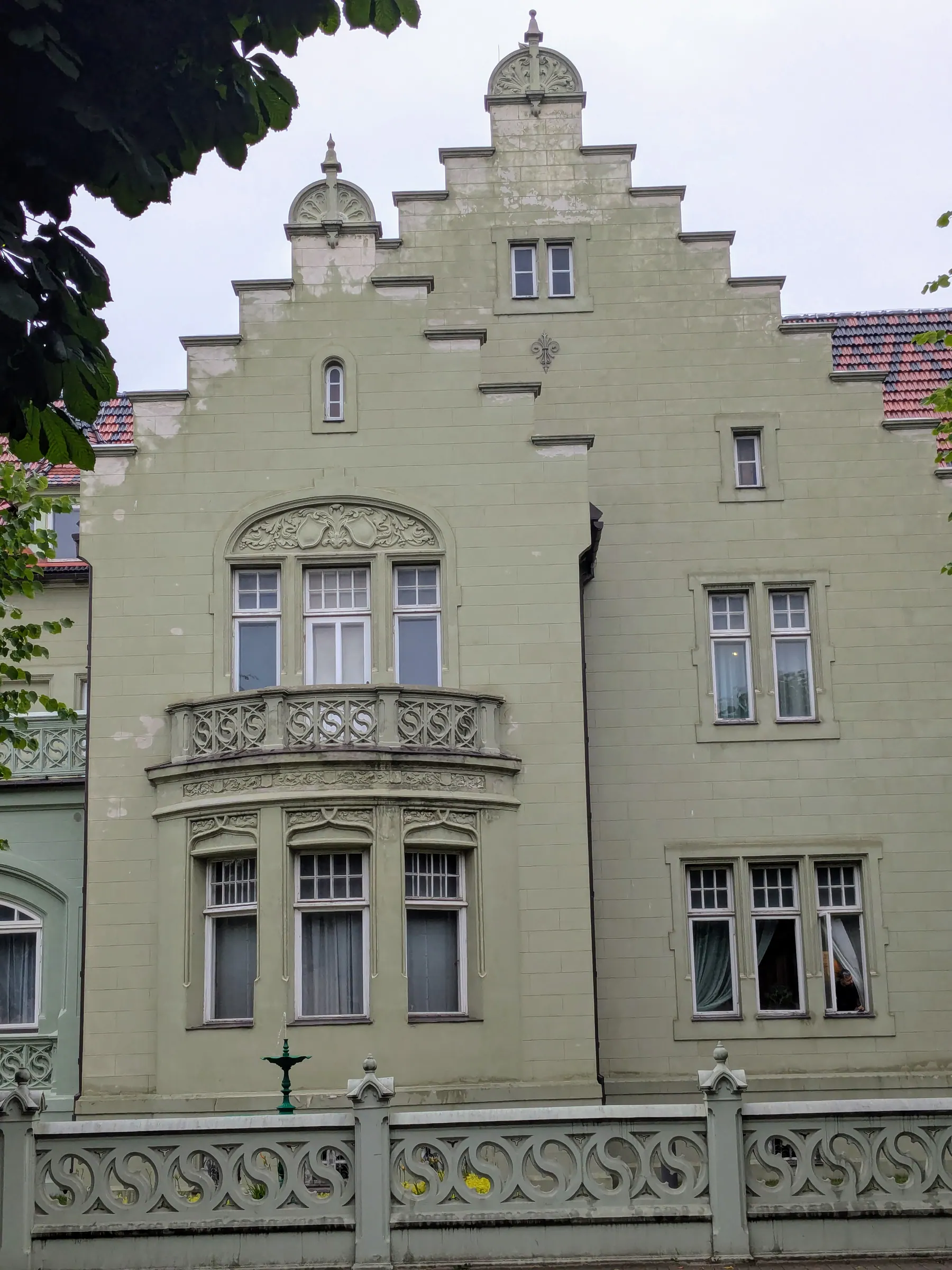
Kūrmājas prospekts itself is worth walking down. Around 1900 Liepāja was a fashionable seaside resort, and this avenue is what that left behind: the city’s wealthy merchants built their mansions along here to show their standing, and their guests took the tram down it to reach the park and the beach. It still looks nothing like the rest of the centre. The Liepāja Museum (Liepājas muzejs) occupies one of those mansions, built in 1900.
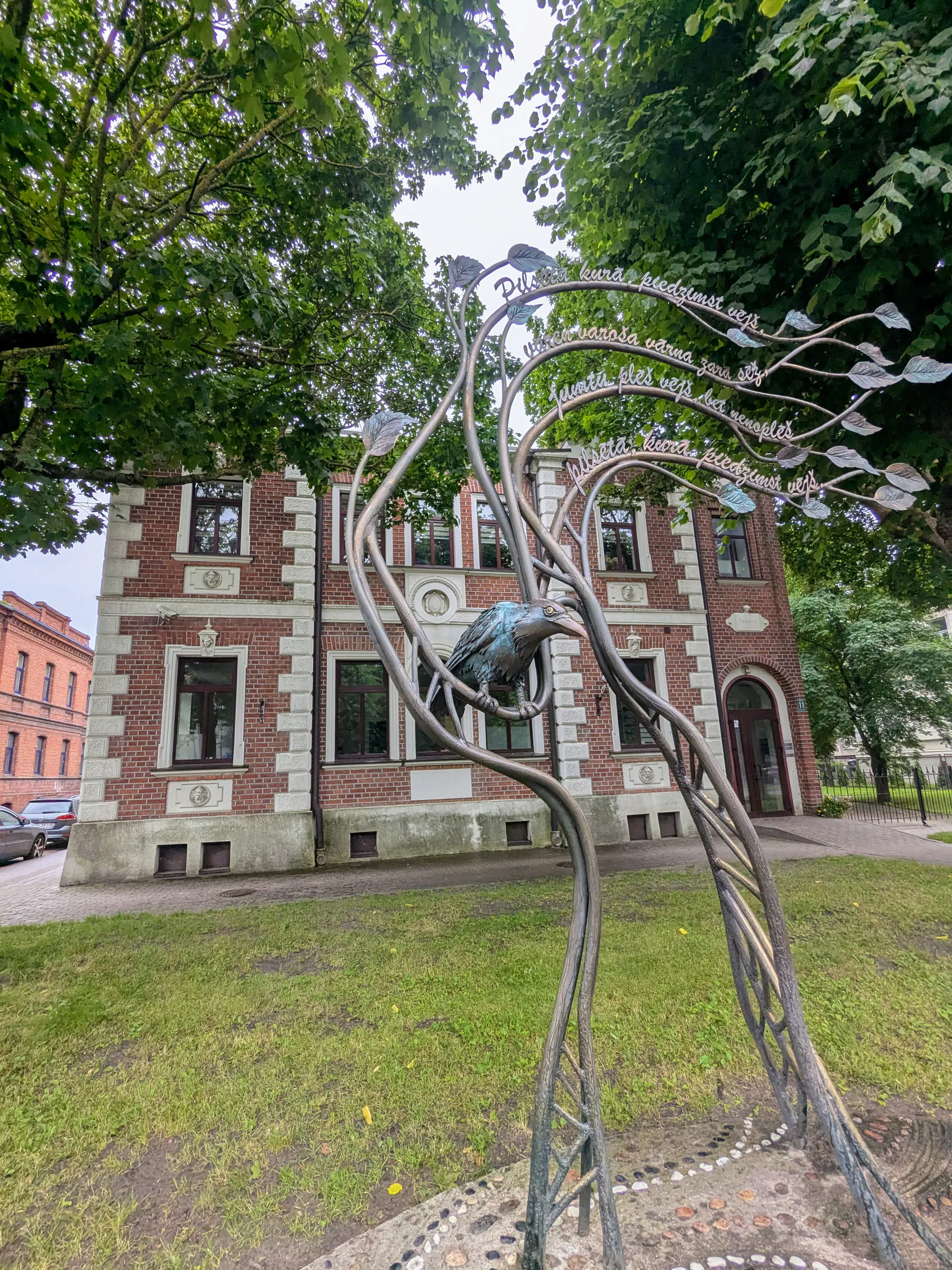
Look up into the trees as you go and you’ll find sculptures of characters from the city’s anthem.
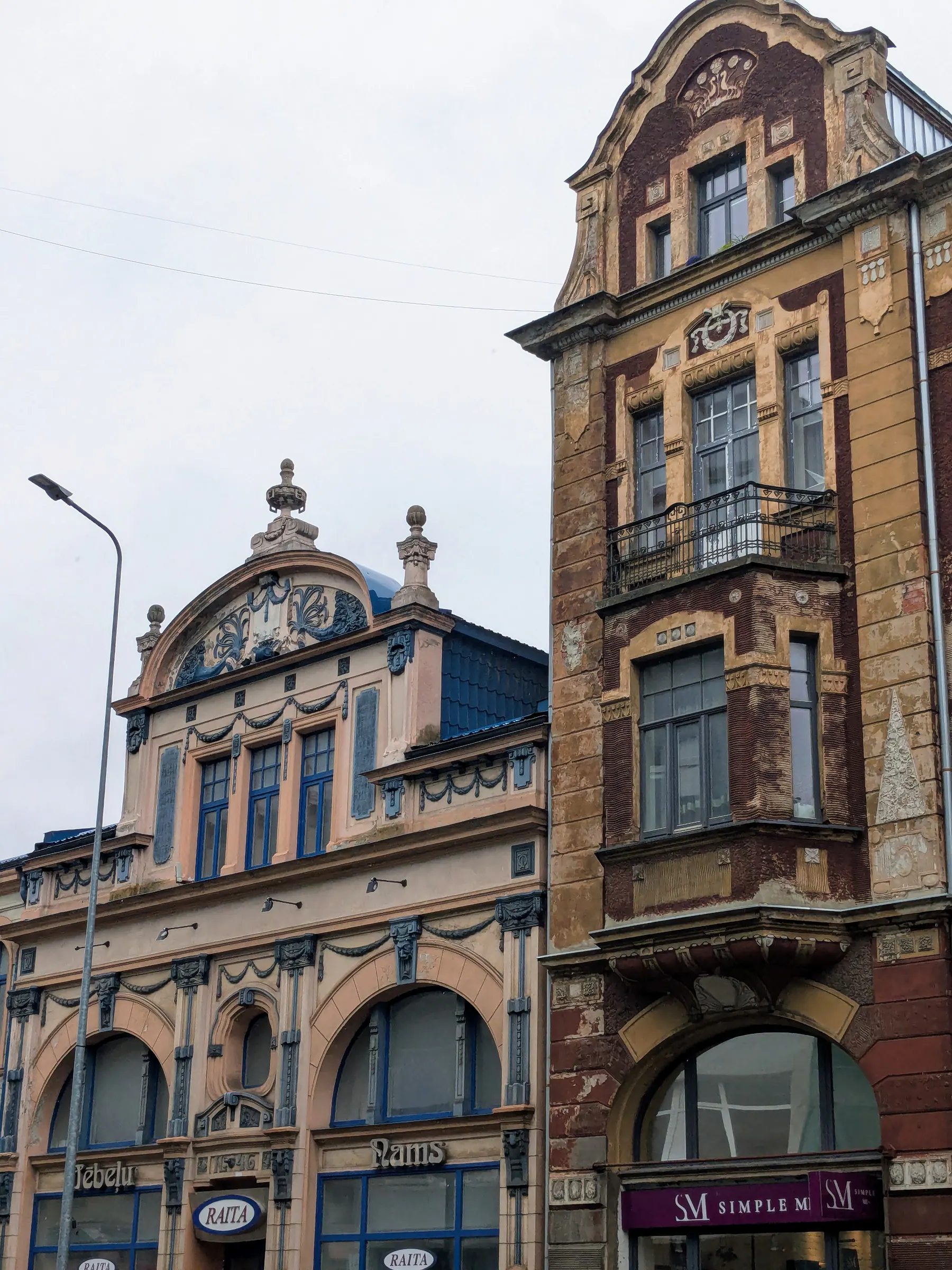
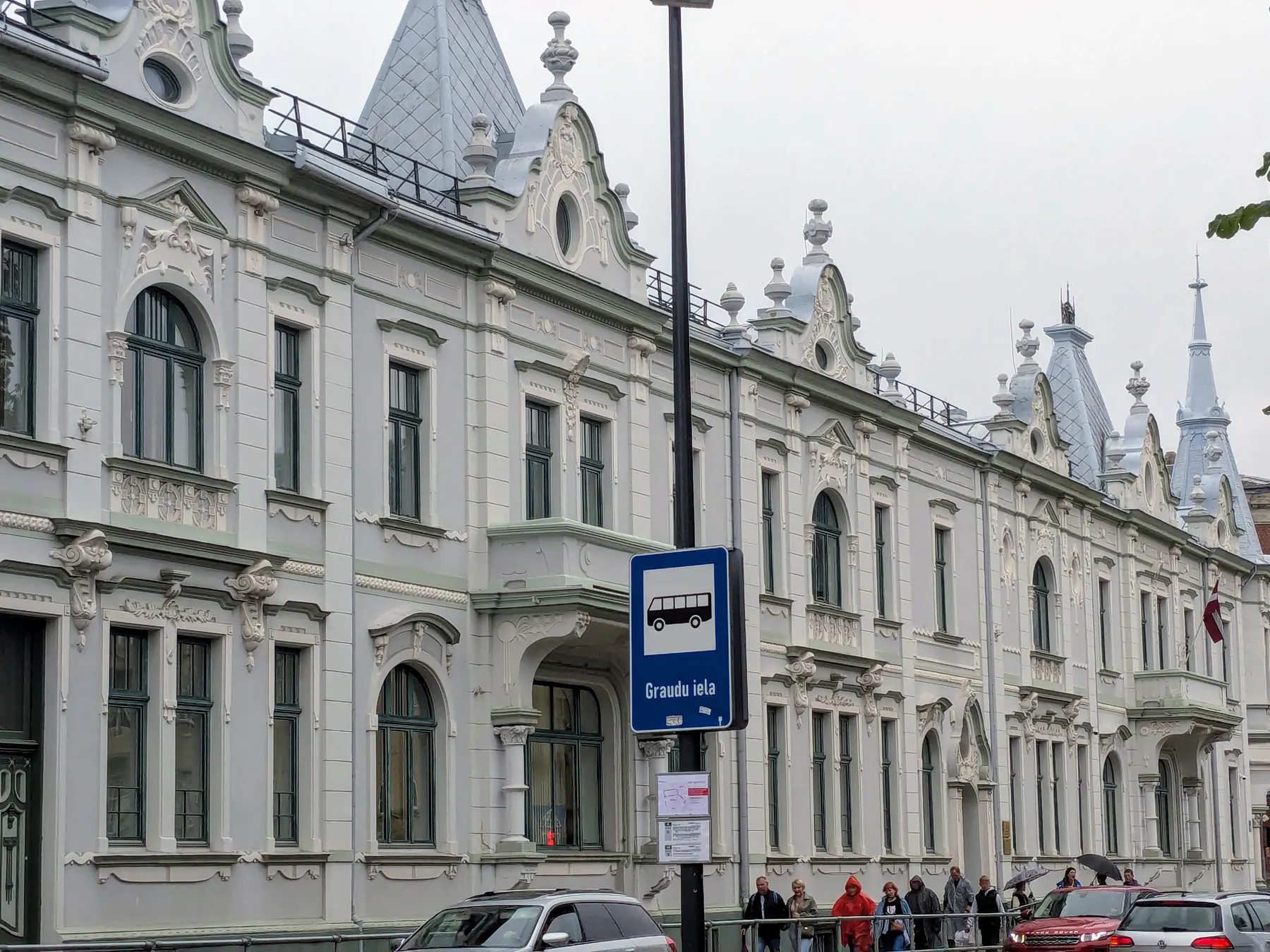
Fa - the art nouveau buildings (Jūgendstila ēkas), most of them built in the first years of the 20th century, when Liepāja was a prosperous port and money was going into the city. You can access the full map of Art Nouveau buildings here: on the official Liepāja Travel website. Riga is the city people associate with art nouveau, and fairly so, since the capital has one of the most important collections in Europe. But Liepāja has a surprising amount of it, and it impressed me more than I expected. Graudu iela is where you’ll see most of it, along with Avotu iela and Lielā iela, and there’s a separate marked route if you want to follow the architecture properly rather than just passing it.
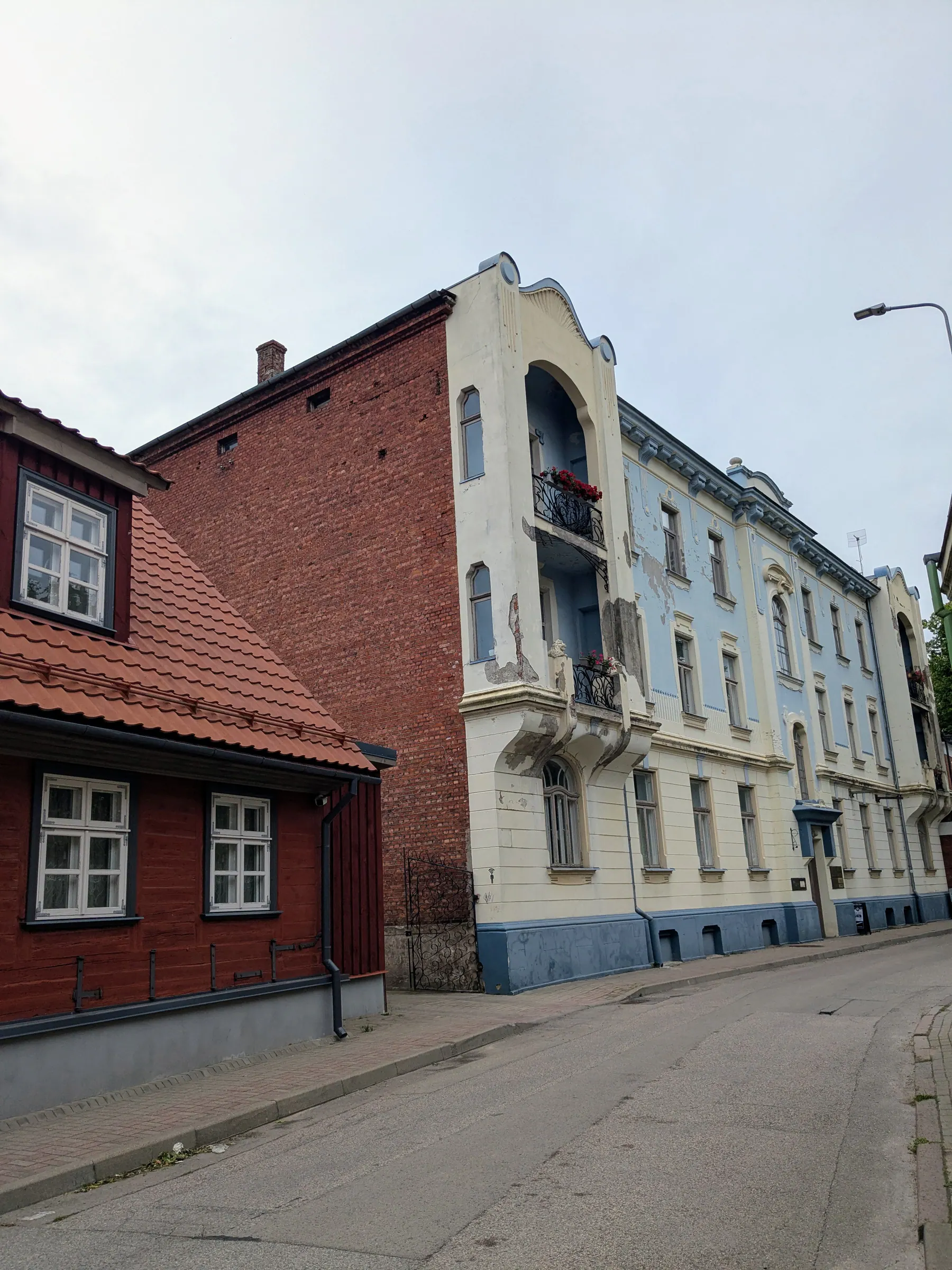
The one I liked most is a white building on Kūrmājas prospekts, and it turns out to have the best story of any of them. It was the headquarters of the shipping company that ran a steamship line directly from Liepāja to New York, and around 40,000 people a year passed through this port on their way to a new life in America. For a while, this was one of the doors out of Europe. Today it houses the courts, which is a fairly ordinary end for a building that beautiful.
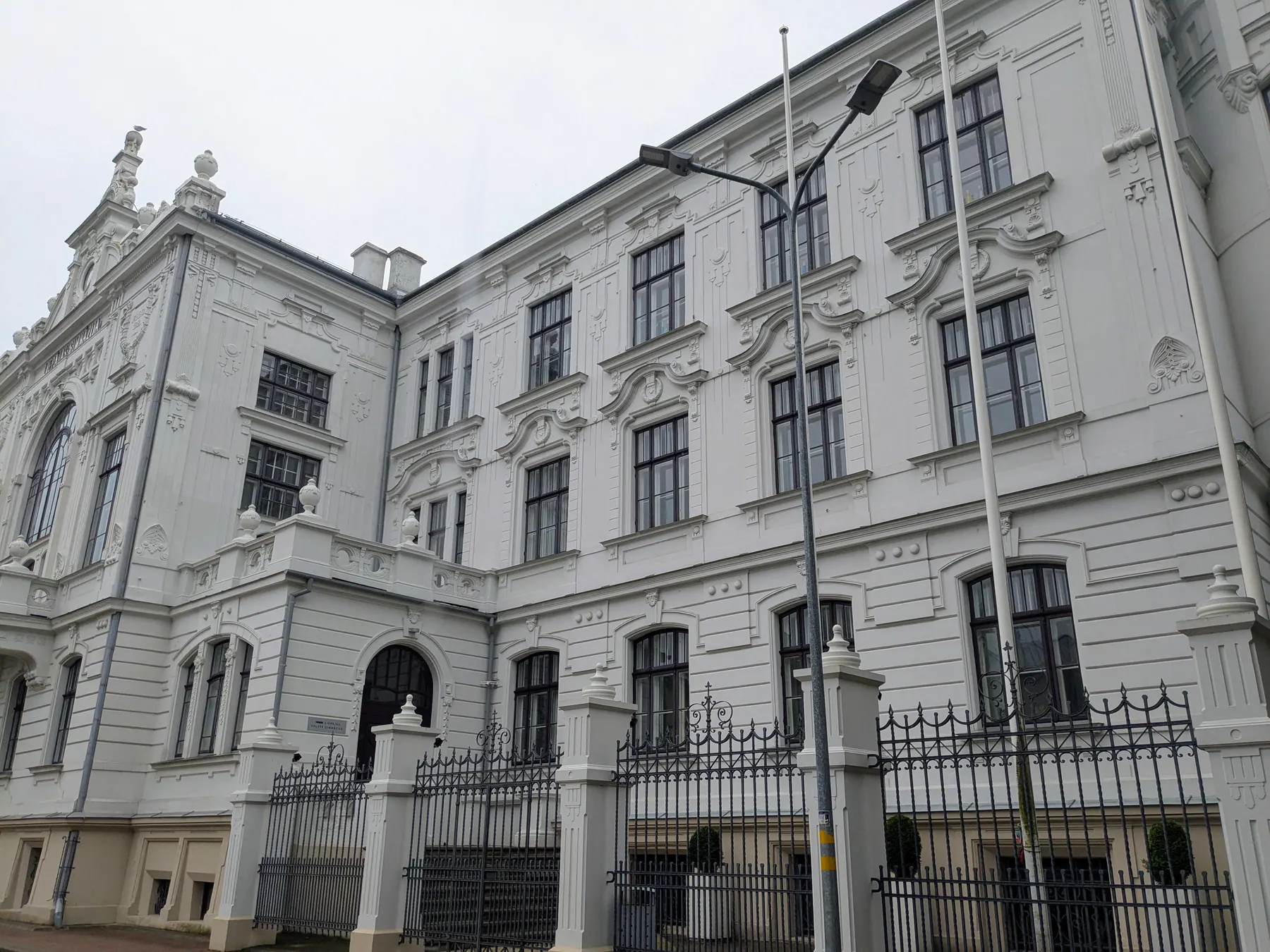
Sol - Liepāja State Gymnasium (Liepājas Valsts ģimnāzija), built in 1912. Something I’ve noticed in Latvia: the historic gymnasium schools are very often housed in beautiful buildings, which strikes me as a real plus for the country. Abroad you usually find schools in very plain constructions.
La - the Great Amber (Lielais dzintars), the concert hall the people of Liepāja are rightly proud of. A recent building that lights up like amber, the stone Latvia is known for.A walk along the canal in that area is a good idea too - it was dug in 1703 to connect Liepāja’s lake with the sea, and it’s still the reason the city has a port at all.
Si - the Holy Trinity Cathedral (Sv. Trīsvienības luterāņu katedrāle), and this is the one to go inside if you can. Its organ was built in 1855 and was the largest in the world until 1912. It still holds a record: it is the largest unaltered mechanical organ anywhere, meaning it has never been rebuilt or modernised, so what you hear is what people heard in the nineteenth century.
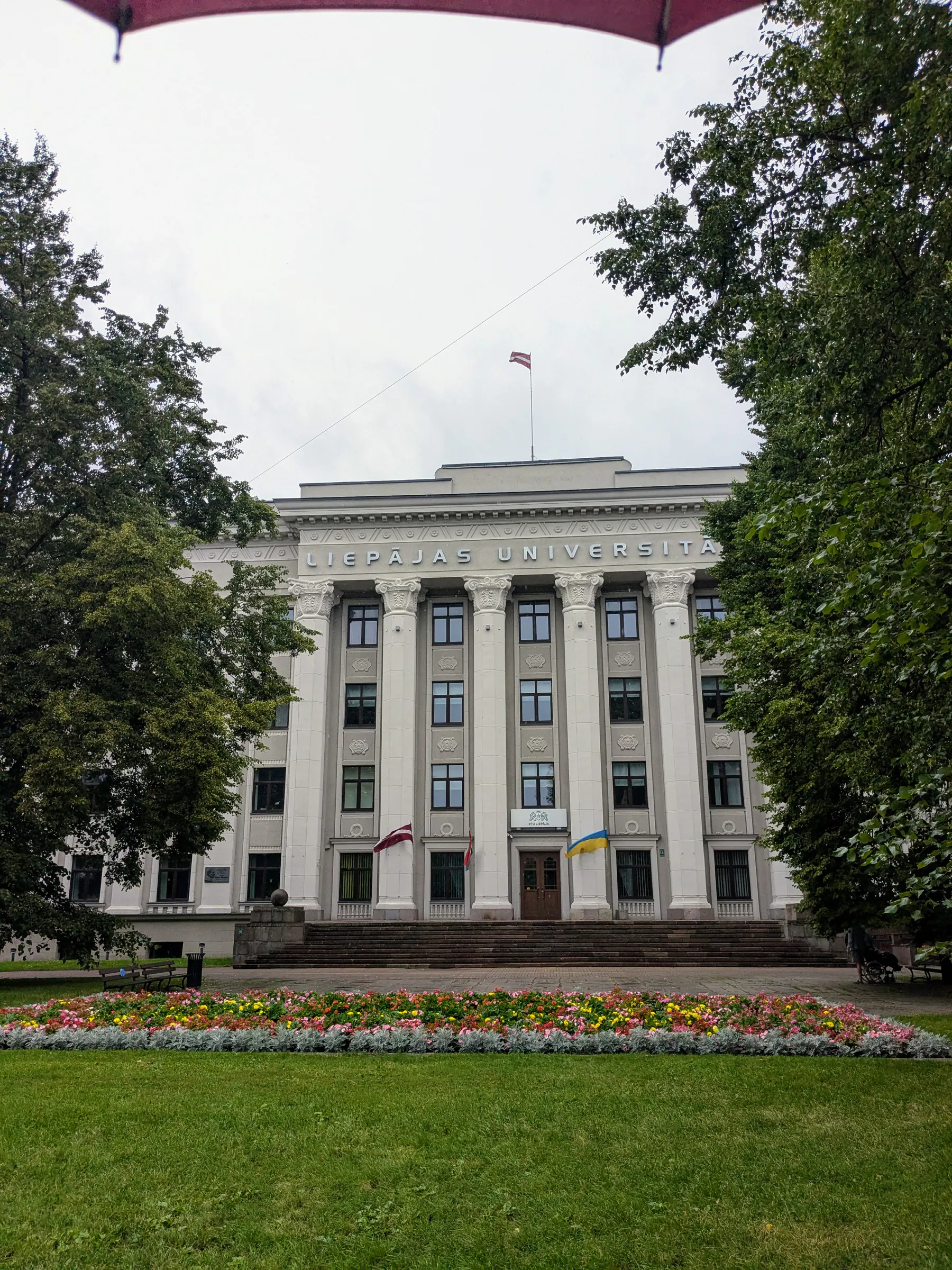
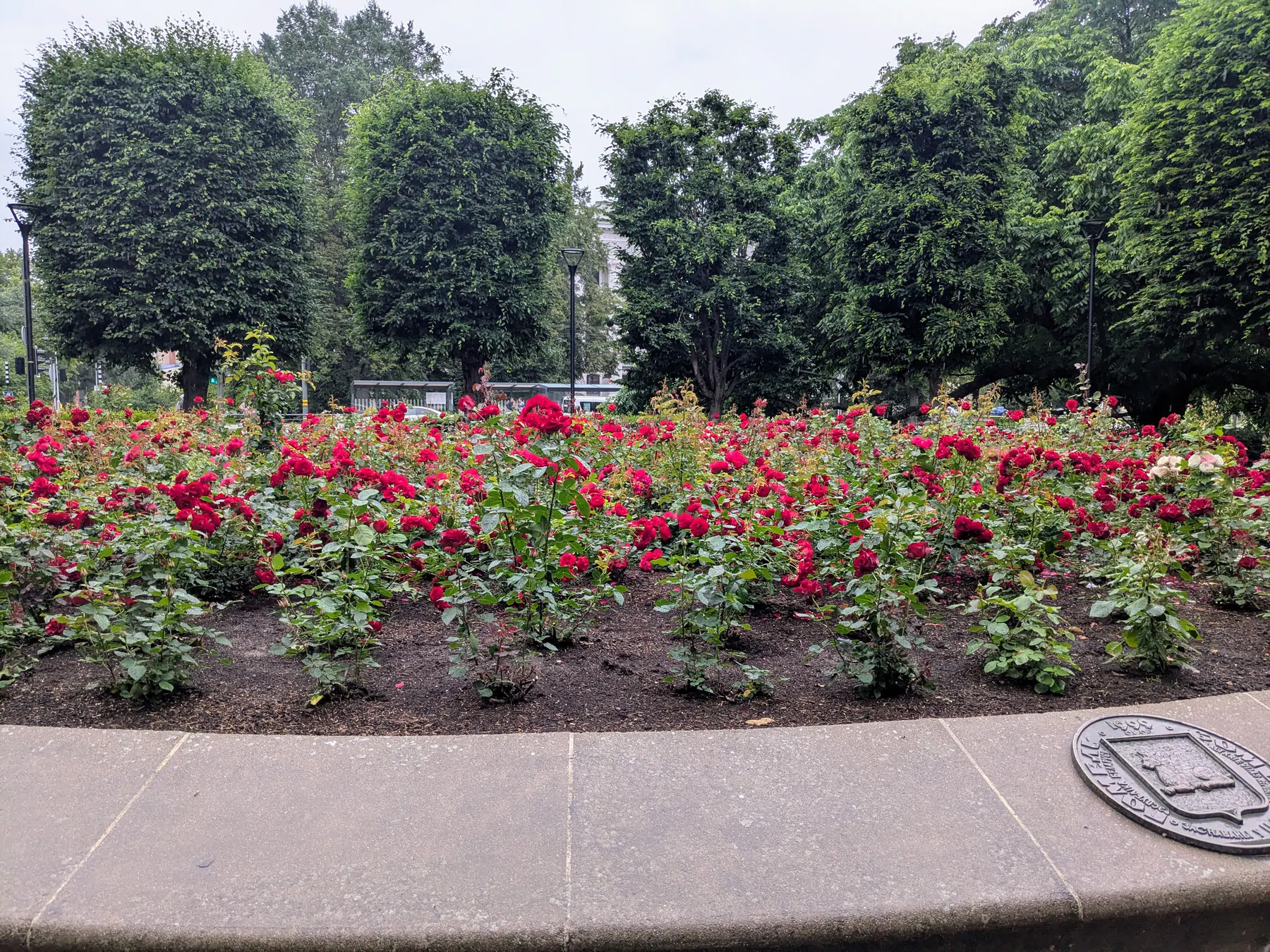
We like detours, so we wandered off the route too. The university building (Liepājas Universitāte) is another piece of fine architecture, and near it there’s a rose garden where you smell the roses before you see them. That’s the old town area, full of small streets.
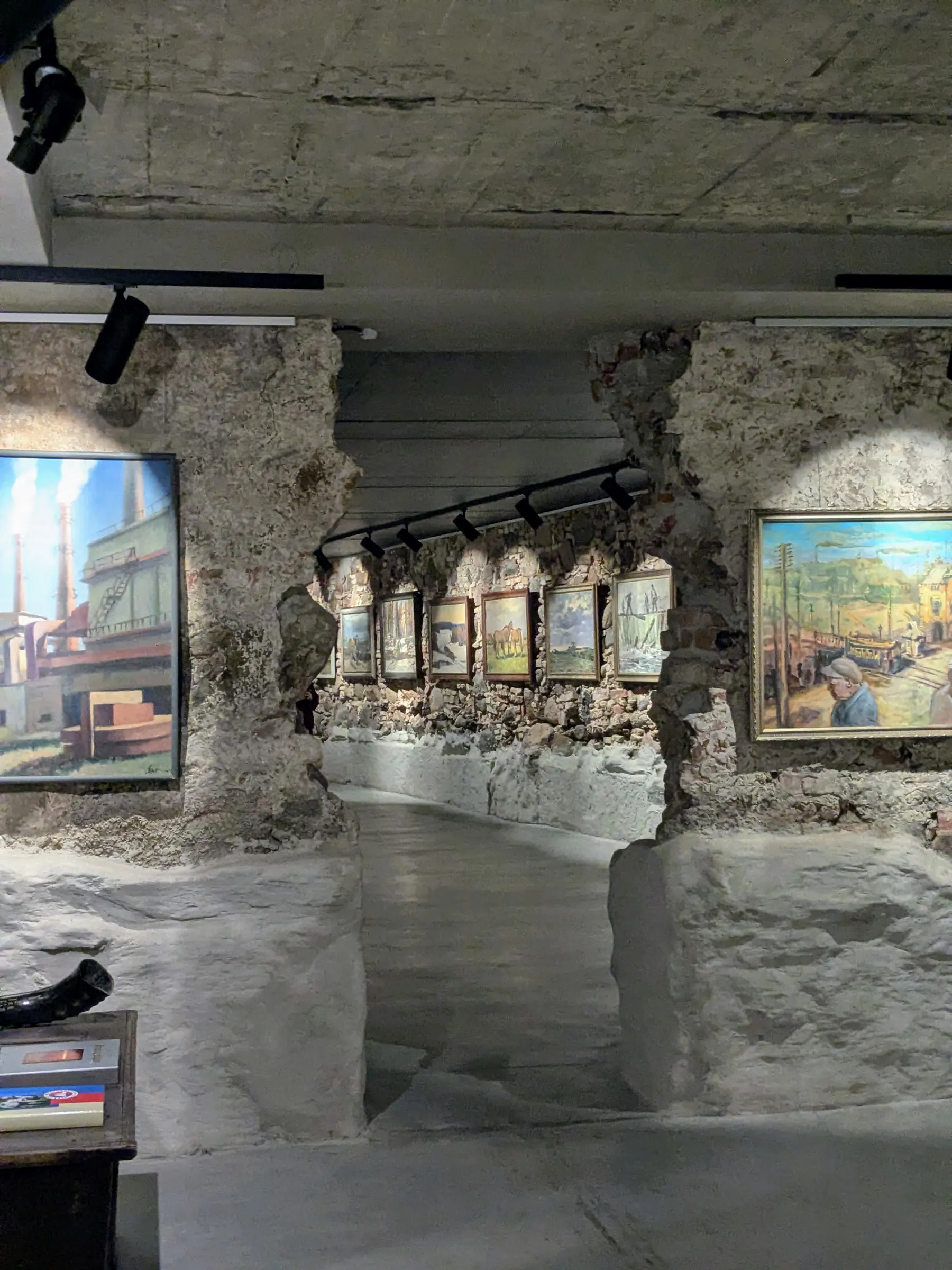
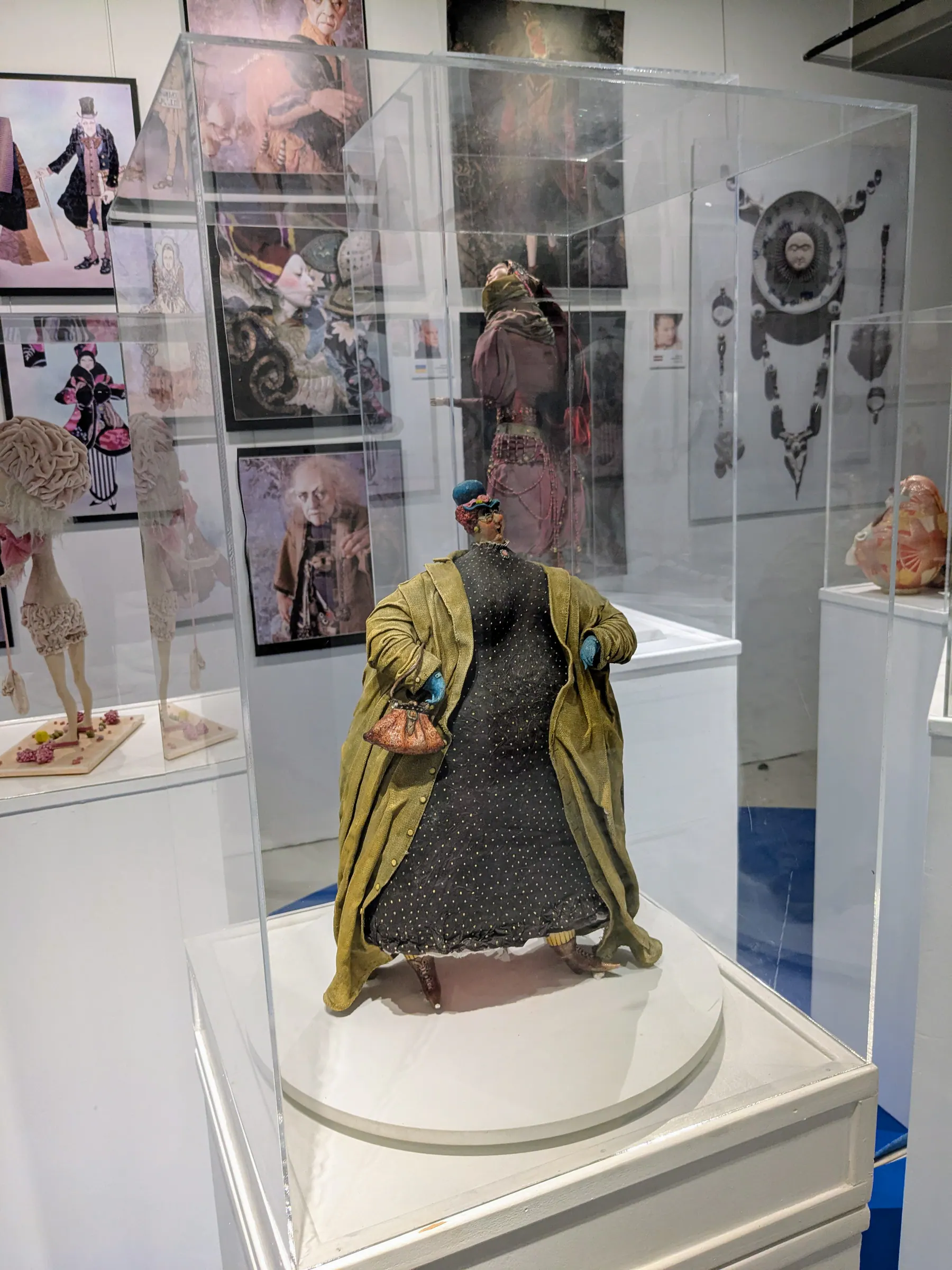
Then the rain came down properly, and we ducked into Galerija Romas dārzs, which turned out to be one of the best decisions of the trip. It holds an exhibition of dolls from the last century and a collection of Liepāja artists, and the space itself is unusual - you walk through underground tunnels rather than separate rooms. Entry was €5 and absolutely worth it. We spent about an hour there.
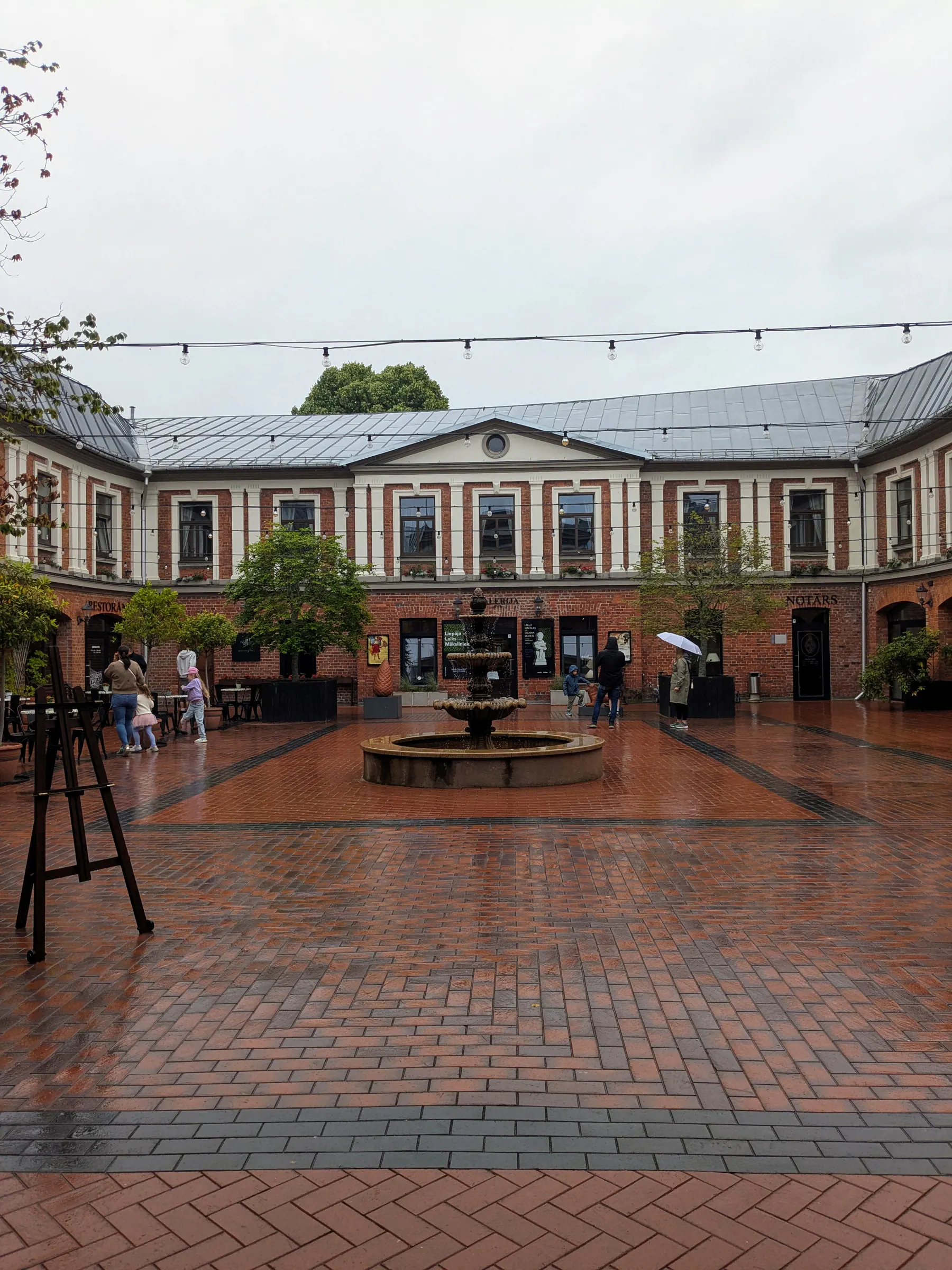
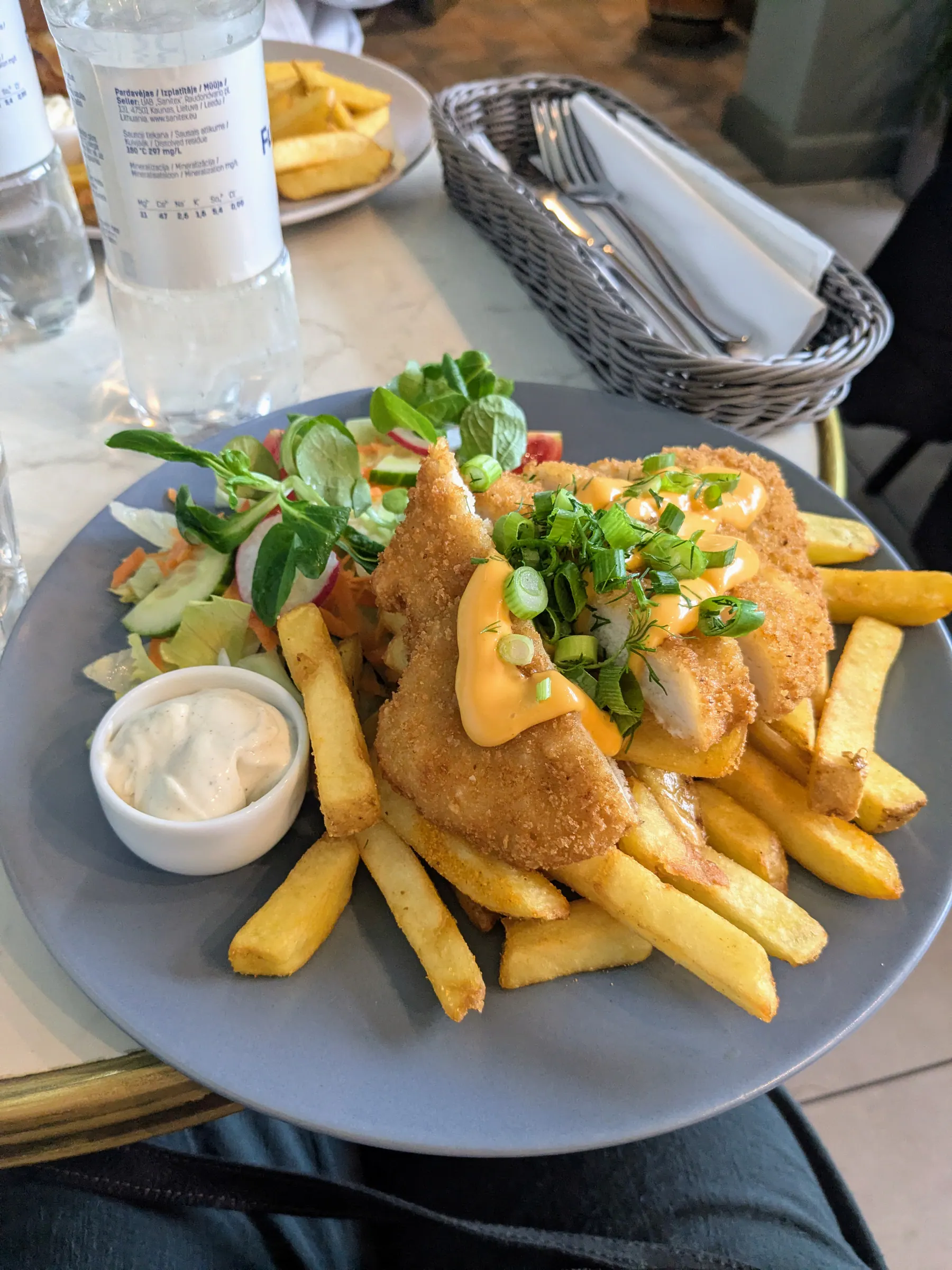
In the evening there was a concert in the Seaside Park, and we ate at Papus, a café in the park. Very good quality food, around €10 a portion. Recommended.
There’s also the Pavilion, the beautiful white building in the middle of the park, which has good reviews and would make a good lunch stop.
Where to go out
One of the better things Liepāja has done is reclaim its abondoned corners. Several of the places people now go for a drink were abandoned buildings not long ago, and they’ve been turned into courtyards and quarters rather than ordinary bars.
Pegaza pagalms is the one we spent an evening in - a reconstructed courtyard with a small stage, live music and a very comfortable atmosphere.
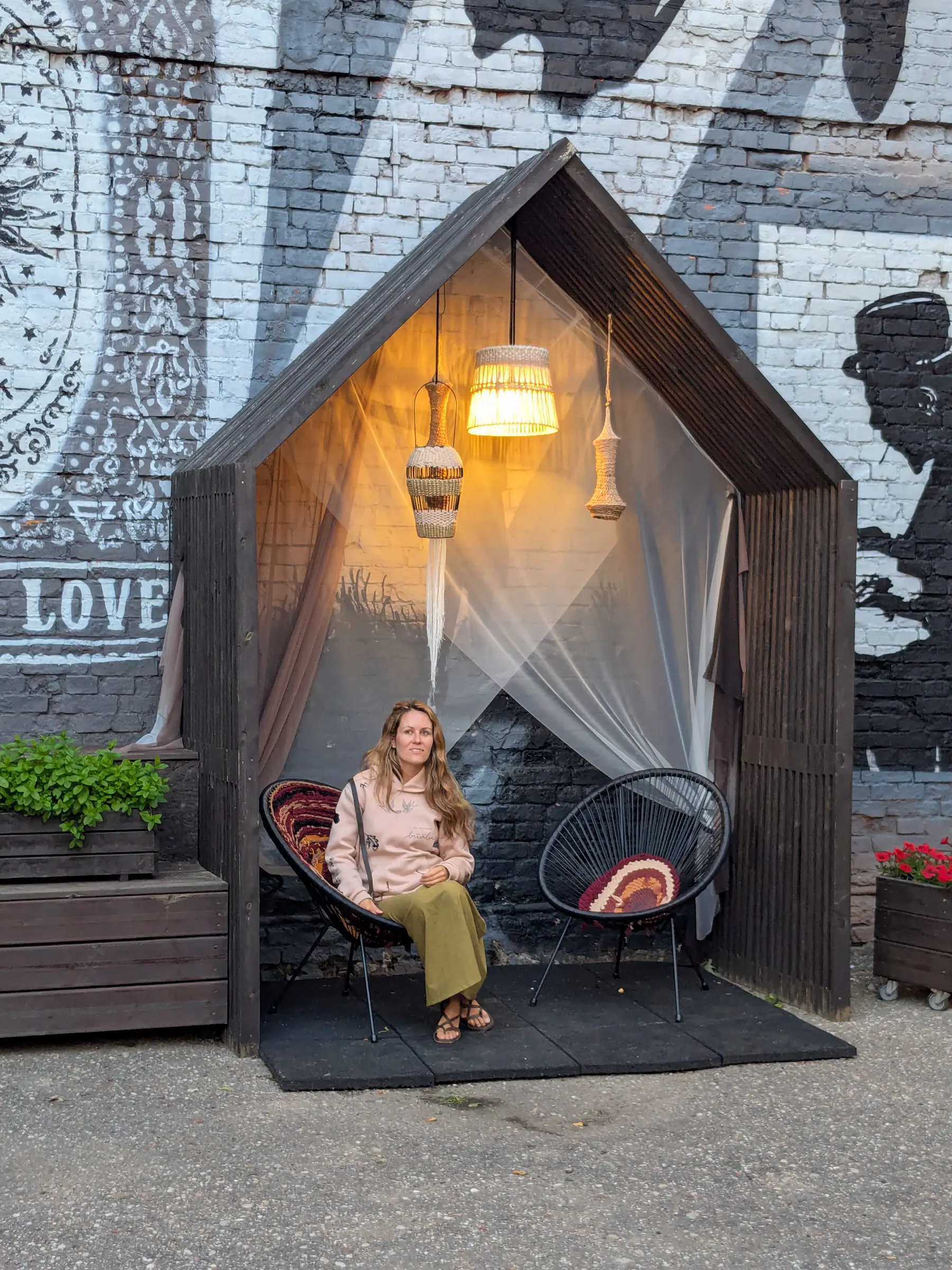
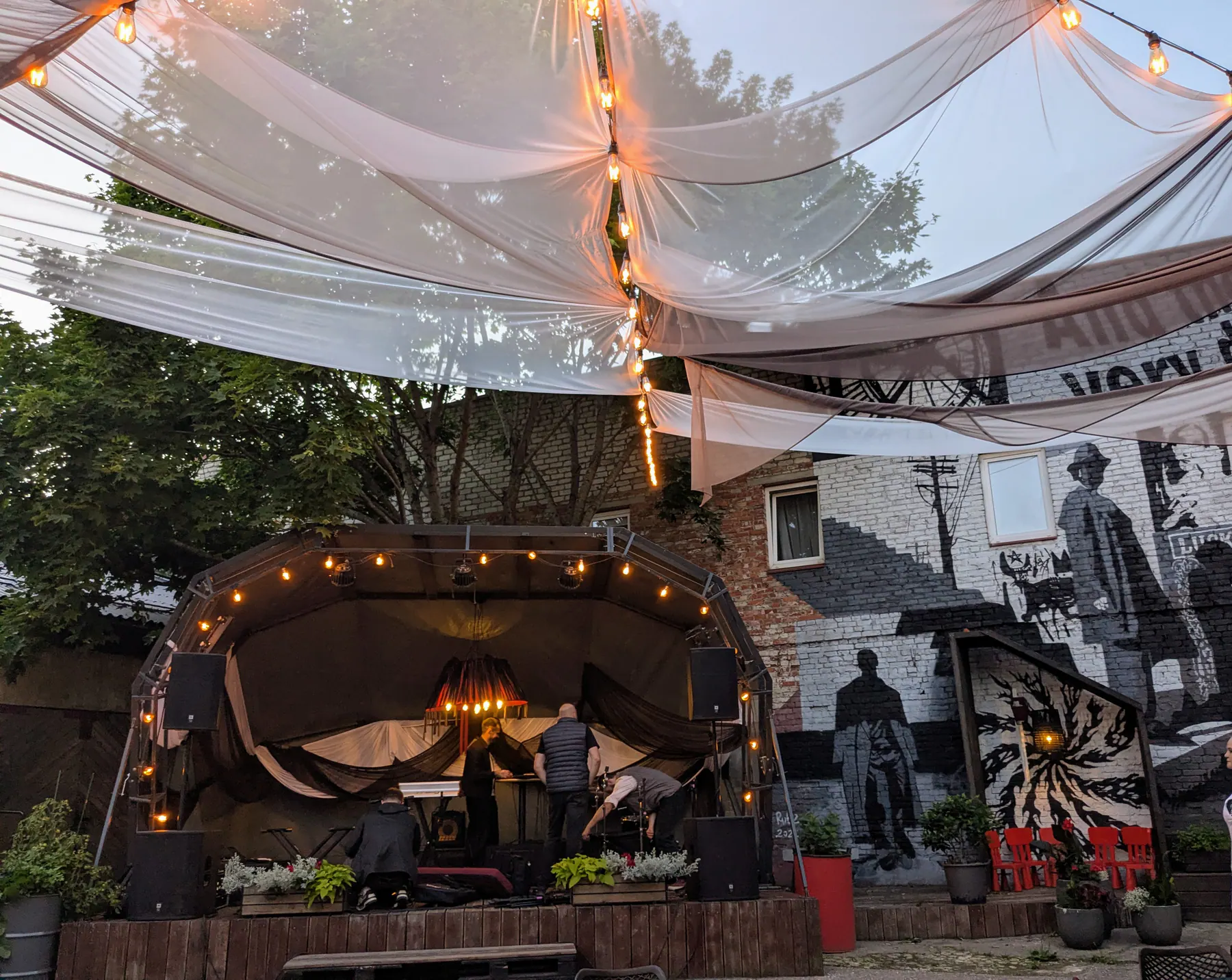
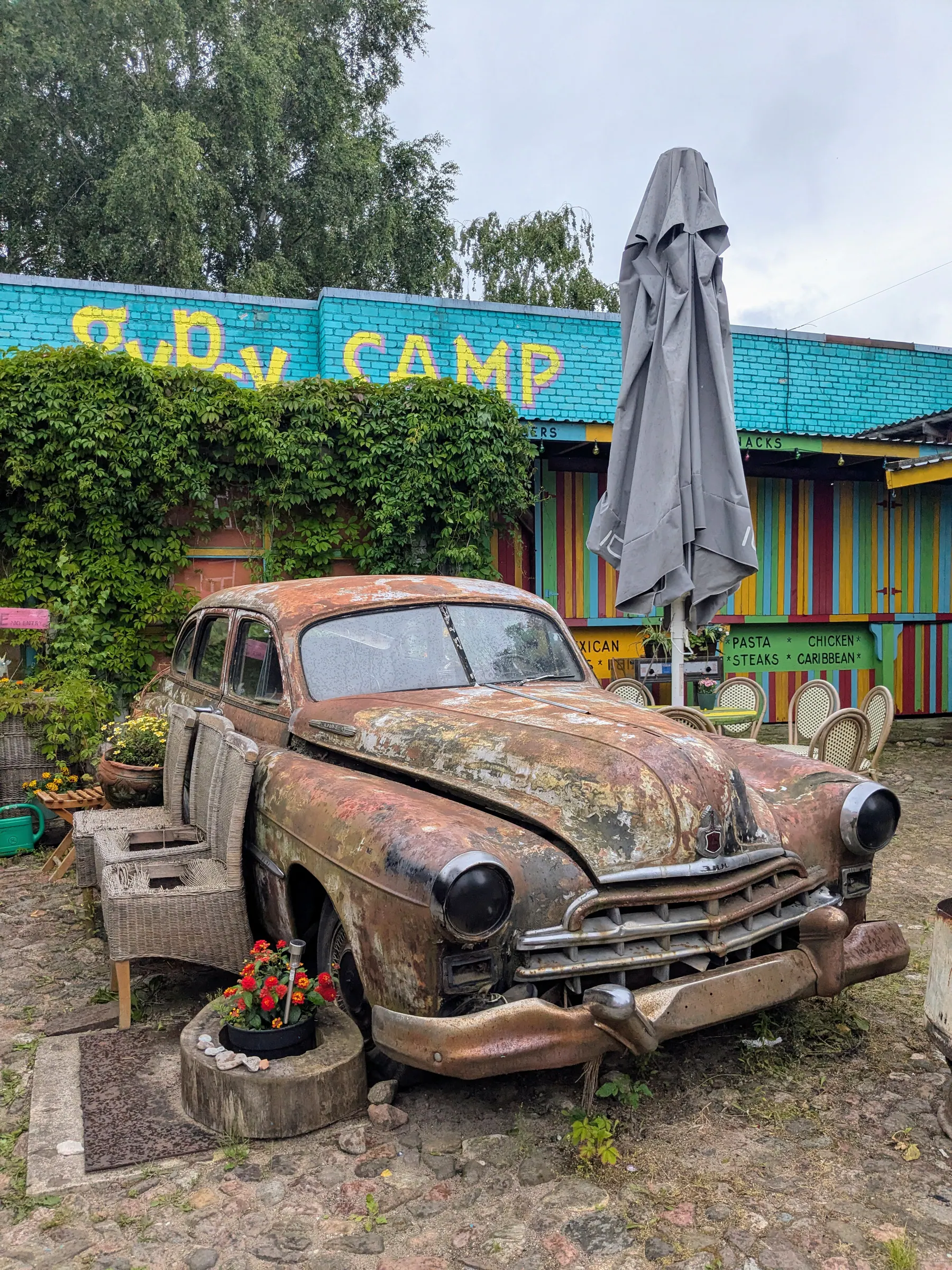
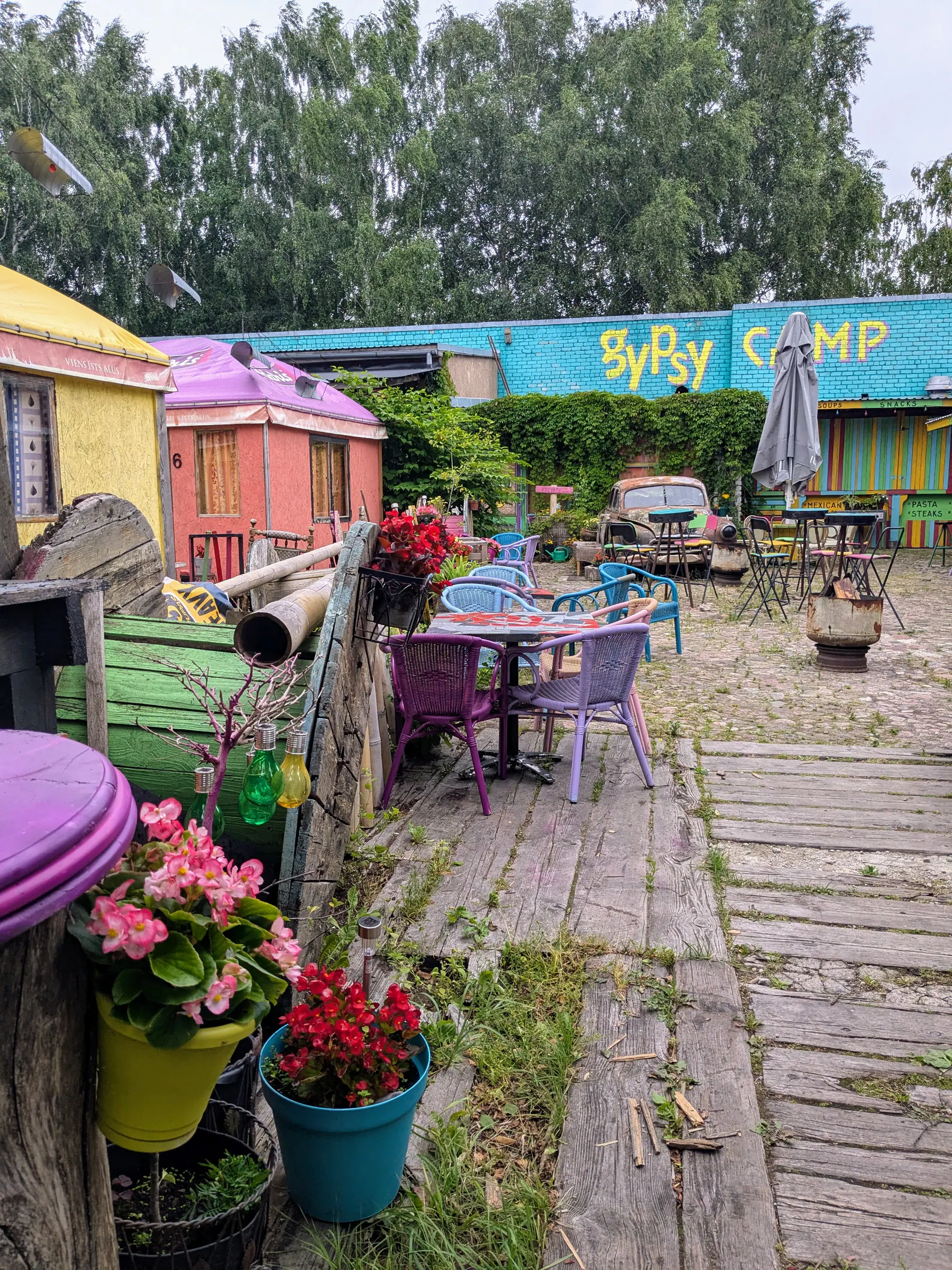
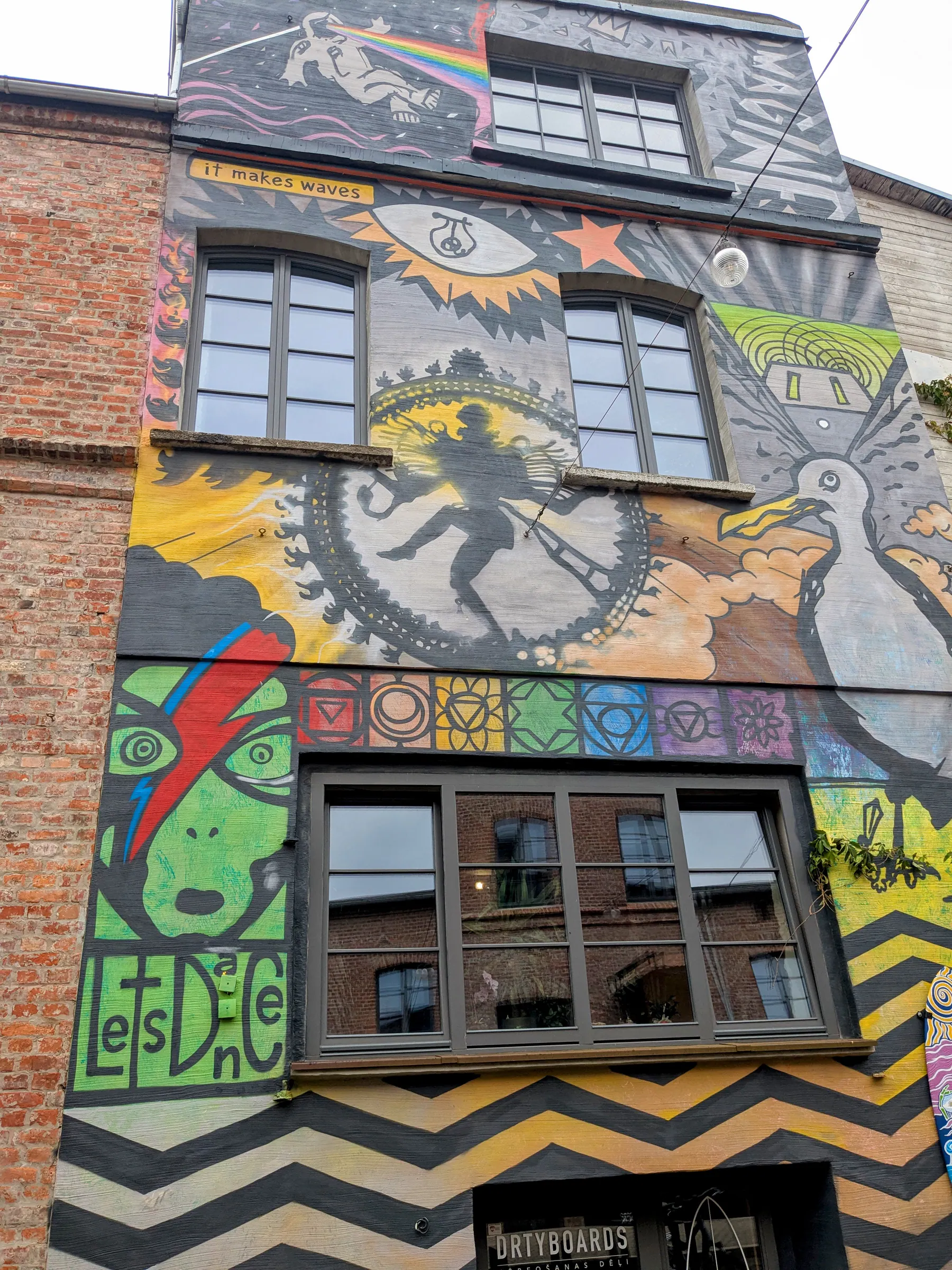
Juliannas kvartāls and the courtyard area locally called the Gipsy Camp are next to each other. Both are full of street art and worth wandering through even when they are shut; the Gipsy Camp in particular looks like a colourful place full of random objects. We visited during the day, when the bars were not open yet, so we wandered around them instead, which is worth doing on its own. They come alive in the late afternoon and evening, so don’t do what we did and turn up in the morning.
We also went looking for the Kungu iela creative quarter, which still shows up on the maps, and found it apparently shut for good.
Tipogrāfijas radošais kvartāls, in an old printworks, is the one to check if you want a concert.
More places worth your time
A day and a half covers a lot, but Liepāja has more than that. If you have longer, these are the ones to add.
St Nicholas Naval Cathedral (Sv. Nikolaja pareizticīgo Jūras katedrāle) in Karosta is the obvious one - an Orthodox cathedral with golden domes, consecrated by Nicholas II in 1903 and used by the Soviets as a warehouse, a gymnasium and a meeting hall. It’s the one building in Karosta that isn’t grim.
Also in Karosta are the lighthouse (Liepājas bāka) and the Ziemeļu mols, the long northern pier, which is a windy walk straight out into the Baltic and one of the better-known things to do in the city.
In the centre, the Liepāja Museum (Liepājas muzejs) on Kūrmājas prospekts covers the city’s history and has a good art collection, and the Liepāja Theatre (Liepājas teātris) is one of the oldest in Latvia. There are boat trips around the harbour and out to sea in summer. And Zirgu sala, just outside the centre, has quiet nature trails if you want a walk without leaving the city.
One practical note for a longer stay: Liepāja is flat and has proper bike lanes, and you can rent a bicycle for a few euros a day. Given how spread out Karosta is from the centre, that’s a sensible way to see more of it.
One thing I didn’t expect
For a city with this much going on, the streets were quiet. Very quiet. Some of that was surely the weather, and some of it the fact that Liepāja is a working city of seventy thousand people rather than a resort, but I had expected somewhere preparing to be a European Capital of Culture to feel busier than it did.
I don’t say that as a complaint. It’s part of why the place is pleasant, and it’s the reason you can have the beach and the park more or less to yourself in July. But if you’re picturing a lively seaside town in high season, adjust the picture.
Is Liepāja worth it?
Yes, and more than I expected before going. It’s the combination that does it: at one end of the city a former closed military town with blown-up forts standing in the sea, and at the other a city that is clearly investing in itself, with concert halls, street art, a piano before the beach and musical notes in the pavement.
What struck me most is how versatile it is. It’s an unusually child-friendly city - the park alone would keep a family busy for a day - and it works just as well if you’re travelling alone or as a couple. Whatever you’re looking for on the coast, Liepāja probably has a version of it.
If you’re driving the west coast - Kuldīga, Jūrkalne, Pāvilosta - Liepāja is the natural place to end up. And with the European Capital of Culture year coming in 2027, this is a good moment to see it before everyone else does.
Planning a longer trip across the country? See our Best of Latvia Beyond Riga guide to four regional routes, covering the Gauja Valley, Ķemeri and Lake Engure, Kurzeme, and the Rundāle and Bauska area.
FAQs
Is Liepāja worth visiting?
Yes. Liepāja combines a wide Baltic beach with military history, Art Nouveau architecture, music and street art, and it feels different from anywhere else in Latvia.
How many days do you need in Liepāja?
A day and a half was enough for the main sights, but two full days would be better if you want more time for Karosta, the Northern Forts and the city centre.
How do you get to Liepāja from Riga?
Liepāja is about 220 kilometres from Riga and takes roughly three hours by car. Direct buses and a direct train also connect the two cities.
Can you visit Karosta Prison and the Northern Forts?
Yes. Karosta Prison offers guided visits, while the Northern Forts are free to explore. A car is useful for the forts, and you should stay on the marked paths because the coast is eroding.
Read next
More posts for this trip mood
 Europe
 Kurzeme, Latvia
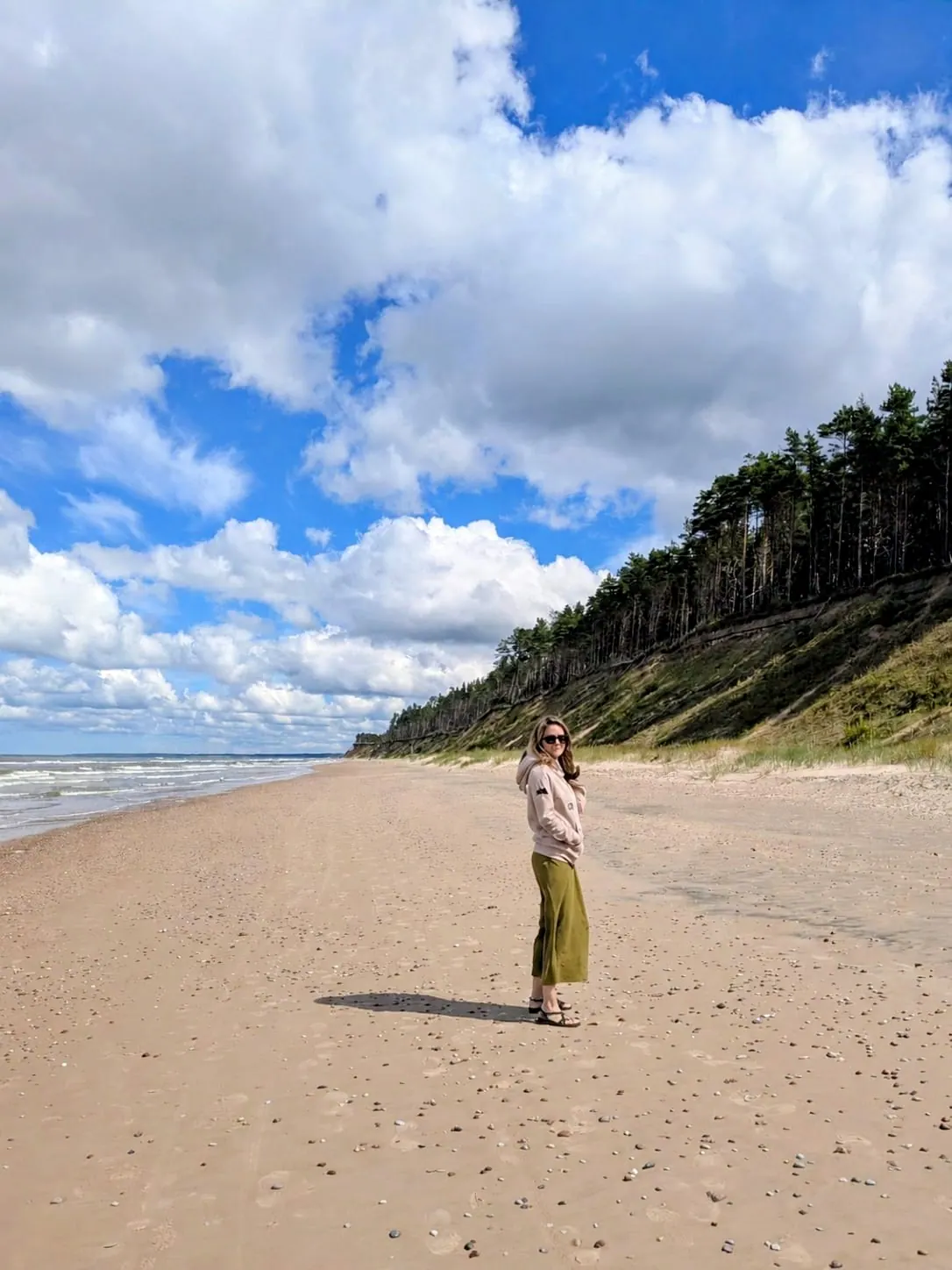
Jūrkalne and Pāvilosta: Latvia's Wildest Stretch of Coast
Between Jūrkalne's high sandy banks and the little harbour town of Pāvilosta lies one of the quietest, wildest stretches of Latvia's Baltic coast.
 Europe
 Kurzeme, Latvia
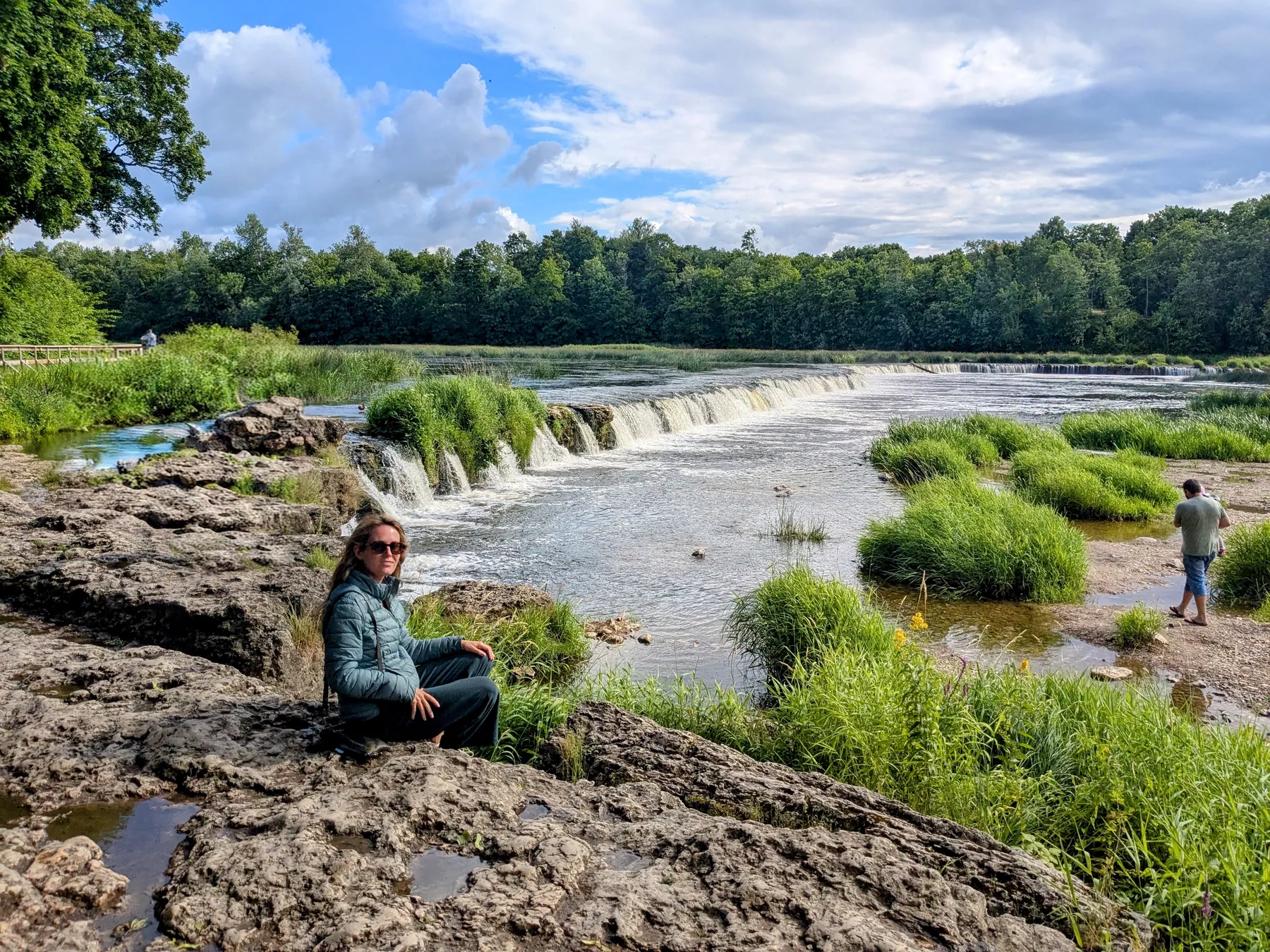
A Day in Kuldīga: Latvia's Most Charming Old Town and Europe's Widest Waterfall
A beautiful day spent between Kuldīga's old wooden streets, the Venta River and Europe's widest waterfall.
Kuldīga is a striking town, and if you happen to be in Latvia, I would say it is a must.
 Europe
 Kurzeme, Latvia
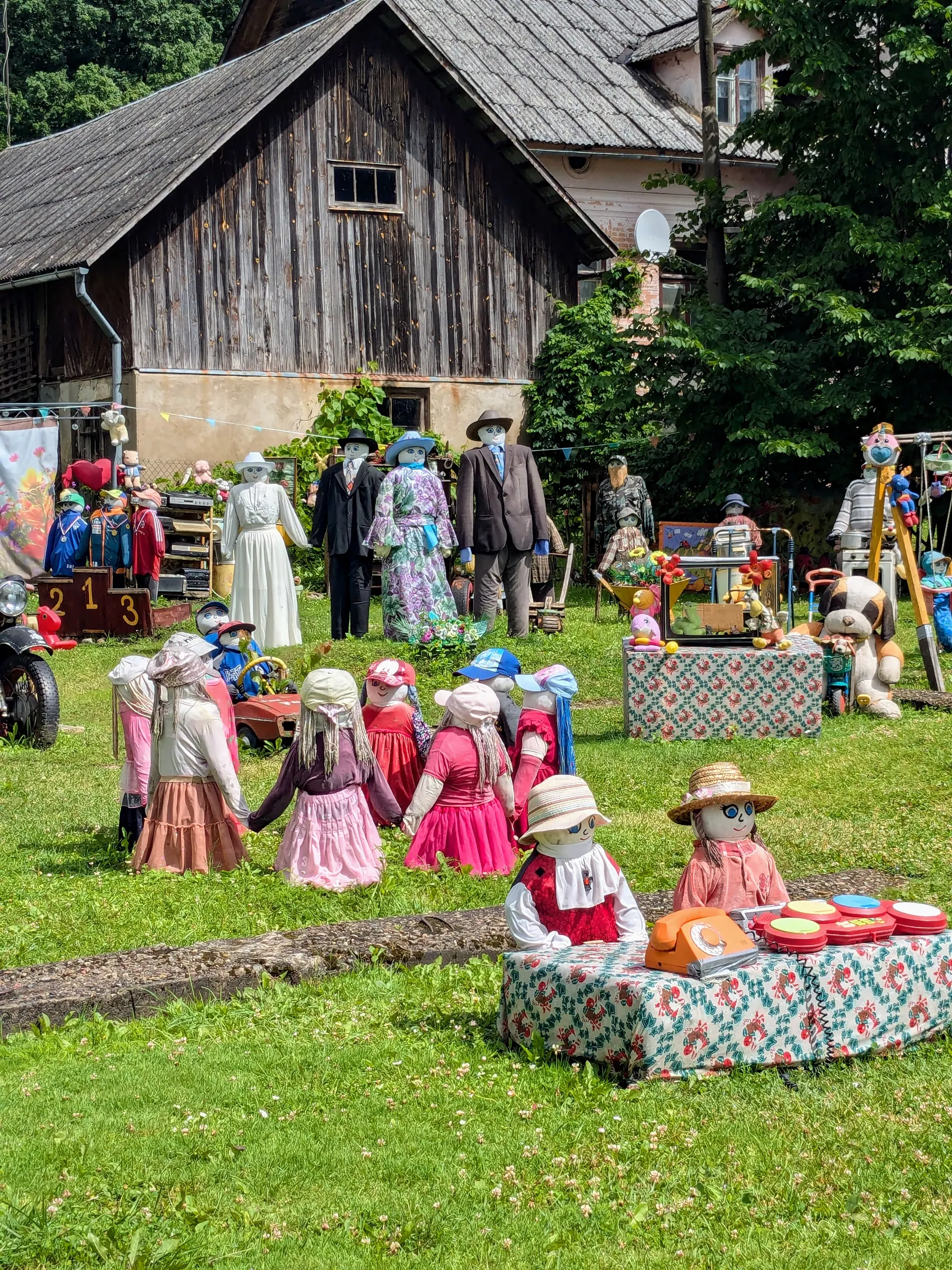
Kandava and Sabile: Two Small Towns Worth a Stop in Western Latvia
Two short stops filled with poetry, wine, handmade dolls and the quiet character of the Abava Valley.
Kandava and Sabile are two easy, characterful stops in the Abava Valley that make any drive west from Riga feel like part of the trip.